

These vegan pickled onions are the bright, tangy condiment that transforms grain bowls, tacos, and sandwiches in minutes. I’ve built this recipe around crisp red onions, apple cider vinegar, and a touch of organic cane sugar or maple syrup—all plant-forward, all shelf-stable for weeks. The Whirl Hook here is simplicity: you’re making a quick refrigerator brine that keeps onions snappy without any fuss or canning equipment. What you get is a jar of sharp, garlicky-dill pickled onions ready to brighten any plate within 30 minutes of prep.
Why You’ll Love This
- Ready in 30 minutes with just 10 minutes of active work—the rest is resting time
- Keeps for 3-4 weeks in the fridge, so one batch covers multiple meals
- No canning equipment or hot-water processing needed; this is true refrigerator pickling
- Fully vegan with no hidden animal products in the brine or sweetener
- Crisp texture holds up on salads, tacos, and grain bowls without getting mushy
- Customizable with dill, peppercorns, garlic, or red pepper flakes for your flavor direction
Ingredient Breakdown
Base Brine
- 3 medium red onions, sliced into thin rings (about 1/4-inch)
- 1 cup apple cider vinegar
- 1 cup filtered water
- 2 tablespoons organic cane sugar or maple syrup
- 1 1/2 teaspoons fine sea salt
Aromatics & Flavor (Optional but Recommended)
- 4-5 fresh dill sprigs or 1 1/2 teaspoons dried dill
- 3-4 garlic cloves, thinly sliced
- 1 teaspoon black peppercorns
- 1/4 teaspoon red pepper flakes (if you like heat)
The sweetener choice matters: cane sugar dissolves cleanly and lets the vinegar shine, while maple syrup adds a subtle earthiness. Either works, so pick what aligns with your pantry. The dill and garlic are optional, but I always add them—they’re the difference between basic pickles and ones you’ll actually crave.
Whirl Hook
The core twist: This isn’t a cooked brine. You’re using the heat from boiling water to soften the onions just enough to absorb flavor while staying crisp. The result is a texture contrast—tender but snappy—that feels fresher than traditional hot-packed pickles.
Flavor Spin
Apple cider vinegar brings warmth and slight fruitiness compared to distilled vinegar’s sharp bite. If you prefer a gentler tang, swap half the ACV for white wine vinegar. For deeper savory notes, add a bay leaf and a strip of lemon zest to the brine before pouring.
Step-by-Step
- Slice red onions into thin rings (about 1/4-inch thick). Separate the rings into individual pieces and place them in a clean glass jar or heatproof container.
- In a small pot, combine apple cider vinegar, filtered water, organic cane sugar or maple syrup, and fine sea salt. Stir over medium heat for 2-3 minutes until the sugar and salt dissolve completely—you’ll see no granules at the bottom.
- If using aromatics, scatter the dill sprigs, garlic slices, black peppercorns, and red pepper flakes (if desired) over the onions in the jar.
- Carefully pour the hot brine over the onions, making sure they’re fully submerged. If needed, add a splash of cool water to cover them completely.
- Let the jar cool to room temperature for 15-20 minutes, then cover and refrigerate for at least 2 hours before using. The onions will continue to soften and absorb flavor as they chill.
- Taste after 4 hours. If you prefer a sharper tang, they’re ready to eat. For deeper flavor, wait until the next day.
Visual Cooking Timeline
- 0:00 — Slice red onions into thin rings, place in jar with aromatics if using
- 0:05 — Combine vinegar, water, sweetener, and salt in pot; heat until dissolved (2-3 minutes)
- 0:10 — Pour hot brine over onions; let cool 15-20 minutes uncovered
- 0:30 — Cover jar and refrigerate for at least 2 hours
- 2:30 — Taste and adjust seasoning if needed; ready to serve
- Overnight — Flavor deepens and onions soften further; peak taste at 24 hours
Whirl Factor
Flavor + Texture Contrast: You get bright, tangy vinegar hitting crisp-tender onion rings with optional garlic and dill layering in savory depth. The cold brine keeps the texture snappy even after days in the fridge, so they stay a textural contrast on soft grain bowls or creamy sandwiches. That’s the payoff—a condiment that adds both punch and structure to any plate.
Quick Tips
- Slice onions thin and uniform: A mandoline or sharp knife gets rings to 1/4-inch so they soften evenly and absorb brine faster.
- Use hot brine, not boiling: The brine should be steaming but not rolling—this softens onions gently without turning them mushy.
- Don’t skip the cooling step: Letting the jar cool uncovered for 15-20 minutes prevents condensation and lets onions set into their texture.
- Taste at 4 hours, peak at 24: They’re edible after 2 hours, but flavor deepens overnight. Plan accordingly if you’re pickling for a specific meal.
- Keep the brine: Once you finish the onions, use the leftover brine for quick-pickling other vegetables like cucumbers, carrots, or jalapeños.
- Store upright in the fridge: A glass jar keeps onions crisp longer than plastic, and upright storage prevents them from getting crushed under their own weight.
Substitution Ideas
- White wine vinegar or champagne vinegar → Apple cider vinegar: Creates a lighter, more delicate tang; use the same amount and expect slightly less fruity depth.
- Coconut sugar or date syrup → Cane sugar or maple syrup: Both work; coconut sugar brings a subtle molasses note, date syrup adds richness. Use the same amount.
- Yellow or white onions → Red onions: Yellow onions stay milder and sweeter; white onions are sharper. Red onions have the most color and slight earthiness, so they’re the first choice here.
- Fresh thyme or rosemary → Fresh dill: Thyme adds herbaceous warmth; rosemary brings piney depth. Either pairs well with garlic and peppercorns.
- Shallots (thinly sliced) → Red onions: Shallots are sweeter and more delicate; use the same volume but expect faster softening and milder flavor.
Spin Options
Spicy Kick
Add 2-3 Thai bird’s eye chilies or 1 teaspoon of red pepper flakes to the brine. The heat builds over 24 hours, so taste early and adjust. Pairs beautifully with tacos and grain bowls.
Citrus & Herb
Swap half the apple cider vinegar for fresh lemon juice and add a strip of lemon zest, 1 teaspoon coriander seeds, and fresh thyme. This version leans bright and Mediterranean—perfect for roasted vegetables and falafel wraps.
Smoky & Deep
Add 1 teaspoon smoked paprika, 2 bay leaves, and 1 teaspoon caraway seeds to the brine. Let the onions sit for 24 hours before eating. This variation works on hearty sandwiches and roasted root vegetable bowls.
Make-Ahead Options
Day Before: Slice onions and store in an airtight container in the fridge (up to 8 hours). Make the brine and store separately in a covered pot at room temperature. On serving day, combine and proceed from step 3. This splits the work and keeps onions fresher longer before brining.
2 Hours Before: Prepare the full recipe through step 5, then refrigerate. The onions will be at their crispest texture and ready to serve exactly when you need them. This works best if you’re pickling for a specific meal.
Morning Of: Make the complete recipe first thing. By lunch or dinner, the onions will have softened to the ideal texture and absorbed enough flavor. This timing ensures peak taste for evening meals.
Storage: Keep the sealed jar in the fridge for 3-4 weeks. Once you open it, use clean utensils to remove onions (never double-dip with a used fork) to extend shelf life. The onions stay crispest for the first 2 weeks, then gradually soften but remain flavorful.
Whirl Finish
Serving: Use these pickled onions as a bright topping on grain bowls, tacos, sandwiches, salads, or roasted vegetable platters. A small handful adds both visual pop and sharp flavor contrast. They’re also excellent alongside vegan cheese boards or as a side to hearty soups.
Storage: Keep the sealed jar in the fridge for 3-4 weeks. The brine acts as a natural preservative, so there’s no need for canning. Once opened, always use clean utensils and store upright to keep onions submerged and crisp.
FAQ
Can I use white or yellow onions instead of red?
Yes, but you’ll lose the vibrant color and get a milder, sweeter flavor. Red onions have earthy notes that pair perfectly with the vinegar and dill. If you prefer less sharpness, yellow onions work—just expect a gentler tang.
How long do pickled onions keep?
In a sealed jar in the fridge, they last 3-4 weeks. Once opened, use clean utensils and keep them submerged in brine to extend freshness. The texture stays crispest for the first 2 weeks.
Do I need to sterilize the jar?
For refrigerator pickling, a clean glass jar is enough—no sterilization needed. Wash it with hot soapy water and dry it well before use. Since these aren’t shelf-stable (they stay in the fridge), you’re not dealing with canning safety concerns.
Can I use bottled lemon juice instead of apple cider vinegar?
Not as a direct swap—bottled lemon juice is less acidic and won’t preserve the onions as effectively. You can blend half lemon juice with half apple cider vinegar for a citrus twist, but keep the ACV as your base for proper preservation.
What if my onions are still too crisp after 2 hours?
That’s not a problem—they’ll continue to soften overnight. If you need them softer faster, let them sit at room temperature for 4-6 hours before refrigerating. The warmth speeds up the softening process.
Are these pickled onions truly vegan?
Yes, completely. Apple cider vinegar, cane sugar or maple syrup, sea salt, water, and optional dill and garlic are all plant-based. No animal products touch the brine or onions at any stage.
Can I scale this recipe up?
Absolutely. Keep the ratio of 1 cup vinegar to 1 cup water per 3 medium onions, then scale proportionally. A triple batch works perfectly in a quart-sized jar and keeps just as well.
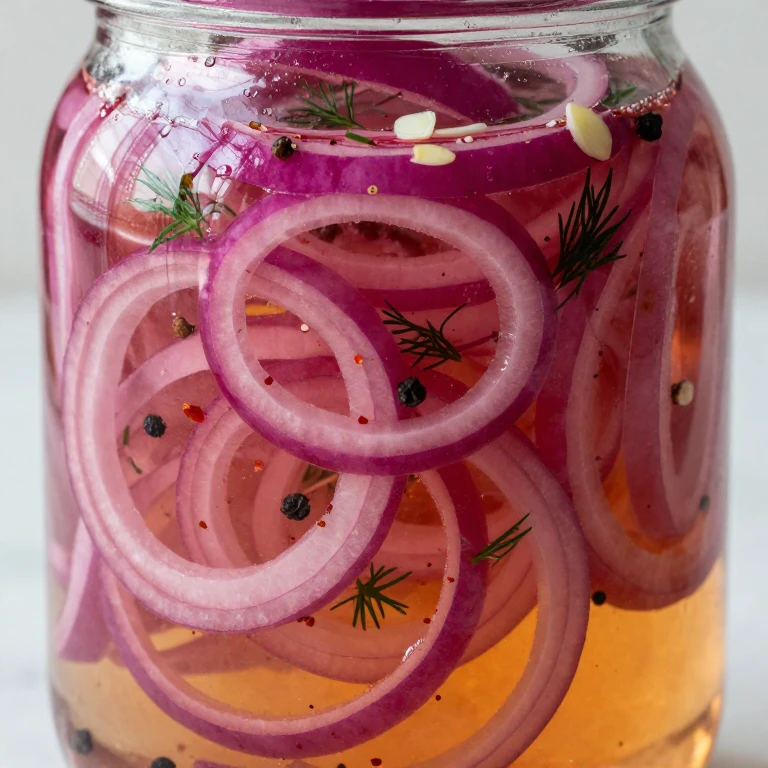
Vegan Pickled Onions Recipe With ACV and Dill
Ingredients
Method
- Slice red onions into thin rings (about 1/4-inch thick). Separate the rings into individual pieces and place them in a clean glass jar or heatproof container.
- In a small pot, combine apple cider vinegar, filtered water, organic cane sugar or maple syrup, and fine sea salt. Stir over medium heat for 2-3 minutes until the sugar and salt dissolve completely—you'll see no granules at the bottom.
- If using aromatics, scatter the dill sprigs, garlic slices, black peppercorns, and red pepper flakes (if desired) over the onions in the jar.
- Carefully pour the hot brine over the onions, making sure they're fully submerged. If needed, add a splash of cool water to cover them completely.
- Let the jar cool to room temperature for 15-20 minutes, then cover and refrigerate for at least 2 hours before using. The onions will continue to soften and absorb flavor as they chill.
- Taste after 4 hours. If you prefer a sharper tang, they're ready to eat. For deeper flavor, wait until the next day.