

Korean-inspired pickled onions hit different. The sharp vinegar bite, the gochujang warmth, the sesame nod at the end—this isn’t your grandmother’s pickle jar. I’ve built this recipe around one core idea: a quick refrigerator brine that keeps onions crisp while layering in savory depth and a whisper of heat. No canning equipment. No complicated ratios. Just onions, rice vinegar, gochujang, and about five minutes of active time.
What makes this version worth your time is the balance. Most pickled onion recipes swing toward pure acid or pure sweetness. This one threads the needle with gochujang as the anchor—it brings umami, color, and a controlled spice that doesn’t overpower. The sesame seeds aren’t decoration; they add a toasted nuttiness that makes these onions shine on bowls, over bulgogi, alongside grilled tofu, or even tucked into sandwiches. You’ll notice the onions stay crisp for days because the brine respects the vegetable instead of drowning it.
I make these in batches because they disappear fast. A jar in the fridge means you’re always ready to add complexity to a bowl or plate. Let’s build that brine together.
Quick Snapshot
- Prep Time: 10 minutes
- Cook Time: 0 minutes (cold brine)
- Total Time: 10 minutes (plus 30 minutes chill before serving)
- Yield: About 2 cups (4-6 servings as a condiment)
- Texture: Crisp, snappy onion with glossy brine
- Flavor Profile: Tangy, savory, lightly spicy with nutty sesame finish
- Skill Level: Easy
Why This Recipe Works
The rice vinegar-to-water ratio (1:1) gives you acidity without harshness. Rice vinegar has a softer edge than distilled or white vinegar, so the onions stay tender rather than tough. I’m using two tablespoons of gochujang per cup of liquid, which dissolves into the brine and coats each slice without creating a thick paste. That ratio took testing—too much and you mask the onion; too little and you lose the savory anchor.
The gochujang also brings natural sweetness and depth. I’m not adding extra sugar because the fermented chile paste handles that job. This keeps the brine balanced and prevents the onions from tasting like candy. The sesame seeds go in at the end, toasted first so they release their oil and aroma. Cold brine means no cooking step, which preserves the onion’s snap and keeps your stovetop free.
Cold brining also means these are ready in thirty minutes. The onions soften just enough to absorb the brine while staying crisp at the core. You’re not waiting days for fermentation or spending an hour canning. This is meal-prep friendly and fridge-friendly.
Ingredient Overview
- Onions: 1 pound red onions (about 2 large), thinly sliced
- Rice Vinegar: 1 cup unseasoned rice vinegar
- Water: 1 cup
- Gochujang: 2 tablespoons Korean red chile paste
- Sesame Oil: 1 teaspoon toasted sesame oil
- Sesame Seeds: 1 tablespoon white sesame seeds
- Garlic: 2 cloves, thinly sliced (optional)
- Scallion Whites: 2 scallion whites, sliced (optional)
- Salt: 1/4 teaspoon kosher salt
Red onions are your best choice here because they hold their color and stay crisp longer than yellow or white varieties. The thin slices matter—aim for 1/8-inch thickness so the brine penetrates evenly. Unseasoned rice vinegar is key. Seasoned rice vinegar has added sugar and salt, which throws off the balance I’ve built into this brine.
Gochujang is a fermented Korean red chile paste. You’ll find it in the Asian section of most grocery stores or online. It brings umami, controlled heat, and a subtle sweetness that makes this recipe Korean-inspired without being overly spicy. If you can’t find gochujang, sriracha works in a pinch, but the flavor profile shifts—you’ll get more heat and less depth. Toasted sesame oil is different from the neutral sesame oil in many kitchens; it has a deep, toasted aroma and shouldn’t be used for cooking. A teaspoon is enough to add nuttiness without overpowering.
Whirl Hook
This recipe’s signature move is gochujang as the brine anchor. It replaces the sugar-heavy sweetness of traditional pickles with savory umami and a balanced spice that works on any bowl, sandwich, or plate. The sesame finish is the texture contrast—toasted seeds add a subtle crunch and nutty aroma that makes these onions impossible to ignore.
Flavor Spin
The core twist here is swapping out the typical vinegar-sugar base for a gochujang-forward brine. Gochujang brings fermented depth, natural sweetness, and a controlled chile warmth that’s more sophisticated than a straight hot sauce. The rice vinegar stays soft and rounded, the sesame oil adds a toasted nuttiness, and the sesame seeds provide the finishing texture that makes you reach for another bite. This isn’t a traditional pickle—it’s a modern, bold condiment built for Korean-inspired bowls and beyond.
Whirl Factor
Flavor: Tangy, savory, with a whisper of heat and a toasted sesame finish that lingers. Texture: Crisp onion slices in a glossy, deeply flavored brine. The contrast between the sharp bite of the onion and the soft, umami-rich brine is what makes these addictive. You’re not just getting a sour condiment; you’re getting a flavor layer that makes every dish it touches more interesting.
Step-by-Step Instructions
- Prepare the onions: Peel and halve your red onions lengthwise. Slice them thinly (about 1/8-inch thick) against the grain so they stay crisp. Place the sliced onions in a clean glass jar or container. If you’re using garlic and scallion whites, add them now. They’ll infuse as the brine chills.
- Make the brine: In a small bowl, whisk together the rice vinegar and water. Add the gochujang and whisk until smooth. The paste will dissolve into the liquid—this takes about 30 seconds of steady whisking. Don’t skip this step; a lumpy brine won’t coat the onions evenly. Add the salt and sesame oil, and whisk once more.
- Pour and chill: Pour the brine over the onions until they’re fully submerged. Use a spoon to press them down gently so they stay under the liquid. Cover the jar and refrigerate for at least 30 minutes before serving. The onions will soften slightly and absorb the brine flavors as they chill.
- Toast and finish: While the onions chill, toast the sesame seeds in a small dry skillet over medium heat for 2-3 minutes, stirring often. You’ll smell the toasted aroma when they’re ready. Don’t walk away—sesame seeds burn fast. Pour the toasted seeds over the onions just before serving. The warm seeds will release their oil and add a final layer of aroma.
- Taste and adjust: After the first 30 minutes, taste a slice. If you want more heat, add another teaspoon of gochujang. If you want more tang, add another tablespoon of rice vinegar. These onions are forgiving—adjust to your preference.
Pro Tips for Best Results
- Onion thickness matters more than you’d think. Slice too thick and they stay crunchy but don’t absorb the brine. Slice too thin and they get mushy. The 1/8-inch sweet spot gives you crisp texture with full flavor absorption. Use a mandoline if you have one—it keeps slices uniform, which means even brining.
- Don’t skip the whisking step when dissolving gochujang. If you dump the paste into the liquid without whisking, it’ll clump at the bottom and create an uneven brine. Thirty seconds of whisking ensures the paste dissolves completely and coats every onion slice with color and flavor.
- Toast the sesame seeds fresh. Pre-toasted seeds lose their aroma after a few weeks. Toasting takes three minutes and transforms the final dish. The moment you smell that nutty aroma, pull them off the heat. They’ll continue to toast slightly as they cool.
- Keep the jar covered and cold. These onions stay crisp for up to two weeks in the fridge because cold slows oxidation and keeps the texture snappy. An uncovered jar in the fridge will start to soften after five days.
- Stir the jar every few days if you’re storing long-term. This keeps the brine distributed evenly and prevents the onions from settling into a packed layer at the bottom, which can cause browning.
Spin Options
Gochugaru Spice Boost
If you want more heat and texture, add 1/2 teaspoon of gochugaru (Korean red chile flakes) to the brine. These flakes stay suspended in the liquid and add a visible spice layer. The heat will build over 24 hours as the flakes infuse, so taste after a day and adjust. This version is bolder and works best on hearty bowls where the spice can shine.
Apple and Ginger Remix
Add one thin-sliced Granny Smith apple and 1/2 teaspoon of grated fresh ginger to the brine before pouring. The apple adds a subtle sweetness and crisp texture that plays against the savory gochujang. The ginger brings warmth and a slight peppery note. This version is lighter and works well on lighter proteins like grilled fish or chicken.
Garlic and Cilantro Spin
Increase the garlic to 4 cloves and add 1/4 cup of fresh cilantro leaves to the jar. Cilantro brings a bright, herbaceous note that softens the gochujang’s heat. This version leans more toward Southeast Asian flavors and pairs beautifully with Vietnamese or Thai bowls.
Whirl Finish
These pickled onions are ready to work on any plate. Scatter them over bibimbap, bulgogi bowls, or grain bowls where they’ll add tang and crunch. Layer them into sandwiches for a savory kick. Top grilled tofu or roasted vegetables. Use them as a condiment alongside Korean fried chicken. The brine is liquid gold—spoon it over rice or into soups for an instant umami boost. Store the jar in the fridge, and you’ll have a ready-to-use condiment for two weeks.
Serving Suggestions
The most obvious pairing is over a Korean bibimbap bowl where the pickled onions add tang and crunch to balance the richness of the egg and meat. I also love them alongside grilled bulgogi or kalbi—the acidity cuts through the smoke and richness of the meat beautifully. For something elevated, serve them on a charcuterie board with aged cheeses and crusty bread. The gochujang brine brings savory depth that plays against sharp aged cheddar or tangy blue cheese.
Storage & Reheating
Store these onions in an airtight glass jar in the refrigerator for up to two weeks. The cold keeps them crisp and prevents the brine from oxidizing. The sesame seeds can be added at serving time or mixed in with the onions—they’ll soften slightly over time, so fresh toasted seeds always taste better. Don’t freeze these onions; the ice crystals will break down the cell structure and turn them mushy. The brine keeps indefinitely in the fridge, so you can reuse it for a second batch of onions. Just strain out the old onion pieces, add fresh sliced onions, and chill again. The flavor will be slightly less intense the second time, but still delicious.
FAQ
Can I use white or yellow onions instead of red?
You can, but red onions are the better choice. They stay crisp longer and hold their color beautifully in the brine. White onions will soften faster and turn pale pink, losing visual appeal. Yellow onions work but lack the slight sweetness that red onions bring to the brine.
What if I don’t have gochujang?
Sriracha works as a substitute at the same ratio (2 tablespoons per cup of brine), but the flavor profile shifts toward pure heat rather than umami. Miso paste (1 tablespoon) mixed with a pinch of cayenne pepper also works and brings similar depth. Neither will taste identical, but both will give you a savory, spiced pickled onion.
Do I need to cook the brine?
No. The cold brine method is one of the strengths of this recipe. Cooking would soften the onions and change the texture profile. The acid in the vinegar is enough to preserve the onions safely in the refrigerator. This is a fresh, cold-brined condiment, not a shelf-stable canned pickle.
How long do these need to sit before eating?
Thirty minutes is the minimum for the onions to soften slightly and absorb the brine. If you’re in a hurry, they’re perfectly good at the 30-minute mark. For deeper flavor, let them sit for 2-4 hours. After 24 hours, the gochujang flavor becomes more integrated and the onions taste more unified. The flavor peaks around day three and stays strong through day ten.
Can I make these ahead for meal prep?
Absolutely. These are ideal for meal prep because they improve with time and last two weeks in the fridge. Make a batch on Sunday, and you have a ready-to-use condiment for the entire week. Just add fresh sesame seeds at serving time for the best texture and aroma.
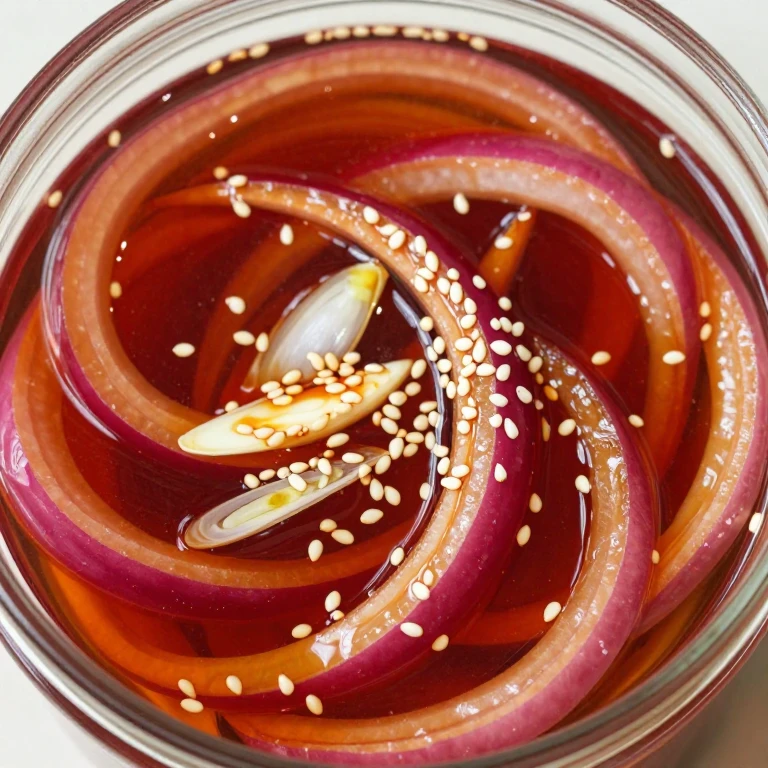
Korean-Inspired Pickled Onions With Gochujang & Sesame
Ingredients
Method
- Peel and halve your red onions lengthwise. Slice them thinly (about 1/8-inch thick) against the grain so they stay crisp. Place the sliced onions in a clean glass jar or container. If you're using garlic and scallion whites, add them now. They'll infuse as the brine chills.
- In a small bowl, whisk together the rice vinegar and water. Add the gochujang and whisk until smooth. The paste will dissolve into the liquid—this takes about 30 seconds of steady whisking. Add the salt and sesame oil, and whisk once more.
- Pour the brine over the onions until they're fully submerged. Use a spoon to press them down gently so they stay under the liquid. Cover the jar and refrigerate for at least 30 minutes before serving. The onions will soften slightly and absorb the brine flavors as they chill.
- While the onions chill, toast the sesame seeds in a small dry skillet over medium heat for 2-3 minutes, stirring often. You'll smell the toasted aroma when they're ready. Pour the toasted seeds over the onions just before serving.
- After the first 30 minutes, taste a slice. If you want more heat, add another teaspoon of gochujang. If you want more tang, add another tablespoon of rice vinegar. These onions are forgiving—adjust to your preference.