

There’s a moment in every kitchen when you realize that the best toppings often come from the simplest ingredients. I’ve found that pickled onions—those bright, tangy rounds that transform a taco, salad, or bowl—don’t need to be salt-heavy to deliver serious impact. In fact, I’ve learned that when you reduce the sodium and lean harder into vinegar, herbs, and citrus, you get something sharper, cleaner, and more interesting than the traditional jar. That’s what I’m making today: low-sodium pickled onions that prove you don’t sacrifice flavor when you cut the salt.
This recipe came from frustration, honestly. I wanted pickled onions in my kitchen rotation, but I was tired of the sodium load in most recipes. So I started experimenting with higher vinegar-to-water ratios, minimal sea salt, and flavor boosters like fresh dill, black peppercorns, and lemon zest. The result is a quick refrigerator pickle that’s crisp, tangy, and ready in hours. No canning equipment, no fuss—just a jar and a method that works every single time.
What Makes This Dish Special
The signature move here is the vinegar-forward brine. By using a 2:1 ratio of vinegar to water instead of the typical 1:1, I’ve created a brine that’s bold enough to carry flavor without relying on salt for depth. The acidity does the heavy lifting—it preserves, it sharpens, and it makes every bite snap.
The second distinguishing factor is the herb and citrus layer. Fresh dill, peppercorns, and lemon zest aren’t afterthoughts here—they’re the flavor spine. They infuse the brine with complexity that makes these onions taste intentional, not like a condiment you grabbed from a shelf. When you bite into these, you taste the herbs first, then the acid, then the onion’s natural sweetness underneath.
Finally, there’s the texture. Because I’m using a quick-pickle method rather than traditional canning, the onions stay crisp. They don’t soften into mush. They maintain a bite that makes them useful across dozens of applications—from breakfast tacos to grain bowls to charcuterie boards.
Flavor Profile Breakdown
The base is vinegar-driven acidity with a whisper of salt—enough to enhance but not dominate. The mid-palate is where the herbs live: dill brings an anise-like freshness, peppercorns add subtle heat and spice, and lemon zest introduces bright citrus that lifts the whole brine. The finish is the onion itself, which becomes sweeter and softer as it sits, creating a pleasant contrast to the sharp vinegar bite. The interplay between acid and the onion’s natural sugars creates a balanced, crave-able flavor that works as a topping or a side.
Ingredient Highlights
Red onions are the star here because they hold their shape during pickling and their natural sugars play beautifully against the vinegar. I use about 1.5 pounds, sliced into thin rings so they pickle evenly and quickly.
Apple cider vinegar is my choice for its subtle sweetness and complexity. White vinegar works too if you prefer something sharper, but I find apple cider gives these onions a rounder finish. The vinegar is doing the preservation work here, so don’t skip it or swap it for something weaker.
Sea salt is used sparingly—just 1 teaspoon for the whole batch. This is where low-sodium happens. If you’re sensitive to sodium, you can reduce it to ½ teaspoon, though you’ll lose a tiny bit of texture enhancement. For a no-salt version, skip it entirely and let the herbs and vinegar carry all the flavor.
Fresh dill and lemon zest are non-negotiable for me. If you don’t have fresh dill, dried dill works in a pinch (use half the amount), but fresh is sharper and more alive. Lemon zest adds brightness without adding liquid, which keeps the brine balanced.
Whirl Hook
Here’s the twist: most pickled onions rely on salt and sugar to build flavor. I’m flipping that. A vinegar-forward brine with minimal salt, bold herbs, and citrus zest creates a low-sodium pickle that’s sharper and more interesting than the traditional version. The texture contrast is crisp onion against silky, herb-infused brine—a combination that works on everything from eggs to salads to bowls.
Flavor Spin
The core twist is the 2:1 vinegar-to-water ratio combined with fresh herb infusion and zero added sugar. This approach delivers bold, clean flavor without sodium creep. The brine tastes intentional—not like a generic condiment, but like something you made for a reason.
Whirl Factor
Crisp, tangy onion rings meet a bright, herb-forward brine. The texture contrast is immediate: the snap of the onion against the silky liquid. The flavor contrast is just as sharp: the onion’s natural sweetness against vinegar bite, rounded out by fresh dill and lemon zest. This is a topping that adds texture and brightness to any plate.
Cooking Walkthrough
Ingredients:
- 1.5 pounds red onions (about 3-4 medium onions)
- 1.5 cups apple cider vinegar
- 0.75 cups water
- 1 teaspoon sea salt
- 2 teaspoons black peppercorns
- 3-4 fresh dill sprigs (or 1.5 teaspoons dried dill)
- Zest of 1 lemon (about 1 tablespoon)
- 2 garlic cloves, sliced (optional)
- 1 teaspoon coriander seeds (optional, for warmth)
Step 1: Prepare the Onions
Slice your red onions into thin rings—about ¼-inch thick. I do this by cutting the onion in half from root to tip, then slicing across the grain. Thin rings pickle faster and distribute more evenly in the jar. Place the sliced onions in a clean quart-sized jar or container.
Step 2: Make the Brine
In a small saucepan, combine the apple cider vinegar, water, and sea salt. Bring it to a simmer over medium heat—you’ll see small bubbles breaking the surface. Stir until the salt dissolves completely. This takes about 2-3 minutes. You’re not boiling the brine; you’re just heating it enough to help the salt dissolve and to lightly soften the onions when you pour it over.
Step 3: Add Aromatics to the Jar
While the brine heats, add the peppercorns, fresh dill sprigs, lemon zest, and garlic slices (if using) directly to the jar with the onions. If you’re using coriander seeds for extra warmth, add them now. These aromatics will infuse the brine as it cools, so they need to be in the jar before you pour the liquid.
Step 4: Pour the Hot Brine
Carefully pour the hot brine over the onions and aromatics. The liquid should cover the onions completely. If you need extra liquid, top with a splash of water or vinegar in a 3:1 ratio. Let the jar sit at room temperature for about 10 minutes—this gives the onions time to start softening slightly while the brine is still warm.
Step 5: Cool and Refrigerate
Once the jar reaches room temperature (about 20-30 minutes), cover it and move it to the refrigerator. The onions will continue to pickle as they chill. They’re ready to eat after 2 hours, but they taste best after 4-6 hours when the flavors have fully melded. They’ll keep for up to 3 weeks in the refrigerator.
Chef Notes
I always slice my onions as thin as possible. Thin rings pickle faster and distribute more evenly throughout the brine. If you slice them too thick, they take longer to soften and the flavor doesn’t penetrate as deeply.
In my kitchen, I’ve learned that the brine doesn’t need to be boiling. A gentle simmer is enough to help the salt dissolve and to warm the onions slightly. If you boil the brine hard, the onions can soften too much and lose that crisp texture that makes them special.
I always use fresh dill when I can get it. Dried dill works, but fresh has a brighter, more alive quality that elevates the whole pickle. If you’re buying fresh dill specifically for this, store it in a damp paper towel in the fridge and it’ll last about a week.
You’ll notice that the onions taste sharper on day one and mellow slightly by day three. Both are good—it just depends on whether you want maximum vinegar bite or a more balanced flavor. I tend to use them within the first week when the brightness is still front and center.
Whirl Finish
These pickled onions are ready to serve straight from the jar. Drain them lightly if you want to reduce the brine on your plate, or serve them with a spoonful of brine for extra tang. Store them in the refrigerator in their jar—they’ll keep for up to 3 weeks. The flavor actually improves over the first few days as the herbs and citrus fully infuse the brine.
Texture & Taste Expectations
When you open the jar, you’ll smell bright vinegar and fresh dill immediately. The onions themselves are deep purple-red, slightly translucent at the edges where the brine has begun to soften them, but still firm in the center. When you eat them, you get a crisp bite followed by a sharp vinegar tang, rounded out by herbaceous dill and subtle lemon brightness. The onion’s natural sweetness comes through underneath, creating a balanced, crave-able flavor that’s neither one-note nor overwhelming. They’re tangy without being harsh, and bright without being acidic in an unpleasant way.
Customization Ideas
- Spicy Version: Add 2-3 sliced red chili peppers or ½ teaspoon red pepper flakes to the jar. The heat will infuse the brine and the onions over a few hours. This works beautifully on tacos or grain bowls.
- Warm Spice Variation: Add 1 teaspoon coriander seeds, ½ teaspoon mustard seeds, and a small piece of cinnamon stick. This creates a more complex, slightly warm flavor that pairs beautifully with roasted vegetables or pulled pork.
- Herbal Shift: Swap the dill for fresh thyme or tarragon if you want a different flavor profile. Tarragon brings an almost anise-like quality that’s lovely with fish or chicken dishes.
- Lower Sodium Option: Reduce the sea salt to ½ teaspoon or eliminate it entirely. The vinegar will still preserve the onions, though you’ll lose a tiny bit of texture enhancement. The flavor will be sharper and more vinegar-forward.
- Sugar-Free/Keto: This recipe contains no added sugar, so it’s already keto-friendly. The sweetness comes entirely from the onions themselves.
Pairing Ideas
These pickled onions are endlessly versatile. I use them on breakfast tacos with scrambled eggs and avocado—the brightness cuts through the richness perfectly. They’re also stunning on grain bowls with roasted vegetables and a grain like quinoa or farro, where they add a sharp counterpoint to earthy flavors. For something unexpected, try them on a charcuterie board alongside sharp cheeses and cured meats. The vinegar and herbs complement aged cheddar or gouda beautifully, and they add a fresh element that balances the richness of the board.
Spin Options
Remix 1: Warm Spice Pickle — Add 1 teaspoon coriander seeds, ½ teaspoon mustard seeds, and a small cinnamon stick to the brine. This creates a more complex flavor that pairs beautifully with roasted root vegetables or pulled pork sandwiches. The warmth of the spices mellows the vinegar slightly, creating a more rounded profile.
Remix 2: Herbal Garden Pickle — Use a mix of fresh herbs instead of just dill. Combine dill, thyme, and a small amount of fresh rosemary. This creates a more complex herbal profile that works beautifully on roasted chicken or fish dishes. The combination of herbs makes these feel more sophisticated and intentional.
Remix 3: Spicy Chili Pickle — Add 2-3 sliced red chili peppers or ½ teaspoon red pepper flakes to the jar. The heat infuses the brine over a few hours, creating a spicy-tangy combination that’s perfect on tacos, nachos, or any dish that needs a sharp, spicy kick.
FAQ
How long do these pickled onions last in the refrigerator?
They’ll keep for up to 3 weeks in a sealed jar in the refrigerator. The flavor actually improves over the first few days as the herbs and citrus fully infuse. After about a week, they start to mellow slightly, so I tend to use them within the first 7-10 days when the brightness is most pronounced.
Can I use white onions instead of red onions?
Yes, white onions work fine and will pickle just as well. Red onions have a slightly sweeter flavor and a beautiful color that makes the finished pickle more visually interesting, so I prefer them. But if that’s what you have on hand, the method is identical.
Do I need to sterilize the jar before using it?
For a quick refrigerator pickle that you’re storing in the fridge, a clean jar is sufficient. Wash it thoroughly with hot soapy water and rinse well. If you want extra assurance, run it through the dishwasher or pour boiling water through it just before use.
Can I make a larger batch and store it in multiple jars?
Absolutely. The recipe scales easily. Just maintain the same ratios: 2 parts vinegar to 1 part water, 1 teaspoon salt per 1.5 pounds of onions, and adjust the herbs proportionally. Make the brine in a larger pot and divide it among clean jars with the onions and aromatics.
What if I don’t have fresh dill?
Dried dill works, though it’s less vibrant. Use about half the amount (roughly ¾ to 1 teaspoon dried dill). You could also substitute fresh thyme, tarragon, or even a combination of herbs. The key is having some herbal element to balance the vinegar.
Can I use these pickled onions on other dishes besides tacos?
Definitely. They’re wonderful on salads, grain bowls, burgers, sandwiches, charcuterie boards, roasted vegetables, and even as a topping for fish or chicken. Any dish that benefits from a sharp, tangy, herbaceous element is a good candidate.
Is this recipe truly low-sodium?
Yes. At 1 teaspoon of sea salt for the entire batch (which makes about 2 cups of pickled onions), each serving contains minimal sodium. For comparison, most traditional pickled onion recipes use 2-3 teaspoons of salt. If you’re very sodium-sensitive, you can reduce it to ½ teaspoon or eliminate it entirely—the vinegar and herbs will still create a delicious pickle.
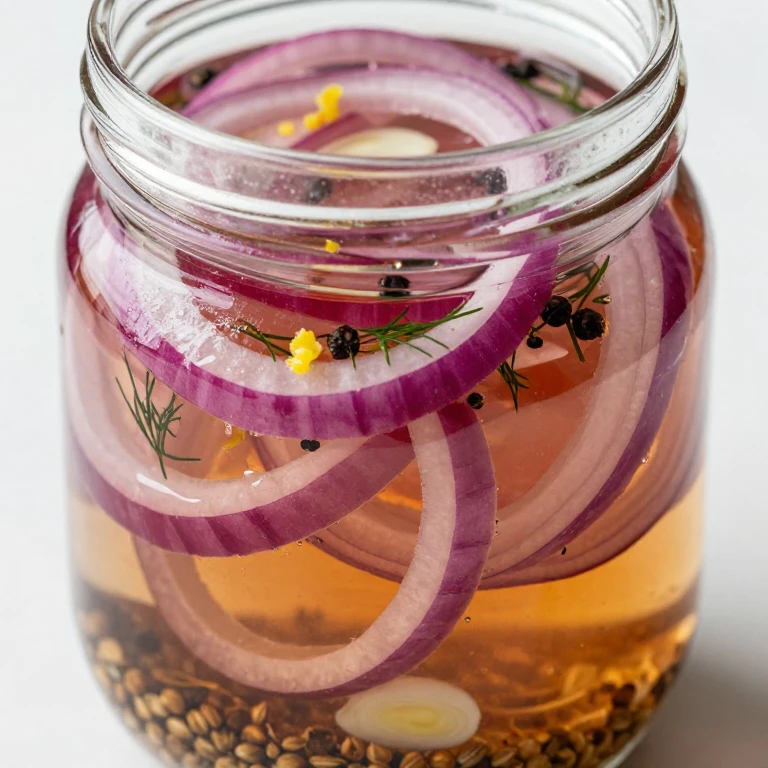
Low-Sodium Pickled Onions Recipe With Fresh Herbs
Ingredients
Method
- Slice red onions into thin rings, about ¼-inch thick, by cutting each onion in half from root to tip, then slicing across the grain. Place the sliced onions in a clean quart-sized jar or container.
- In a small saucepan, combine apple cider vinegar, water, and sea salt. Bring to a simmer over medium heat—you'll see small bubbles breaking the surface. Stir until the salt dissolves completely, about 2-3 minutes. Do not boil hard.
- While the brine heats, add peppercorns, fresh dill sprigs, lemon zest, garlic slices (if using), and coriander seeds (if using) directly to the jar with the onions.
- Carefully pour the hot brine over the onions and aromatics. The liquid should cover the onions completely. If needed, top with a splash of water or vinegar in a 3:1 ratio. Let the jar sit at room temperature for about 10 minutes.
- Once the jar reaches room temperature (about 20-30 minutes), cover it and move it to the refrigerator. The onions are ready to eat after 2 hours, but taste best after 4-6 hours when flavors have fully melded. Store in the refrigerator for up to 3 weeks.