

There’s a moment in every cook’s life when a jar of pickled onions changes everything. Maybe it’s the first time you pile them onto a pulled pork sandwich, or scatter them across a charcuterie board and watch them disappear. That sharp, aromatic bite cuts through richness in a way nothing else quite does. But here’s what I’ve learned: the difference between forgettable pickled onions and the ones people ask for by name comes down to one thing—the brine itself. A good brine isn’t just vinegar and salt. It’s a flavor foundation.
This bay leaf pickled onions recipe is my answer to that foundation. I’ve built it around warm, herbal aromatics that transform a simple red onion into something with real depth. The bay leaves bring an almost floral note, the peppercorns add subtle heat, and the garlic rounds everything out. It’s a quick refrigerator pickle—no canning equipment, no intimidation—that’s ready to use in three days and keeps for weeks. If you’ve ever wondered how to make pickled onions that actually taste like something, this is where to start.
What Makes This Dish Special
The Whirl Hook here is straightforward: this brine method builds complexity through layering. Most pickled onion recipes throw everything into a pot and call it done. I steep the aromatics separately in the hot brine, which lets each flavor develop without competing. The bay leaves infuse slowly, the peppercorns crack just enough to release their oils, and the garlic mellows into something almost sweet by day two.
The texture contrast matters just as much. You’re starting with raw red onions—crisp, almost brittle. The hot brine softens them just enough to make them tender without turning them mushy. By day three, they’ve absorbed the brine but still have bite. That’s the sweet spot. They’re not limp. They’re not raw. They’re balanced.
The other thing that sets this apart: the ratio. Too much vinegar and you’ve got a sour bomb. Too little and the onions spoil faster. I’ve dialed this in so the acidity is present but not aggressive—it’s a supporting player, not the lead. The salt preserves without making them taste like a salt lick. This is a brine designed to work, not to show off.
Flavor Profile Breakdown
The base is clean and bright—red wine vinegar carries the acidity without the sharp bite of white vinegar. That’s intentional. On the mid-palate, the bay leaf introduces a subtle herbal warmth, almost like a whisper of thyme crossed with something floral. The peppercorns add a dry spice note that builds slowly. You don’t taste them immediately; they reveal themselves on the finish. The garlic starts sharp and rounds into something almost caramelized by day three. The interplay is salt balancing acid, fat (from the onion itself) rounding the vinegar, and warmth from the aromatics creating depth. This isn’t a one-note pickle. It’s layered.
Ingredient Highlights
Red onions are non-negotiable here. They’re sweeter than yellow onions and their color bleeds into the brine, creating that gorgeous magenta hue. If you only have yellow onions, they’ll work, but you’ll lose the visual drama and some of the natural sweetness. Red wine vinegar is my choice because it’s less harsh than distilled vinegar and carries subtle fruit notes that complement the bay. White wine vinegar works too if that’s what you have, but adjust your expectations slightly—it’ll be sharper.
Bay leaves are the anchor. Use fresh if you can find them; dried works fine, but the flavor is more muted. I always use two leaves for a quart of brine because one leaf gets lost. Peppercorns should be whole and fresh—pre-ground pepper will turn to dust in the brine. Black peppercorns are classic, but if you want a milder spice note, white peppercorns work. Garlic cloves should be peeled but left whole so they infuse without falling apart. If you substitute with garlic powder, you’ll lose the slow mellowing that makes this special—skip it.
Whirl Hook
The signature move here is the steep-and-cool method. You heat the brine to extract maximum flavor from the aromatics, then cool it before adding the onions. This prevents overcooking the onions while letting the bay, peppercorns, and garlic fully develop. The result: crisp onions with complex, layered flavor. That’s the texture contrast and depth you’re after.
Cooking Walkthrough
Ingredients:
- 2 pounds red onions (about 4 medium onions)
- 1 1/2 cups red wine vinegar
- 1 1/2 cups water
- 2 tablespoons kosher salt
- 2 bay leaves
- 1 tablespoon whole black peppercorns
- 4 garlic cloves, peeled and whole
- Optional: 1 teaspoon mustard seeds, 1/2 teaspoon red pepper flakes
Steps:
1. Prepare the onions. Trim the root and stem ends from the red onions, then peel away the papery skin. Rinse them under cold water. Slice them into 1/4-inch rings—not paper-thin, but not thick either. You want them to pickle evenly. If your rings are too thick, they’ll stay crunchy in the center. Too thin and they’ll soften into mush by week two. Put the sliced onions into a clean quart-sized glass jar or container.
2. Build the brine. In a small saucepan, combine the red wine vinegar, water, and kosher salt. Stir until the salt dissolves completely. Add the bay leaves, whole peppercorns, and garlic cloves. If you’re using mustard seeds or red pepper flakes, add them now. Bring the mixture to a boil over medium-high heat. You’ll see the brine bubble and the aromatics will release their oils into the liquid. Let it boil for one minute, then remove from heat.
3. Cool the brine. This is the step most recipes skip, and it’s why their pickles are either mushy or undercooked. Let the brine cool to room temperature—about 30 to 40 minutes. You can speed this up by transferring it to a bowl and setting it in an ice bath, but patience works fine. You want the brine warm enough that it will infuse the onions, but cool enough that it won’t cook them soft.
4. Pour and refrigerate. Once the brine is cool, pour it over the onions in the jar, making sure all the sliced onions are submerged. If some float above the liquid, they’ll oxidize and turn brown. Use a small plate or parchment paper to weigh them down if needed. Cover the jar and refrigerate. The onions will be lightly pickled in 24 hours, fully flavored by day three, and at their peak from day three through week three.
5. Taste and adjust. On day two, open the jar and taste a ring. If it tastes too vinegary, you can dilute the brine slightly with water. If it’s too mild, add a splash more vinegar and let it sit another day. This is your chance to dial in the flavor to your preference.
Chef Notes
I always make a double batch because these disappear faster than I expect. Once people taste them, they find reasons to use them everywhere—on tacos, in grain bowls, alongside roasted chicken, tucked into sandwiches. In my kitchen, I’ve learned that the quality of your bay leaves matters more than most people think. Old bay leaves that have been sitting in the pantry for two years will be dusty and flavorless. Fresh dried bay leaves (from the current season) make a noticeable difference. I buy mine from a spice shop rather than the grocery store because the turnover is faster.
Another thing I’ve found: don’t skip the cooling step. I know it adds time, but hot brine will soften the onions’ cell structure too much. You want them to stay crisp. The aromatics infuse better in a cooling brine anyway—the flavors develop more evenly.
If you’re making these for a specific dish—say, a pulled pork sandwich—taste your onions the day before you plan to serve them. They evolve. Day one tastes bright and sharp. Day three tastes more rounded and complex. Knowing where you are in the timeline helps you serve them at their best.
Whirl Factor
The texture contrast is the whole game: crisp onion rings against a layered, aromatic brine. The bay leaf brings warmth, the peppercorns add dry spice, and the garlic rounds it all out. By day three, the flavors have merged into something that tastes intentional and balanced, not like you just threw vinegar at some onions and called it done.
Whirl Finish
These pickled onions keep for three weeks in the refrigerator, covered. They’re best used within the first two weeks when the onions are still crisp and the brine is bright. After that, they soften slightly and the brine mellows, which is fine for cooking applications but less ideal for fresh garnishes. Store them in a glass jar with a tight-fitting lid. The brine can be reused once—strain out the old onions and aromatics, add fresh onions, and refrigerate. By the second use, the brine is gentler and works well for quick pickles (ready in 24 hours). Don’t reuse beyond that.
Texture & Taste Expectations
When you open the jar on day three, you’ll see deep magenta onion rings suspended in a ruby-colored brine. The aroma is herbal and warm—the bay leaf and peppercorns are unmistakable. Bite into a ring and you’ll get immediate crispness, then a gentle warmth from the peppercorns, followed by the soft mellow note of the garlic. The vinegar is present but not aggressive. The salt is balanced. The onions have absorbed the brine enough to taste intentional, but they haven’t lost their structure. This is what success looks like.
Spin Options
Spiced Variation: Add 1/2 teaspoon red pepper flakes and 1 teaspoon mustard seeds to the brine. This version is sharper and brings heat. It’s excellent on charcuterie boards and with fatty meats like pulled pork or brisket.
Mild Variation: Use only one bay leaf and reduce the peppercorns to 1 teaspoon. Add 2 fresh thyme sprigs instead. This version is softer and more herbaceous—better for delicate applications like salads or fish plates.
Quick Pickle Variation: If you need pickled onions in 24 hours, use this method but increase the vinegar to 1 3/4 cups and reduce the water to 1 1/4 cups. The higher acidity speeds up the pickling process. They won’t be as complex, but they’ll be ready faster and still taste good.
Customization Ideas
- Sweetness: If you like a touch of sweetness, add 1 tablespoon of honey or sugar to the brine. Stir it in while the brine is hot so it dissolves completely. This mellows the vinegar and brings out the onion’s natural sweetness.
- Heat: For more spice, add red pepper flakes, whole dried chiles, or fresh jalapeño slices. Add them to the brine before heating so they infuse fully.
- Herb swaps: If you don’t have bay leaves, use fresh rosemary sprigs or thyme. The flavor will be different but still good. Avoid dried herbs other than bay—they tend to turn dusty in the brine.
- Vinegar swaps: White wine vinegar works but tastes sharper. Apple cider vinegar adds sweetness. Rice vinegar makes them milder. Adjust quantities based on the vinegar’s acidity—stronger vinegars need slightly less volume.
- Garlic intensity: Use more garlic cloves if you want a garlicky brine, or skip the garlic entirely if you prefer a cleaner flavor. The brine works either way.
Pairing Ideas
These pickled onions are built for richness. Pile them on pulled pork sandwiches where they cut through the fat and smoke. Scatter them across a charcuterie board with aged cheeses and cured meats—the acidity and crispness are exactly what those pairings need. For something unexpected, try them alongside roasted duck or fatty fish like mackerel. The aromatic warmth complements the meat without competing. On grain bowls, they add brightness and crunch. In tacos, they’re essential—especially with carnitas or al pastor where you need acid to balance richness.
FAQ
Can I use white onions instead of red onions?
Yes, but you’ll lose the color. White onions are slightly sharper and less sweet than red onions, so the pickle will taste brighter and more vinegary. If you use them, consider adding 1/2 teaspoon of sugar to the brine to balance the acidity. Yellow onions work too and fall somewhere in the middle flavor-wise.
How long do these keep?
In the refrigerator, three weeks. The onions stay crisp for about two weeks, then gradually soften. After week three, they’re still safe to eat but the texture degrades. The brine can be reused once for a fresh batch of onions, but I don’t recommend reusing it twice.
Do I need to sterilize the jar?
For refrigerator pickles, no. Just wash the jar in hot soapy water and dry it. Since these are stored cold and eaten within three weeks, sterilization isn’t necessary. If you want to can them for shelf storage, that’s a different process and requires proper canning methods.
Can I make these without bay leaves?
Yes, but they’ll taste less complex. Bay leaves bring a subtle herbal warmth that’s hard to replicate exactly. If you don’t have them, use fresh rosemary or thyme sprigs instead. The flavor will be different but still good. Alternatively, just use the peppercorns and garlic—the pickle will be simpler but still tasty.
Why do my pickled onions taste too vinegary?
The most common reason is the ratio. If your brine has too much vinegar relative to water, it’ll be sharp. Use the ratio in this recipe: 1.5 parts vinegar to 1.5 parts water. If you’ve already made them and they’re too sour, dilute the brine with water—add 1/4 cup at a time and taste until it’s balanced.
Can I use fresh bay leaves instead of dried?
Yes, and they’re actually better. Use three fresh bay leaves instead of two dried ones because fresh leaves are milder. Fresh bay brings a brighter, more floral note. If you have access to a bay laurel plant or can find fresh bay at a farmers market, it’s worth using.
What’s the best way to serve these?
Cold, straight from the jar. They’re crispest when they’re cold. If you need them warm (say, for a hot sandwich), warm them gently in the brine on the stovetop, but they’ll soften slightly. I prefer them cold, which is why they work so well on sandwiches and boards where the contrast between the cold pickle and warm or rich food matters.
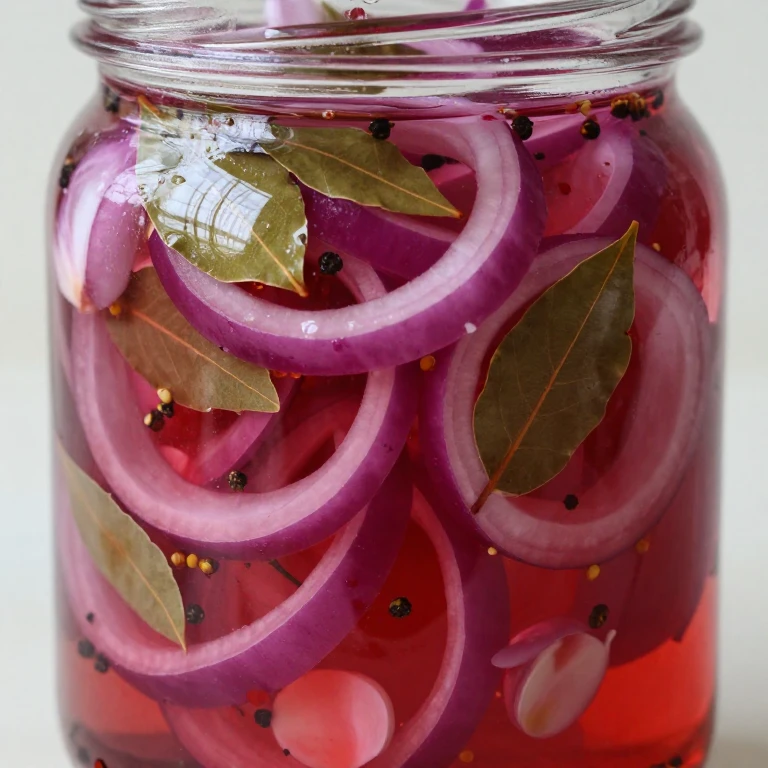
Bay Leaf Pickled Onions Recipe, Aromatic and Savory
Ingredients
Method
- Trim the root and stem ends from the red onions, then peel away the papery skin. Rinse them under cold water. Slice them into 1/4-inch rings. Put the sliced onions into a clean quart-sized glass jar or container.
- In a small saucepan, combine the red wine vinegar, water, and kosher salt. Stir until the salt dissolves completely. Add the bay leaves, whole peppercorns, and garlic cloves. Add mustard seeds or red pepper flakes if using. Bring the mixture to a boil over medium-high heat. Let it boil for one minute, then remove from heat.
- Let the brine cool to room temperature, about 30 to 40 minutes. You can speed this up by transferring it to a bowl and setting it in an ice bath, but patience works fine.
- Once the brine is cool, pour it over the onions in the jar, making sure all the sliced onions are submerged. Cover the jar and refrigerate. The onions will be lightly pickled in 24 hours and fully flavored by day three.
- On day two, open the jar and taste a ring. If it tastes too vinegary, dilute the brine slightly with water. If it's too mild, add a splash more vinegar and let it sit another day.