

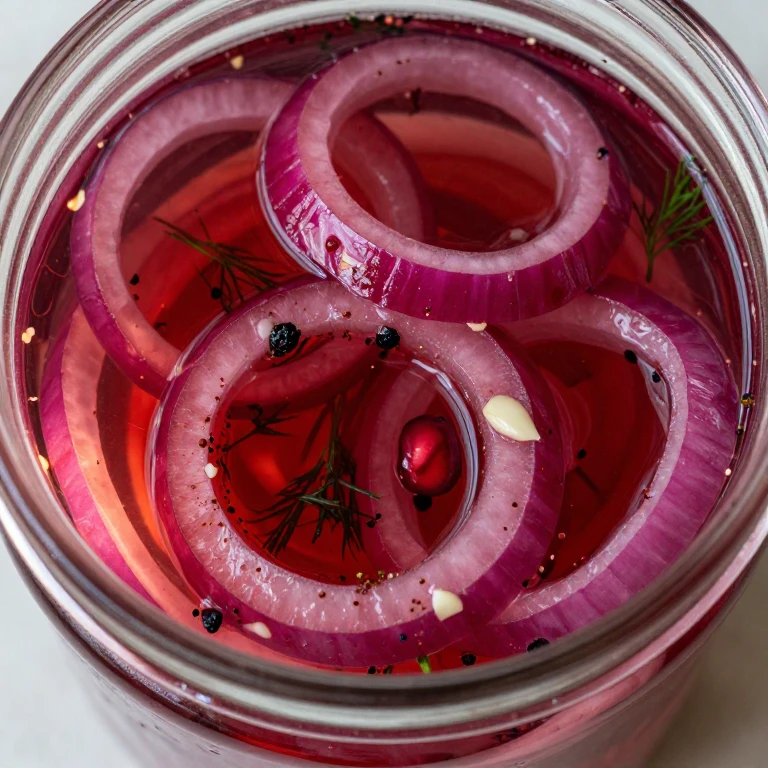
Turkish pickled onions with sumac and pomegranate molasses are the crisp, tart-sweet condiment that transforms any plate. I’ve found that blanching thin-sliced red onions before the quick brine keeps them snappy instead of mushy, while sumac adds citrus lift and pomegranate molasses brings subtle depth. These refrigerator pickles are ready in 2 hours, last 3 weeks in the fridge, and pair with everything from kebabs and köfte to mezze platters and grain bowls. If you’ve ever tasted soğan piyazı or reached for a bright pickle to cut through rich food, this is your new go-to.
Why You’ll Love This
- Ready in 2 hours with just 15 minutes of active prep — no canning equipment needed
- Stays crisp and snappy for 3 weeks in the fridge, making it perfect for meal prep and entertaining
- Sumac and pomegranate molasses create a tart-sweet flavor that’s way more interesting than plain vinegar pickles
- Works with any protein or grain bowl — kebabs, köfte, roasted chicken, falafel, or rice pilafs all benefit from the bright acidity
- One batch goes a long way; a small jar sits in your fridge ready to garnish whenever you need it
Ingredient Breakdown
For the Pickled Onions
- 1 pound red onions (about 3 medium), thinly sliced into rings
- 1 cup red wine vinegar or distilled white vinegar
- 3/4 cup water
- 2 tablespoons pomegranate molasses
- 1 1/2 tablespoons sumac
- 1 tablespoon kosher salt
- 1 teaspoon sugar
- 3-4 whole cloves garlic, smashed
- 1/2 teaspoon black peppercorns
- 3-4 fresh dill sprigs or parsley stems (optional but recommended)
The sumac is the star here — it’s tart and citrusy without being acidic, so it balances the vinegar beautifully. If you can’t find pomegranate molasses, a touch of honey or maple syrup works, though you’ll lose that deep fruity note. Dill or parsley stems add herbal brightness without overpowering the brine.
Whirl Hook
The twist that makes these pickles special is the combination of sumac’s citrus punch and pomegranate molasses’ subtle sweetness — it’s not just vinegar and salt. I’m blanching the onions first so they stay crisp instead of becoming soft and mushy. That texture contrast between the bright, snappy onion and the complex, layered brine is what makes you reach for these again and again.
Flavor Spin
This isn’t a basic vinegar pickle. The sumac delivers a lemony, slightly fruity note that feels fresh and modern, while pomegranate molasses adds depth without being cloying. Together with red wine vinegar, you get tart, complex, and balanced — the kind of pickle that makes people ask what’s in it. The garlic and peppercorns add subtle spice, and the dill or parsley stems give you an herbal lift that ties everything to Turkish and Mediterranean flavors.
Step-by-Step
- Bring a large pot of water to a rolling boil. Slice the red onions into thin rings (about 1/8 inch thick) — don’t worry about separating them perfectly; they’ll fall apart naturally in the brine.
- Add the onion slices to the boiling water and blanch for 2-3 minutes, stirring once halfway through. The onions should lose their raw edge but still feel firm when you pinch one — they should not be soft.
- Drain the onions in a colander and let them cool for 2-3 minutes while you prepare the brine.
- In a medium saucepan, combine the vinegar, water, pomegranate molasses, sumac, salt, and sugar. Bring to a gentle simmer over medium heat, stirring until the salt and sugar dissolve completely — about 2 minutes. Taste the brine; it should be tart, slightly sweet, and balanced. If it tastes too sharp, add 1 tablespoon more water.
- Remove the brine from heat and add the smashed garlic cloves, black peppercorns, and dill or parsley stems if using.
- Pack the cooled onions into a clean glass jar or container, then pour the warm brine over them until they’re completely submerged. The onions will float slightly at first; that’s normal.
- Let the jar cool to room temperature, about 15-20 minutes, then cover and refrigerate. The pickles will taste good after 2 hours, but the flavor deepens after 24 hours. They’ll keep for up to 3 weeks in the fridge.
Visual Cooking Timeline
- 0:00 — Slice onions into thin rings, bring water to boil
- 0:05 — Blanch onions for 2-3 minutes, drain and cool
- 0:10 — Combine vinegar, water, pomegranate molasses, sumac, salt, and sugar in a saucepan
- 0:12 — Simmer brine until salt dissolves, taste for balance
- 0:15 — Remove brine from heat, add garlic, peppercorns, and herbs
- 0:18 — Pack onions into jar, pour warm brine over them
- 0:35 — Cool to room temperature, cover, and refrigerate
- 2:00 — Pickles ready to taste; flavor deepens after 24 hours
Whirl Factor
The texture contrast is crisp, snappy onion against a complex, layered brine that’s tart but not sharp. The sumac adds a subtle citrus note that feels bright and modern, while pomegranate molasses brings depth and a hint of sweetness that rounds out the vinegar’s edge. Blanching the onions is the move that keeps them from turning soft and mushy — they stay firm enough to be a real textural element on your plate, not just a condiment that dissolves into mush. When you bite into one, you get snap, then brightness, then a lingering tart-sweet finish.
Spin Options
Spiced Version
Add 1/2 teaspoon Aleppo pepper, 2-3 whole cloves, and a small cinnamon stick to the brine for warmth and spice. This version pairs beautifully with roasted lamb or rich stews where you want the pickles to cut through and add complexity.
Herbed Version
Skip the dill and instead add 3-4 fresh mint leaves, 2-3 oregano sprigs, and 1 bay leaf to the brine. This leans into Greek and Turkish mezze territory and works especially well with grilled vegetables, feta, and flatbreads.
Honey-Sweetened Version
If you can’t find pomegranate molasses, replace it with 1 tablespoon honey and add 1/4 teaspoon ground sumac to the brine instead of the whole sumac. The result is slightly sweeter and less complex, but still bright and balanced — perfect if you prefer a milder pickle.
Quick Tips
- Don’t skip the blanching step. It’s the difference between crisp pickles and mushy ones — just 2-3 minutes in boiling water is enough to take the raw edge off without cooking them through.
- Taste the brine before you pour it over the onions. If it tastes too sharp, add a tablespoon more water. If it tastes flat, add another pinch of sumac or salt. You’re aiming for balanced tart-sweet with a citrus lift.
- Use a glass jar or container, not plastic. The vinegar and sumac can stain plastic over time, and glass keeps the brine tasting cleaner longer.
- The pickles taste good after 2 hours, but they’re genuinely better after 24 hours when the flavors have melded. Plan ahead if you’re making these for a specific meal.
- If the onions float to the top of the brine, press them down gently with a clean spoon or small plate so they stay submerged. Any exposed onion can soften or develop off-flavors.
Substitution Ideas
- White onions → Red onions — White onions are milder and less sweet; they’ll taste sharper in this brine. Use them if you want a more assertive pickle, but reduce the vinegar by 2 tablespoons.
- Red wine vinegar → Apple cider vinegar — Apple cider brings a fruity warmth that complements the pomegranate molasses beautifully. Use the same amount; the flavor profile shifts from wine-forward to orchard-forward.
- Pomegranate molasses → Honey or maple syrup — You’ll lose the fruity depth, but honey adds floral sweetness and maple adds earthiness. Use 1 tablespoon of either, and add an extra 1/4 teaspoon of sumac to keep the citrus lift.
- Sumac → Lemon zest — Fresh lemon zest gives brightness but a different character — more citrus, less fruity. Use the zest of 1 lemon and reduce the vinegar by 2 tablespoons to balance the acidity.
- Dill → Cilantro or mint — Both work beautifully. Cilantro adds a fresh, slightly peppery note; mint brings cooling sweetness. Use 4-5 leaves of either, torn gently.
Make-Ahead Options
Day before: Slice the onions, blanch them, and cool them completely. Store in an airtight container in the fridge. Prepare the brine in a separate container. On the day you need them, combine the cooled onions and brine, and they’ll be ready within 2 hours. Morning of: If you’re serving that evening, make the full batch in the morning. They’ll be perfectly flavored by dinner time. 2 hours before: Slice and blanch the onions while your brine comes together. By the time you’ve poured the brine over them, they’ll be nearly ready to serve. Storage: Keep the finished pickles in a glass jar in the coldest part of your fridge. They last 3 weeks, and the flavor actually deepens over time. Don’t freeze them — the texture will be ruined.
Whirl Finish
Serve these pickles cold or at room temperature alongside kebabs, köfte, grilled chicken, or roasted vegetables. A small spoonful on top of hummus, baba ganoush, or labneh brings brightness and snap. They’re also stunning scattered across a mezze platter with cheese, olives, and flatbread. If you’re making grain bowls, a handful of these pickles adds the acidic punch that ties everything together. Store the jar in the fridge with the brine, and you’ll have a ready-to-go condiment for weeks.
FAQ
Can I use white vinegar instead of red wine vinegar?
Yes, but the flavor will be sharper and less complex. Red wine vinegar brings a subtle fruitiness that complements the pomegranate molasses. If you use white vinegar, reduce the amount by 2 tablespoons and taste the brine before pouring it over the onions.
Why do my pickles turn mushy?
You’re likely skipping the blanching step or blanching too long. The 2-3 minute blanch takes the raw edge off without cooking the onions through. If you blanch longer than 3 minutes, they’ll soften too much. Also, make sure they’re completely submerged in the brine — any exposed onion can soften quickly.
How long do these keep?
Up to 3 weeks in the fridge in a sealed glass jar. The flavor actually deepens after a few days, so they’re better at day 3 than day 1. If you notice any mold or off-smells, discard the batch.
Can I make a larger batch?
Absolutely. Double or triple the recipe using the same proportions. Use a larger jar and make sure all the onions stay submerged under the brine. The blanching and brining times stay the same.
What if I can’t find sumac?
Use the zest of 1 lemon mixed into the brine, or replace the sumac with 1/2 teaspoon of ground coriander for a different but still bright flavor. You’ll lose the specific citrus note of sumac, but the pickles will still be delicious.
Are these vegan?
Yes, completely. All the ingredients are plant-based — vinegar, water, pomegranate molasses, sumac, salt, sugar, garlic, peppercorns, and herbs. They work beautifully in vegan mezze platters or grain bowls.
Can I use these pickles in other dishes?
Definitely. Chop them and mix into grain salads, scatter them over roasted vegetables, or use them as a topping for grilled fish or white beans. The brine is also worth saving — it’s delicious drizzled over roasted beets or mixed into vinaigrettes.
Turkish Pickled Onions With Sumac & Pomegranate
Ingredients
Method
- Bring a large pot of water to a rolling boil. Slice the red onions into thin rings (about 1/8 inch thick) — don't worry about separating them perfectly; they'll fall apart naturally in the brine.
- Add the onion slices to the boiling water and blanch for 2-3 minutes, stirring once halfway through. The onions should lose their raw edge but still feel firm when you pinch one — they should not be soft.
- Drain the onions in a colander and let them cool for 2-3 minutes while you prepare the brine.
- In a medium saucepan, combine the vinegar, water, pomegranate molasses, sumac, salt, and sugar. Bring to a gentle simmer over medium heat, stirring until the salt and sugar dissolve completely — about 2 minutes. Taste the brine; it should be tart, slightly sweet, and balanced. If it tastes too sharp, add 1 tablespoon more water.
- Remove the brine from heat and add the smashed garlic cloves, black peppercorns, and dill or parsley stems if using.
- Pack the cooled onions into a clean glass jar or container, then pour the warm brine over them until they're completely submerged. The onions will float slightly at first; that's normal.
- Let the jar cool to room temperature, about 15-20 minutes, then cover and refrigerate. The pickles will taste good after 2 hours, but the flavor deepens after 24 hours. They'll keep for up to 3 weeks in the fridge.