

Maple syrup pickled onions deliver a naturally sweet, balanced brine that cuts through rich foods without tasting cloying. I’ve found that pure maple transforms the standard vinegar-and-sugar pickle into something more sophisticated—the maple’s round, mellow notes soften the vinegar’s sharp edges while keeping the onions crisp and snappy. You’ll get a jar of refrigerator pickles ready in under an hour, with a brine that’s equally at home on a charcuterie board, tucked into a pulled pork sandwich, or scattered across a grain bowl. The hot-brine method means no canning equipment or long sterilization process; just heat, pour, cool, and refrigerate. This is the pickle I reach for when I want something that tastes refined but takes minimal effort.
Why You’ll Love This
- Ready in under 1 hour with zero canning gear—just a jar and a pot
- Crisp, snappy onions that hold their texture for weeks in the fridge
- Naturally sweet maple brine balances vinegar tang without added sugar
- Versatile enough for sandwiches, salads, cheese boards, and grain bowls
- Easily customizable with mustard seeds, peppercorns, or fresh herbs
- Makes a thoughtful homemade gift that lasts 3–4 weeks refrigerated
Ingredient Breakdown
For the Pickles
- 2 pounds red or yellow onions (about 4–5 medium)
- 1 tablespoon kosher salt
For the Brine
- 1 cup apple cider vinegar
- 1/2 cup pure maple syrup
- 1/2 cup water
- 1 teaspoon yellow mustard seeds (optional)
- 1/2 teaspoon black peppercorns
- 2 bay leaves
- 3–4 whole cloves garlic, smashed
- 1 small dried red chili (optional, for subtle heat)
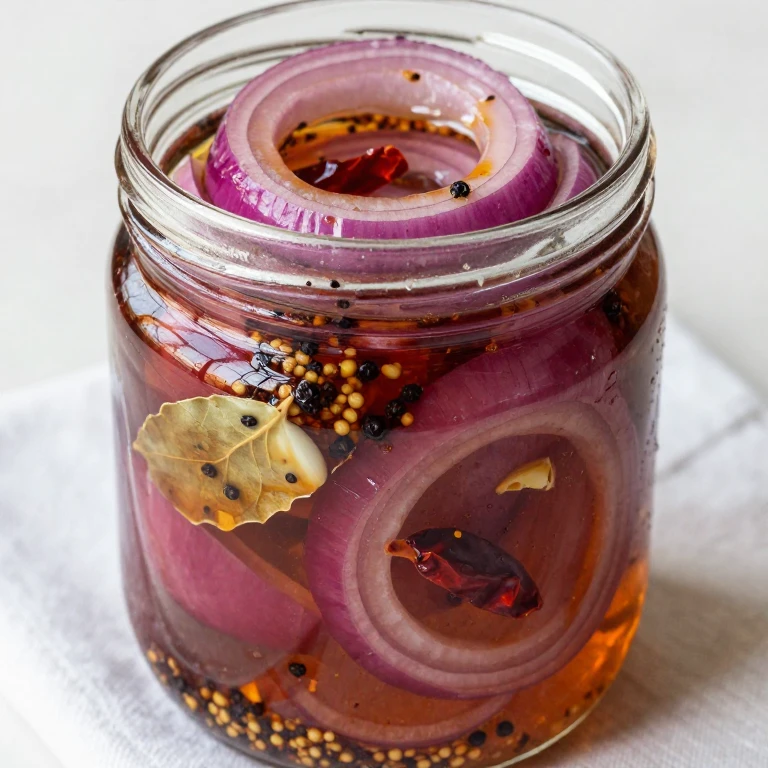
The maple syrup is the star here—use pure maple, not pancake syrup, which contains additives that muddy the flavor. I prefer a medium or dark amber grade because it brings deeper caramel notes without overwhelming the pickle’s brightness. Yellow onions give you a milder, sweeter onion base; red onions are slightly more peppery and will stain your brine a gorgeous pink.
Whirl Hook
The twist: Maple syrup replaces granulated sugar in the brine, adding natural depth and round sweetness that vinegar alone can’t achieve. The texture contrast: Hot brine keeps the onions snappy and firm, while the maple creates a silky, glossy finish on each slice.
Flavor Spin
The core magic happens at the intersection of maple’s mellow sweetness and apple cider vinegar’s bright acidity. Pure maple syrup has a subtle complexity—caramel, woodsy undertones, a touch of mineral warmth—that transforms a basic pickle brine into something you’ll want to use on everything. The vinegar cuts through richness (think pulled pork, fatty cheeses, roasted meats), while the maple prevents the pickle from tasting sharp or one-note. I always taste the brine before jarring; if it feels too tart, I add a touch more maple; if it’s too mellow, a splash more vinegar brings it back into balance.
Step-by-Step
- Prep the onions: Peel and trim the root and stem ends. Slice onions into 1/4-inch-thick rings or half-moons, whichever you prefer. Place sliced onions in a large bowl and toss with kosher salt. Let sit 10 minutes; this draws out moisture and helps them absorb the brine more evenly.
- Combine brine ingredients: In a medium saucepan, whisk together apple cider vinegar, maple syrup, and water. Add mustard seeds, peppercorns, bay leaves, smashed garlic, and dried chili if using. Bring to a simmer over medium-high heat, stirring occasionally until the maple dissolves fully—about 3–4 minutes. You should see small bubbles breaking the surface and smell the vinegar warming.
- Heat the jar: While the brine simmers, place a clean quart-sized glass jar in a warm water bath or run it under hot tap water for 30 seconds. This prevents thermal shock when you pour in the hot brine. Pour out the water and set the jar on a clean kitchen towel.
- Pack the onions: Transfer the salted onion slices into the warm jar, packing them down gently but firmly so they’re snug. Leave about 1 inch of headspace at the top.
- Pour the brine: Carefully pour the hot brine over the onions, making sure the vinegar mixture covers them completely. Use a slotted spoon to distribute the garlic cloves, bay leaves, and spices evenly throughout the jar. The brine should reach just below the rim.
- Cool and refrigerate: Let the jar sit at room temperature for 15–20 minutes until it’s cool enough to handle comfortably. Cover with a lid (a regular canning lid works, or any airtight lid) and refrigerate. The pickles will be lightly pickled after 4–6 hours and fully flavored after 24 hours.
Visual Cooking Timeline
- 0:00 — Peel and slice onions, toss with salt, let sit
- 0:10 — Combine vinegar, maple syrup, water, and spices in saucepan; bring to simmer
- 0:15 — Heat jar under hot water; pack onions into jar
- 0:18 — Pour hot brine over onions; distribute spices
- 0:20 — Cool jar at room temperature; cover and refrigerate
- 4:00 — Lightly pickled and ready to taste
- 24:00 — Fully flavored; use on sandwiches, salads, boards
Whirl Factor
The texture contrast is everything here. The hot-brine method ensures the onions stay crisp and snappy—they don’t turn mushy or rubbery like overcooked pickles. Meanwhile, the maple creates a silky, glossy coating on each slice. When you bite into one, you get immediate crunch followed by a wave of sweet-tart flavor that’s balanced and refined. Pair these on a fatty sandwich (pulled pork, smoked brisket, rich pastrami) and they cut through the richness without being sharp. Scatter them on a creamy burrata or aged cheddar and they brighten every bite. That interplay—crisp texture, mellow maple sweetness, vinegar brightness—is the whirl that makes these pickles stand out.
Spin Options
Maple + Thyme Remix
Add 2–3 sprigs fresh thyme to the brine as it simmers. The herbal notes complement maple beautifully and add an earthy undertone. This version is especially good on roasted vegetables or with roasted chicken.
Maple + Spiced Remix
Increase peppercorns to 1 teaspoon, add 1/4 teaspoon red pepper flakes, and include a pinch of ground cumin or coriander. The spice deepens the maple’s warmth and creates a more complex, less purely sweet pickle. Perfect for tacos, grain bowls, or alongside cured meats.
Maple + Mustard Remix
Use 1.5 teaspoons yellow mustard seeds and add 1/2 teaspoon mustard powder to the brine. The mustard’s sharpness plays beautifully against the maple’s mellowness, creating a pickle that’s both sweet and punchy. This one is stellar on hot dogs, burgers, or charcuterie boards.
Quick Tips
- Slice onions uniformly so they pickle at the same rate. A mandoline works beautifully here and saves time.
- Don’t skip the salt step—it seasons the onions and draws out excess moisture so the brine penetrates evenly.
- Taste the brine before jarring. Vinegar and maple ratios vary by brand; adjust to your preference while it’s still hot and easy to fix.
- Store the jar in the coldest part of your fridge (usually the back of the bottom shelf). These pickles keep for 3–4 weeks; after that, they soften slightly but remain safe to eat.
- Reserve the brine after you’ve eaten the onions—it’s liquid gold for vinaigrettes, cocktails, or pickling the next batch.
Substitution Ideas
White onions → Red onions: Red onions are slightly more peppery and will turn your brine a gorgeous pink. Flavor impact: more assertive, slightly earthier. Apple cider vinegar → White wine vinegar: Creates a brighter, cleaner pickle with less apple undertone. Flavor impact: crisper, more delicate. Maple syrup → Honey: Honey is thinner and less complex; use the same amount but the pickle will taste more simply sweet. Flavor impact: lighter, less depth. Maple syrup → Brown sugar: Brown sugar brings molasses notes; use 1/3 cup instead of 1/2 cup to avoid oversweetening. Flavor impact: earthier, less refined. Fresh herbs instead of dried spices: Swap mustard seeds and peppercorns for 2–3 sprigs thyme, rosemary, or dill. Add them fresh to the jar after the brine cools slightly to preserve their brightness.
Make-Ahead Options
Day before: Make the brine, cool completely, and store in an airtight container in the fridge. Slice and salt the onions, then store in a bowl covered with plastic wrap. In the morning, assemble by jarring the onions and pouring the cold brine over them. They’ll be lightly pickled by dinner. 2 hours before serving: If you’ve already jarred them, pull them from the fridge 15 minutes before serving so the flavors come forward at room temperature. Make-ahead batch method: Make a double batch of brine and store it in a sealed container for up to 2 weeks. Whenever you want fresh pickles, slice onions, salt them, and pour the chilled brine over them. They’ll be ready in 6–8 hours. Do not make ahead: Don’t slice the onions more than 4 hours before pickling—they’ll oxidize and turn gray. Also, don’t jar them without the hot brine; the brine’s heat is what sets the texture and prevents mushiness.
Whirl Finish
Serve these pickles on charcuterie boards alongside aged cheeses and cured meats, where their sweetness and crunch elevate every bite. Pile them on sandwiches—pulled pork, pastrami, roast beef—to cut through richness. Scatter them across grain bowls, salads, or roasted vegetable platters for brightness and crunch. They’re also stunning as a condiment alongside tacos, burgers, or roasted chicken. Store the jar in the fridge with a tight-fitting lid; they’ll keep for 3–4 weeks and actually improve as flavors meld over the first week.
FAQ
Can I use white vinegar instead of apple cider vinegar?
Yes, but white vinegar is sharper and more one-note. Apple cider vinegar brings subtle fruit undertones that complement the maple beautifully. If you only have white vinegar, use the same amount but add an extra 1 tablespoon of maple syrup to round out the flavor.
How long do these pickles last?
Refrigerated in an airtight jar, they’ll keep for 3–4 weeks. The onions soften slightly after the first week but remain crisp enough for most uses. The flavor actually deepens as they age, so don’t hesitate to make them well ahead.
Can I use this brine for other vegetables?
Absolutely. The maple brine works beautifully on red cabbage, carrots, jalapeños, or even cucumbers. Adjust cooking time based on vegetable density—harder vegetables like carrots may need a slightly longer brine time to soften.
What if my pickles taste too sweet?
Add a splash of vinegar to the jar and shake well. If you’re making a fresh batch, reduce the maple to 1/3 cup and increase the vinegar to 1.25 cups. Taste as you go until the balance feels right for your palate.
Do I need to sterilize the jar?
For short-term refrigerator storage (3–4 weeks), a clean jar is sufficient. Just run it under hot water and dry it well. If you’re planning to store these at room temperature or give them as gifts, use proper canning sterilization methods.
Can I make these without the optional spices?
Yes. A simple maple-vinegar-water brine is delicious on its own. The mustard seeds, peppercorns, and garlic add complexity, but they’re not essential. Start simple and add spices next time if you want more depth.
What’s the best way to slice the onions?
A mandoline set to 1/4-inch thickness is fastest and most uniform. If you’re slicing by hand, aim for consistent thickness so they pickle evenly. Thinner slices pickle faster (4–6 hours); thicker slices take longer (24+ hours) but hold their crunch better.
Maple Syrup Pickled Onions Recipe, Naturally Sweet
Ingredients
Method
- Peel and trim the root and stem ends of onions. Slice onions into 1/4-inch-thick rings or half-moons. Place sliced onions in a large bowl and toss with kosher salt. Let sit 10 minutes to draw out moisture.
- In a medium saucepan, whisk together apple cider vinegar, maple syrup, and water. Add mustard seeds, peppercorns, bay leaves, smashed garlic, and dried chili. Bring to a simmer over medium-high heat, stirring occasionally until the maple dissolves fully, about 3-4 minutes.
- Place a clean quart-sized glass jar in a warm water bath or run it under hot tap water for 30 seconds to prevent thermal shock. Pour out the water and set the jar on a clean kitchen towel.
- Transfer the salted onion slices into the warm jar, packing them down gently but firmly. Leave about 1 inch of headspace at the top.
- Carefully pour the hot brine over the onions, ensuring they are completely covered. Use a slotted spoon to distribute the garlic cloves, bay leaves, and spices evenly throughout the jar.
- Let the jar sit at room temperature for 15-20 minutes until cool enough to handle comfortably. Cover with a lid and refrigerate. The pickles will be lightly pickled after 4-6 hours and fully flavored after 24 hours.