

Pickled onions are the kind of ingredient that transforms a meal from ordinary to memorable. They add a bright, tangy crunch that cuts through rich flavors and makes everything taste fresher. But if you’re navigating a gluten-free diet, finding a pickled onions recipe you can trust takes work. Most store-bought versions hide gluten in unexpected places—vinegars, spice blends, even the processing. I wanted a method I could control completely, using ingredients I could verify myself.
This gluten-free pickled onions recipe strips away the guesswork. It relies on distilled vinegars, sea salt, and whole spices you can inspect before they go into the brine. No canning equipment needed. No complicated timing. Just thin onion slices, a quick brine, and a few hours in the refrigerator. The result is crisp, tangy, and safe for your table.
Whether you’re topping tacos, layering into salads, or adding punch to grain bowls, these pickled onions deliver consistent flavor and texture. Let me walk you through exactly how I make them, plus the ingredient checks that matter most.
Quick Snapshot
- Prep Time: 10 minutes
- Cook Time: 5 minutes (brine only)
- Total Time: 3 hours 15 minutes (plus chilling)
- Yield: 1 quart (about 2 cups packed onions)
- Texture: Crisp, tender-firm with slight give
- Flavor Profile: Bright, tangy, gently spiced with subtle sweetness
- Skill Level: Beginner
Why This Recipe Works
Gluten-free pickling lives or dies on three details: vinegar choice, spice sourcing, and brine balance. I use distilled white vinegar and distilled apple cider vinegar because their labels are cleanest and most transparent. Distilled versions have been stripped of solids, which means fewer hidden additives. Before I buy, I check the label for any mention of gluten, malt, or barley.
The spice list matters equally. Whole spices—coriander seeds, mustard seeds, peppercorns, dried chiles—are naturally gluten-free and give you visual confirmation of what’s going in. Pre-ground spice blends carry risk because cross-contamination happens during grinding. I buy whole spices from brands that clearly state gluten-free certification on the package.
The brine ratio is 1 part vinegar to 1 part water, with salt and sugar balanced to preserve crunch while building flavor. That ratio keeps onions from turning mushy while the acid does its work. A short cooking time for the brine itself—just bringing it to a simmer—means you’re not cooking away delicate flavor notes. The onions finish their transformation in the cold, which locks in texture.
Ingredient Overview
- Onions: 2 pounds red onions, thinly sliced (about 1/8 inch)
- Brine Base: 1 cup distilled white vinegar, 1 cup distilled apple cider vinegar, 2 cups water
- Seasoning: 2 tablespoons sea salt, 1 tablespoon organic cane sugar, 1 teaspoon coriander seeds, 1 teaspoon yellow mustard seeds, 1/2 teaspoon whole black peppercorns, 2 dried red chiles (optional)
- Aromatics: 3 cloves garlic, smashed, 1 bay leaf (certified gluten-free)
Red onions are my choice here because they hold their color, add visual pop to any dish, and have a slightly sweeter profile than yellow onions. Slice them thin—about 1/8 inch—so the brine penetrates quickly and evenly. Thicker slices stay crunchy but take longer to develop flavor.
Vinegar sourcing is non-negotiable. Distilled white vinegar and distilled apple cider vinegar both carry transparent labeling. I avoid malt vinegar entirely—it’s made from barley and always contains gluten. Rice vinegar is naturally gluten-free, but I prefer the clarity of distilled versions. Check your label before buying. Some brands add flavorings or processing agents that may not be labeled clearly.
Sea salt dissolves cleanly and doesn’t contain anti-caking agents that can cloud your brine. Organic cane sugar is optional—it softens the vinegar bite without making the onions sweet. If you prefer pure tang, skip it. Whole spices give you control and visibility. If you can’t find certified gluten-free bay leaves, omit them rather than risk cross-contamination from bulk bins.
Whirl Hook
This recipe flips the script on store-bought pickled onions by giving you complete ingredient control and a three-hour timeline instead of weeks of waiting. The core twist: a dual-vinegar brine that layers brightness—white vinegar for sharp tang, apple cider vinegar for subtle depth—with whole spices you verify yourself. The texture contrast comes from thin-sliced red onions that stay crisp against a tangy, gently spiced brine.
Step-by-Step Instructions
- Prepare the onions. Slice red onions in half lengthwise, then slice each half into thin strips about 1/8 inch thick. Separate the layers gently so they don’t clump. You should have roughly 4 cups of loosely packed onion slices. Place them in a clean glass jar or heat-safe container.
- Combine the brine ingredients. In a small saucepan, combine 1 cup distilled white vinegar, 1 cup distilled apple cider vinegar, 2 cups water, 2 tablespoons sea salt, and 1 tablespoon organic cane sugar. Stir until the salt and sugar dissolve completely. This takes about 1-2 minutes over medium heat.
- Add the spices and aromatics. Add 1 teaspoon coriander seeds, 1 teaspoon yellow mustard seeds, 1/2 teaspoon whole black peppercorns, 2 dried red chiles (if using), 3 smashed garlic cloves, and 1 bay leaf to the brine. Bring the mixture to a gentle simmer—you should see small bubbles breaking the surface, not a rolling boil. Simmer for 2-3 minutes to bloom the spice flavors, then remove from heat.
- Pour the hot brine over onions. Carefully pour the hot brine and all spices over the onion slices. The brine should cover the onions completely. If you need more liquid, add equal parts water and vinegar in a 1:1 ratio. Let the jar cool to room temperature—this takes about 30-45 minutes.
- Chill and develop flavor. Once cooled, cover the jar and refrigerate for at least 3 hours before tasting. The onions will continue to soften and absorb flavor as they sit. They reach peak flavor and texture after 24 hours, but they’re delicious after 3 hours if you’re in a hurry.
Flavor Spin
The dual-vinegar approach creates a flavor profile that’s brighter and more complex than a single-vinegar method. White vinegar delivers sharp, clean tang. Apple cider vinegar adds subtle caramel notes and a rounded finish. Together, they balance acidity without harshness. The whole spices—coriander, mustard seed, peppercorn—infuse slowly in the cold brine, building flavor without overpowering the onions themselves.
Whirl Factor
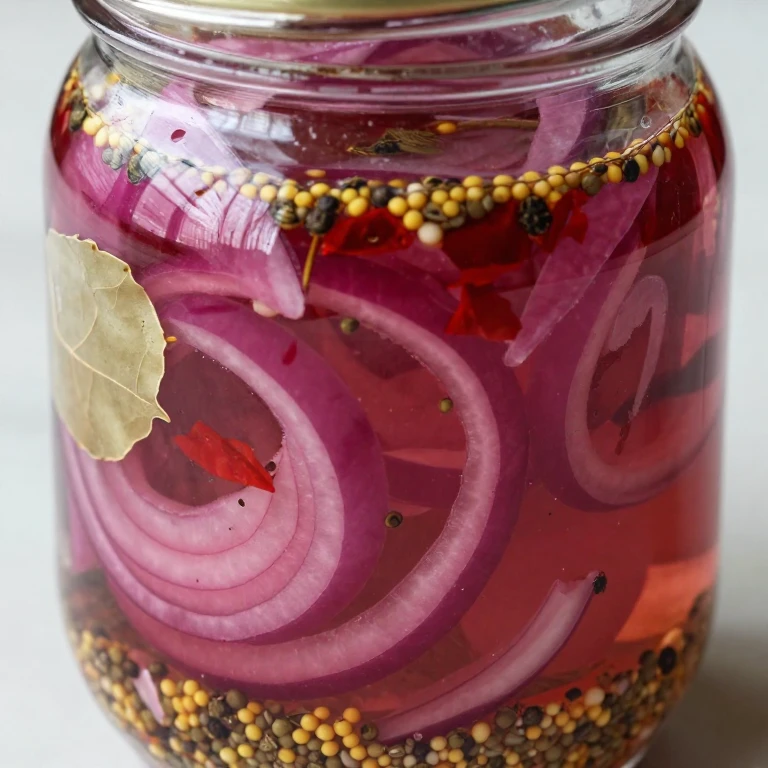
The texture contrast is crisp-to-tender: thin-sliced red onions stay structurally sound because the brine is balanced (not too acidic, not too diluted), while the vinegar and spices soften them just enough to make them tender on the bite. The visual contrast is equally important—deep purple-red onions against clear brine, with visible whole spices floating throughout. That combination of crunch, color, and visible ingredients makes these pickled onions feel intentional and restaurant-quality, even though the method is simple.
Pro Tips for Best Results
- Slice consistently for even pickling. Onions that vary in thickness will pickle unevenly. Thin slices (about 1/8 inch) pickle faster and stay crunchier. If you have a mandoline, use it with the guard. If you’re slicing by hand, take your time and aim for uniformity. Uneven slices lead to some pieces turning mushy while others stay too firm.
- Verify your vinegar label before buying. Malt vinegar contains barley and is never safe for gluten-free diets. Rice vinegar is naturally gluten-free but sometimes processed in shared facilities. Distilled white vinegar and distilled apple cider vinegar are your safest choices. I buy from brands that print gluten-free certification directly on the label, not just on the website.
- Don’t skip the spice bloom step. Simmering the brine for 2-3 minutes with spices in it releases essential oils and flavor compounds. This step takes minimal time but transforms the brine from flat to complex. If you skip it, your pickled onions will taste more acidic and less nuanced.
- Cool the brine before pouring it over onions. Hot brine will cook the onions slightly, making them soften faster and lose crunch. Cooling to room temperature (30-45 minutes) lets you pour the brine without shock-cooking the slices. Your onions will stay crisp-tender instead of turning mushy.
- Taste after 24 hours for peak flavor. The first 3 hours give you edible pickled onions. After 24 hours, they’ve absorbed more brine and developed deeper flavor. If you’re making these for an event, prepare them the day before. If you need them the same day, 3 hours is workable, but they’ll taste brighter and less integrated.
Spin Options
Spicy Variation with Extra Heat
Add 2-3 dried Calabrian chiles (or Thai bird chiles) to the brine instead of just 2 dried red chiles. The heat builds slowly as the onions sit, so they’re mildly spicy after 3 hours and quite fiery after 24 hours. This version is excellent on tacos, nachos, or grain bowls where heat complements other toppings. The flavor stays balanced because the base brine is still the same; you’re just increasing the chile count.
Herbal Variation with Fresh Dill and Thyme
Add 2-3 sprigs fresh dill and 1-2 sprigs fresh thyme to the brine as it simmers. Remove them before pouring the brine over onions (fresh herbs can develop off-flavors if they sit in the brine too long). The result is more herbaceous and pairs beautifully with fish, salads, or roasted vegetables. This variation works best if you use the pickled onions within 2-3 days, as the herbal notes fade over time.
Sweet and Tangy Variation
Increase the cane sugar to 2 tablespoons and add 1 tablespoon honey to the brine. This version skews slightly sweeter while keeping the tang intact. The sweetness makes these onions more versatile for barbecue, pulled pork, or burgers where you want a balance of brightness and sweetness. The flavor profile is less sharp than the original, so they’re more approachable for people who find straight pickled onions too acidic.
Whirl Finish
Serve these pickled onions cold, straight from the jar, or bring them to room temperature for 15 minutes if you prefer them slightly softer. They work on tacos, layered into salads, piled on burgers, or stirred into grain bowls. They’re also excellent on cheese boards or alongside cured meats. The brine itself is useful too—save it and use it as a vinaigrette base or a marinade for vegetables.
Serving Suggestions
Layer these pickled onions on fish tacos with crispy cabbage slaw and lime crema. The bright tang cuts through the richness of the fish and adds textural contrast. The color also makes the taco visually appealing.
Toss them into a grain bowl with roasted chickpeas, arugula, and tahini dressing. The pickled onions add punch that ties all the components together and prevents the bowl from tasting flat or one-note.
For an elevated option, serve them alongside a cheese board with aged cheddar, soft cheese, and crusty bread. The acidity and crunch cleanse the palate between bites of cheese, making them function almost like a condiment that sharpens the entire tasting experience.
Storage and Reheating
Keep pickled onions in an airtight glass jar in the refrigerator for up to 2 weeks. The brine preserves them naturally, and the cold temperature slows any degradation. Check the jar before each use—if you see any cloudiness, mold, or off-smell, discard the entire batch. Properly stored pickled onions should look clear and bright.
You don’t need to reheat pickled onions. Serve them cold straight from the jar. If you prefer them at room temperature, remove them from the refrigerator 15-20 minutes before serving. They’ll soften slightly and the flavors will feel less sharp.
Freezing is not recommended. The texture will degrade significantly, and the brine will separate when thawed. Refrigeration is your only storage method here.
FAQ
Can I use white onions instead of red onions?
Yes, white onions work and will pickle the same way. They’re milder and less sweet than red onions, so the tang will feel more pronounced. You’ll lose the visual pop of deep purple color, but the flavor and texture will be equally good. Yellow onions are also an option if that’s what you have on hand.
Is this recipe truly gluten-free?
It is, provided you source your ingredients carefully. The biggest risk is vinegar. Always check the label and buy from brands that explicitly state gluten-free certification. Distilled vinegars are your safest choice. Whole spices from reputable brands are naturally gluten-free. If you have celiac disease or severe gluten sensitivity, buy from brands certified gluten-free, not just brands that claim it on the website.
How long does the brine stay good in the refrigerator?
The brine itself stays good for 2-3 weeks. Once you’ve used the onions, you can strain the brine and reuse it for a fresh batch of onions or as a vinaigrette base. If you notice cloudiness or any off-smell, discard it.
Can I make a larger batch and store it in the pantry?
No. This is a refrigerator pickle, not a shelf-stable canned pickle. The brine ratio and lack of canning process mean these onions need cold storage. If you want shelf-stable pickled onions, you’d need to follow a proper canning method with higher acidity and heat processing, which is a different technique entirely.
What if my onions taste too acidic after 3 hours?
They’re likely not ready yet. Wait another 12-24 hours. The acidity mellows as the onions absorb brine and soften. If they still taste too sharp after 24 hours, you can add a small pinch of sugar to the jar and shake it gently to distribute. A teaspoon of honey stirred in also rounds out the flavor.
Can I use apple cider vinegar alone instead of the dual-vinegar approach?
You can, but the flavor will be less bright. Apple cider vinegar alone tastes rounder and slightly sweet. Using it with distilled white vinegar gives you the brightness of white vinegar plus the depth of apple cider. If you only have one type of vinegar on hand, use what you have. The pickled onions will still be delicious, just with a different flavor profile.
Do I need to sterilize the jar before using it?
For refrigerator pickles, a clean jar is sufficient. Wash it with hot soapy water and rinse thoroughly. You don’t need to boil it or use canning techniques because the cold storage and vinegar do the preservation work. If you want extra assurance, you can rinse the jar with boiling water and let it air-dry, but it’s not necessary.
Gluten-Free Pickled Onions Recipe
Ingredients
Method
- Slice red onions in half lengthwise, then slice each half into thin strips about 1/8 inch thick. Separate the layers gently so they don't clump. You should have roughly 4 cups of loosely packed onion slices. Place them in a clean glass jar or heat-safe container.
- In a small saucepan, combine 1 cup distilled white vinegar, 1 cup distilled apple cider vinegar, 2 cups water, 2 tablespoons sea salt, and 1 tablespoon organic cane sugar. Stir until the salt and sugar dissolve completely. This takes about 1-2 minutes over medium heat.
- Add 1 teaspoon coriander seeds, 1 teaspoon yellow mustard seeds, 1/2 teaspoon whole black peppercorns, 2 dried red chiles, 3 smashed garlic cloves, and 1 bay leaf to the brine. Bring the mixture to a gentle simmer—you should see small bubbles breaking the surface, not a rolling boil. Simmer for 2-3 minutes to bloom the spice flavors, then remove from heat.
- Carefully pour the hot brine and all spices over the onion slices. The brine should cover the onions completely. If you need more liquid, add equal parts water and vinegar in a 1:1 ratio. Let the jar cool to room temperature—this takes about 30-45 minutes.
- Once cooled, cover the jar and refrigerate for at least 3 hours before tasting. The onions will continue to soften and absorb flavor as they sit. They reach peak flavor and texture after 24 hours, but they're delicious after 3 hours if you're in a hurry.