

There’s a particular magic in a sheet cake that shows up to the party looking effortless. Not precious. Not overthought. Just a wide, flat canvas of vanilla crumb with swirled buttercream that catches the light, and somehow that simplicity reads as confidence. I’ve baked plenty of layer cakes that demand a turntable and a palette knife and a steady hand. But a sheet cake? A sheet cake says: I know what I’m doing, and I’m not making this harder than it needs to be.
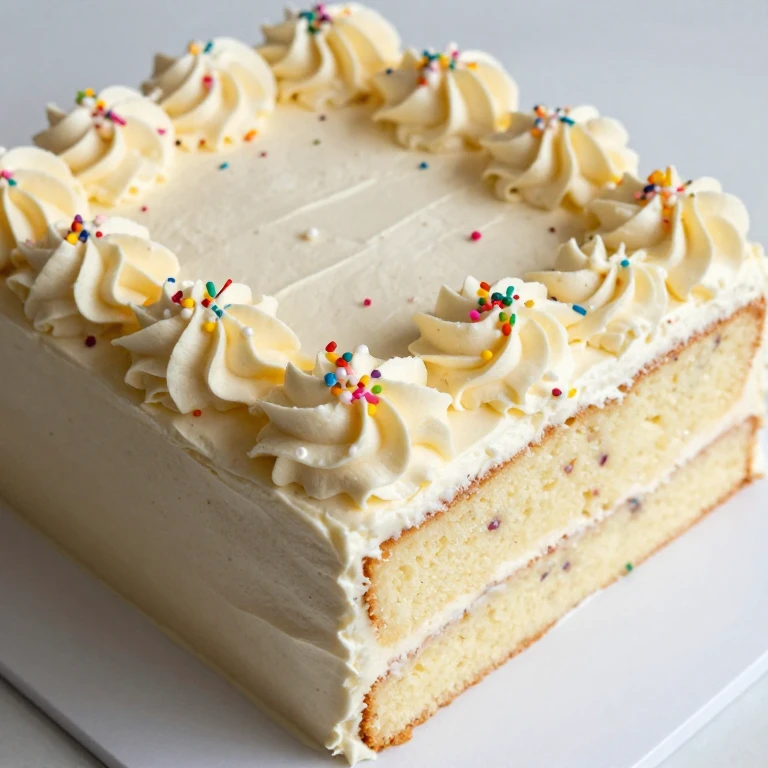
That’s what this recipe does. It’s a birthday sheet cake built on a moist vanilla confetti crumb—the kind that stays tender at room temperature and slices clean—paired with a buttercream swirl that’s bold enough to look intentional but forgiving enough that you don’t need special tools to pull it off. The confetti isn’t just sprinkles scattered on top; it’s baked into the cake itself, so every bite has that subtle texture pop and visual interest. Add a simple sprinkle border, a piped message, or nothing at all, and you’ve got a cake that works for a crowd, a small gathering, or just because.
What Makes This Dish Special
The Whirl Hook here is the confetti built into the crumb itself. Most sheet cakes treat sprinkles as decoration—a last-minute flourish on top. I bake them directly into the batter, which means the confetti stays in place, colors don’t bleed, and the texture contrast is built in from the first slice. That’s the high-payoff twist: no extra decorating steps required, and the cake looks intentional from the inside out.
The second defining move is the buttercream swirl. Not a smooth, flat frosting. Not piped rosettes that demand precision. A swirl—bold, visible, uneven in the best way—that reads as modern and intentional. You apply it with an offset spatula or even a butter knife, and the movement of the tool becomes the design. It’s texture contrast in real time: the soft, almost cloud-like buttercream against the tender crumb underneath.
The third quality is repeatability. The cake rises evenly in a standard 9×13 pan. The frosting holds its shape without refrigeration. The whole thing tastes better at room temperature, which means it’s built for serving at a party, not in a climate-controlled kitchen.
Flavor Profile Breakdown
The base is clean vanilla—not extract-forward, but warm and buttery, with a slight salt note that keeps it from reading as one-dimensional. The confetti adds a visual spark and a subtle crunch on the bite, which breaks up the soft crumb and keeps your palate engaged. The buttercream is where the flavor spine sits: butter-forward, lightly sweet, with just enough vanilla to echo the cake without competing. The salt in the frosting balances the sweetness and makes the vanilla read clearer. On the finish, you get a gentle sweetness that doesn’t linger—the cake melts off your tongue and leaves you wanting another slice, which is exactly the point.
Ingredient Highlights
The butter here matters. Room-temperature butter creams with sugar to a pale, fluffy base—that’s where the cake’s structure and tender crumb come from. If the butter is cold, the batter won’t incorporate enough air, and you’ll get a dense cake. If it’s too warm, the batter breaks and the cake rises unevenly. I aim for the texture of soft peanut butter: it yields to pressure but holds its shape.
The eggs are equally important. They’re the binder and the lift. I always use room-temperature eggs because cold eggs don’t incorporate smoothly into the batter, and you can end up with a grainy texture. Room temperature takes about 10 minutes on the counter, and it’s worth the wait.
The confetti sprinkles need to be the kind that don’t bleed color into the batter. I use pearl sprinkles or nonpareils—they’re denser and more stable than traditional jimmies. If you only have regular sprinkles, toss them in a tablespoon of cornstarch before folding them in; it helps stabilize them and prevents color bleed. For a dairy-free swap, use a neutral oil in place of butter at a 3:4 ratio (so 6 tablespoons oil for every 8 tablespoons butter), and the cake will still be tender, though slightly less rich.
Whirl Hook
The confetti baked into the crumb is the signature move here. You’re not decorating the top of a plain cake; you’re building the texture contrast into every layer. The sprinkles stay suspended in the batter, they don’t sink to the bottom, and they add a visual and textural element that makes the cake feel intentional and modern. That’s the Whirl Factor: texture contrast that’s baked in, not added on.
Cooking Walkthrough
Ingredients:
- 1 3/4 cups all-purpose flour
- 1 1/2 teaspoons baking powder
- 1/2 teaspoon baking soda
- 1/2 teaspoon fine sea salt
- 8 tablespoons unsalted butter, room temperature
- 1 cup granulated sugar
- 3 large eggs, room temperature
- 1/2 cup sour cream, room temperature
- 1/4 cup whole milk
- 2 teaspoons vanilla extract
- 1/2 cup pearl sprinkles or nonpareils
- 1 pound unsalted butter, room temperature (for frosting)
- 4 cups powdered sugar
- 2 tablespoons heavy cream
- 2 teaspoons vanilla extract
- 1/4 teaspoon fine sea salt
- Gel food coloring (optional)
Steps:
1. Prepare and preheat. Heat your oven to 350°F. Line a 9×13-inch baking pan with parchment paper, letting it overhang the short sides by an inch or two. This makes lifting the cooled cake out clean and easy. If you don’t have parchment, grease the pan well and dust it lightly with flour.
2. Combine dry ingredients. In a medium bowl, whisk together flour, baking powder, baking soda, and salt. Set aside. This step ensures even distribution of the leavening agents, which is crucial for a level rise.
3. Cream butter and sugar. In a large bowl, beat room-temperature butter and sugar together on medium-high speed for 3 to 4 minutes, until the mixture is pale, fluffy, and noticeably lighter in color. This is where the cake’s structure comes from—the air you’re incorporating into the butter-sugar base. Stop and scrape the bowl halfway through.
4. Add eggs one at a time. Add eggs one at a time, beating on medium speed for about 30 seconds after each addition. Wait until the first egg is fully incorporated before adding the second. This prevents the batter from becoming grainy or separated.
5. Alternate wet and dry ingredients. Combine sour cream, milk, and vanilla extract in a small bowl. Add one-third of the dry mixture to the butter mixture, beat on low speed until just combined. Add half of the wet mixture, beat until combined. Repeat: one-third dry, remaining wet, then the final third of dry. Mix on low speed until each addition is just incorporated—don’t overmix once you’ve added the flour, or you’ll develop gluten and toughen the cake.
6. Fold in confetti. Gently fold the sprinkles into the batter using a rubber spatula, turning the bowl as you fold. Work quickly but carefully—you want the sprinkles distributed evenly without crushing them or overmixing the batter. This is where the texture contrast lives.
7. Transfer and smooth. Pour the batter into the prepared pan. Use an offset spatula or the back of a spoon to smooth the top into an even layer. The batter should reach the corners evenly so the cake rises level.
8. Bake until a toothpick comes clean. Bake for 28 to 32 minutes, until a toothpick inserted in the center comes out with just a few moist crumbs—not wet, but not completely dry either. The cake will continue to cook slightly as it cools. Overbaking dries it out; underbaking leaves it gummy. Start checking at 25 minutes.
9. Cool in the pan, then fully. Let the cake cool in the pan for 15 minutes, then lift it out using the parchment overhang and transfer it to a wire rack. Let it cool completely to room temperature—about 1 hour—before frosting. A warm cake will melt the buttercream and make swirling difficult.
10. Make the buttercream. While the cake cools, beat room-temperature butter on medium-high speed for 2 to 3 minutes until it’s pale and fluffy. Sift the powdered sugar and add it gradually, about 1 cup at a time, beating on low speed between additions to avoid a sugar cloud. Once all the sugar is incorporated, add heavy cream, vanilla, and salt. Beat on medium-high speed for 1 to 2 minutes until the frosting is light, fluffy, and spreadable. If you want colored frosting, add gel food coloring a few drops at a time, beating until the color is even.
11. Apply the swirl. Place the cooled cake on a serving board or platter. Using an offset spatula or a butter knife, spread the buttercream across the top in broad, confident strokes. Don’t aim for smooth—aim for visible movement and texture. The swirl is the design. Work quickly; if the frosting gets too warm, refrigerate it for 10 minutes and continue.
12. Finish and serve. Add a sprinkle border, pipe a message, or leave it as is. The cake is ready to serve at room temperature. If you’re transporting it, cover it loosely with plastic wrap and keep it out of direct sunlight.
Chef Notes
- I always use room-temperature ingredients for this cake—butter, eggs, sour cream, and milk. Cold ingredients don’t incorporate smoothly, and you end up with a grainy batter or an unevenly risen cake. Set everything out 30 minutes before you start.
- In my kitchen, I sift the powdered sugar for the frosting. It removes lumps and makes the frosting smoother and lighter. A small sifter or fine-mesh strainer works perfectly.
- When I fold in the confetti, I use a gentle hand. Overmixing at this stage can crush the sprinkles or overdevelop the gluten in the flour, both of which affect the final texture. Fold just until the sprinkles are evenly distributed.
- I’ve found that this cake tastes better the next day. The crumb continues to set and becomes even more tender, and the flavors meld. If you’re baking ahead, frost it the day of, wrap it loosely, and store it at room temperature. It keeps for 3 days.
- If your frosting is too soft to swirl, refrigerate it for 10 to 15 minutes. If it’s too stiff, let it sit at room temperature for a few minutes. The goal is a spreadable consistency that holds a swirl but isn’t rock-hard.
Whirl Factor
Texture contrast is the spine of this recipe. The confetti baked into the cake adds a subtle crunch and visual interest to every bite, which breaks up the soft, tender crumb. The buttercream swirl is cloud-like and pillowy against that structure. The result is a cake that’s interesting to eat—not monotonous, not heavy. It’s modern without being fussy, and it’s built to be repeated. Every slice looks intentional. Every bite has that textural play.
Texture & Taste Expectations
When you slice into this cake, you’ll see the confetti scattered throughout the crumb and a visible swirl of buttercream on top. The cake itself is tender and moist—it yields to your fork without being dense or gummy. The confetti adds a subtle pop and a visual brightness that makes the cake feel celebratory. The buttercream is soft and buttery, slightly sweet, with a subtle vanilla note that echoes the cake. The finish is clean; there’s no heavy aftertaste, just a gentle sweetness that makes you want another slice. At room temperature, the cake is at its best—the crumb is tender, the frosting is spreadable but holds its shape, and the flavors are clear.
Spin Options
Lemon Confetti Cake: Replace the vanilla extract with 1 teaspoon lemon extract and add 1 tablespoon of lemon zest to the batter. Make the frosting with a tablespoon of fresh lemon juice in place of some of the heavy cream. The citrus brightens the cake and pairs beautifully with the confetti.
Chocolate Confetti Cake: Replace 1/4 cup of the flour with unsweetened cocoa powder. The cake becomes a subtle chocolate-vanilla blend with the confetti still visible and bright. Pair it with a chocolate buttercream by adding 2 tablespoons of unsweetened cocoa powder to the frosting.
Rainbow Swirl Frosting: Divide the buttercream into bowls and tint each with a different gel food coloring. Dollop each color onto the cake in stripes, then swirl them together with a knife or offset spatula for a rainbow effect. It’s a simple move that looks striking and keeps the modern, intentional aesthetic.
Whirl Finish
This cake is built for serving at room temperature, which means it’s perfect for a party or a gathering where you need something that holds up without refrigeration. Store it loosely covered at room temperature for up to 3 days. If you need to transport it, place it on a sturdy board or cake carrier and cover it loosely with plastic wrap. Avoid wrapping it tightly, which can smudge the frosting or create condensation. If you’ve refrigerated it, let it sit at room temperature for 20 to 30 minutes before serving so the crumb is tender and the frosting is spreadable.
Customization Ideas
- Dairy-Free: Use a neutral oil in place of butter (use 3/4 cup oil for the cake and 12 ounces for the frosting), dairy-free sour cream, and unsweetened almond milk. The cake will be slightly less rich but still tender. The frosting will be softer and may need extra chilling time to hold its shape.
- Gluten-Free: Use a 1:1 gluten-free flour blend in place of all-purpose flour. Add 1/2 teaspoon of xanthan gum if your blend doesn’t include it. The cake will have a slightly different crumb structure—it may be a bit more tender—but it will still work well. Check the bake time; gluten-free cakes sometimes bake a few minutes faster.
- Extra Flavor: Add 1/2 teaspoon of almond extract to the batter for a subtle nod to almond flavor, or stir a tablespoon of fresh lemon zest into the frosting. Both moves brighten the cake without overpowering the vanilla.
- Sprinkle Swap: If you don’t have pearl sprinkles, use nonpareils, sanding sugar, or even crushed freeze-dried strawberries for a fruity spin. Avoid regular jimmies unless you toss them in cornstarch first; they bleed color more easily.
- Frosting Flavor: Swap the vanilla for almond extract, add a tablespoon of espresso powder for a subtle coffee note, or stir in a tablespoon of fresh lemon juice for brightness. Each change shifts the cake’s personality while keeping the structure intact.
Pairing Ideas
Serve this cake with a cold glass of whole milk or a cup of strong coffee—the simplicity of the cake pairs beautifully with both. For a gathering, set out a small bowl of whipped cream or vanilla ice cream on the side; the contrast between cold cream and room-temperature cake is elegant. If you’re looking for an elevated pairing, serve it with a sparkling rosé or a light champagne. The bubbles cut through the sweetness and the delicate fruit notes echo the confetti’s playful energy. For a kids’ party, set out pitchers of cold milk or lemonade. The cake itself is the star; it doesn’t need much else.
FAQ
Can I make this cake ahead?
Yes. You can bake the cake a day ahead, cool it completely, wrap it loosely, and store it at room temperature. Frost it the day you plan to serve it. If you frost it ahead, cover it loosely with plastic wrap and keep it at room temperature for up to 3 days. The frosting holds up well, and the cake actually tastes better the next day as the crumb continues to set.
Why is my cake sinking in the middle?
A few common causes: the oven temperature might be off (use an oven thermometer to check), the batter might have been overmixed (which develops too much gluten and causes uneven rise), or the cake might have baked too long. Start checking at 25 minutes, and pull it out when a toothpick comes out with just a few moist crumbs. If the oven temperature is accurate and you’re not overmixing, the cake should rise evenly.
Can I double this recipe?
Yes, but you’ll need two 9×13 pans. Double all the ingredients and divide the batter evenly between the pans. Bake them side by side at 350°F for 28 to 32 minutes, checking both pans at 25 minutes. You’ll also need to double the frosting recipe. The bake time should be the same since both pans will be the same thickness.
What if I don’t have sour cream?
You can use Greek yogurt or crème fraîche in the same amount. Both add moisture and tang, and the cake will turn out similarly. If you have neither, you can use an equal amount of whole milk plus 1 tablespoon of lemon juice or vinegar, let it sit for 5 minutes to curdle slightly, and use that in place of sour cream. The result will be slightly less tangy but still tender.
How do I get the confetti to stay suspended in the batter?
Toss the sprinkles in a tablespoon of cornstarch before folding them in. The cornstarch helps them float rather than sink to the bottom. Pearl sprinkles and nonpareils are naturally denser and more stable than regular jimmies, so they’re easier to work with. Fold them in gently at the very end, just before transferring the batter to the pan.
Can I use buttermilk instead of sour cream and milk?
Yes. Use 3/4 cup of buttermilk in place of the 1/2 cup sour cream and 1/4 cup milk. The cake will be slightly tangier and have a similar tender crumb. The bake time should be the same.
What’s the best way to transport this cake?
Once the frosting has set (about 1 hour), place the cake on a sturdy cake board or cardboard base. Cover it loosely with plastic wrap or place it in a cake carrier. Avoid wrapping it tightly, which can smudge the frosting. Keep it at room temperature during transport. If you’re traveling more than 30 minutes, place the cake in a cooler with an ice pack nearby (not touching the cake) to keep it from getting too warm.
Birthday Sheet Cake Recipe With Confetti Buttercream
Ingredients
Method
- Heat oven to 350°F. Line a 9x13-inch baking pan with parchment paper, letting it overhang the short sides by an inch or two.
- In a medium bowl, whisk together flour, baking powder, baking soda, and salt. Set aside.
- In a large bowl, beat room-temperature butter and sugar together on medium-high speed for 3 to 4 minutes, until pale, fluffy, and noticeably lighter in color. Stop and scrape the bowl halfway through.
- Add eggs one at a time, beating on medium speed for about 30 seconds after each addition. Wait until the first egg is fully incorporated before adding the second.
- Combine sour cream, milk, and vanilla extract in a small bowl. Add one-third of the dry mixture to the butter mixture, beat on low speed until just combined. Add half of the wet mixture, beat until combined. Repeat: one-third dry, remaining wet, then the final third of dry.
- Gently fold the sprinkles into the batter using a rubber spatula, turning the bowl as you fold. Work quickly but carefully to distribute sprinkles evenly without crushing them.
- Pour the batter into the prepared pan. Use an offset spatula or the back of a spoon to smooth the top into an even layer.
- Bake for 28 to 32 minutes, until a toothpick inserted in the center comes out with just a few moist crumbs. Start checking at 25 minutes.
- Let the cake cool in the pan for 15 minutes, then lift it out using the parchment overhang and transfer it to a wire rack. Let it cool completely to room temperature, about 1 hour, before frosting.
- While the cake cools, beat room-temperature butter on medium-high speed for 2 to 3 minutes until pale and fluffy. Sift the powdered sugar and add it gradually, about 1 cup at a time, beating on low speed between additions.
- Once all the sugar is incorporated, add heavy cream, vanilla, and salt. Beat on medium-high speed for 1 to 2 minutes until the frosting is light, fluffy, and spreadable. Add gel food coloring if desired.
- Place the cooled cake on a serving board or platter. Using an offset spatula or a butter knife, spread the buttercream across the top in broad, confident strokes, creating a visible swirl pattern.
- Add a sprinkle border, pipe a message, or leave as is. The cake is ready to serve at room temperature.