
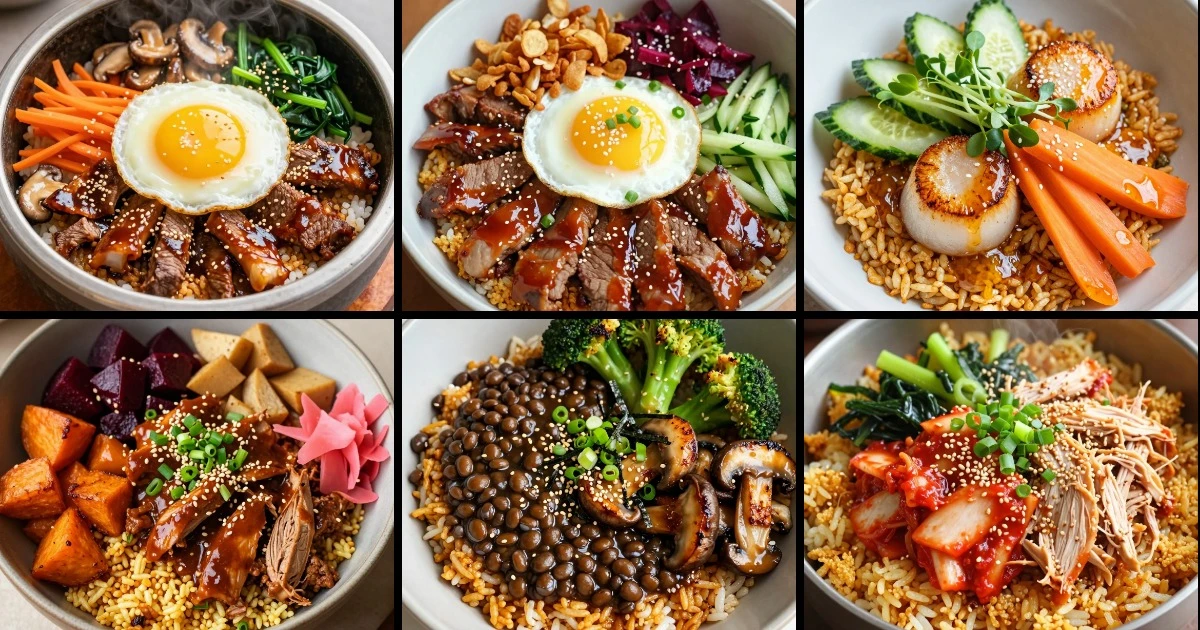

Whether you’re craving something quick on a Tuesday night or impressing guests with a showstopping dinner, bibimbap-style rice bowls deliver on both fronts. I’ve found that the magic of these Korean-inspired bowls lies in one signature move: the crispy rice base. That sizzling, caramelized layer transforms a simple bowl into something with real textural contrast. Stack your toppings high—bulgogi, gochujang sauce, fried eggs, sesame spinach—and you’ve got a meal that’s as visually striking as it is craveable. Across weeknights, dinner parties, meal prep, and family tables, these 12 recipes show you how to master the crunch, balance the heat, and nail the finish every single time.
Bibimbap-Style Rice Bowl Recipes for Weeknight — Fast, Flavorful, Done in 30
I reach for weeknight bibimbap when I need serious flavor without the fuss. The key is prepping your components while the rice crisps, so everything comes together in one confident move. These recipes clock in at 25–30 minutes active time and deliver that restaurant-quality crunch your weeknight deserves.
1. Classic Bulgogi Bibimbap with Crispy Rice
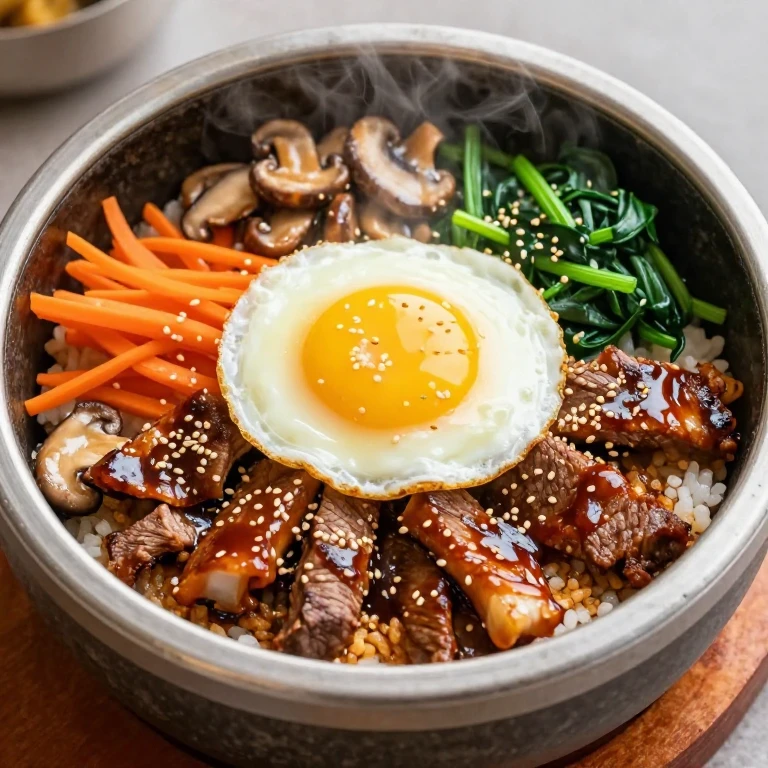
This is the blueprint I return to again and again. Thin-sliced beef gets a quick sear in a gochujang-soy glaze while jasmine rice develops those coveted crispy edges in a hot skillet. Top with a runny fried egg, sesame spinach, and a drizzle of extra gochujang sauce, and you’ve got textural contrast in every bite. The entire bowl comes together in under 30 minutes, making it a weeknight workhorse that tastes like you spent way more time than you did.
Ingredients
- 2 cups cooked jasmine rice
- 8 oz thinly sliced beef ribeye or sirloin
- 3 tbsp gochujang paste
- 2 tbsp soy sauce
- 1 tbsp sesame oil
- 2 cups fresh spinach
- 1 carrot, julienned
- 4 oz mushrooms, sliced
- 2 eggs
- 2 tbsp toasted sesame seeds
Instructions
- Heat 1 tbsp oil in a large skillet over medium-high heat. Press cooked rice into the skillet in a single layer; don’t stir. Cook 4–5 minutes until the bottom is golden and crispy, then transfer to a bowl.
- In the same skillet, sear beef slices 1–2 minutes per side until caramelized. Toss with gochujang, soy sauce, and 1 tsp sesame oil; set aside.
- Quickly sauté spinach with a pinch of salt and sesame oil (1 minute), then sauté mushrooms and carrot separately (2–3 minutes each).
- Fry eggs to your preference (runny yolk is traditional).
- Arrange crispy rice in a bowl, top with beef, vegetables, and egg. Drizzle with extra gochujang mixed with a splash of water and vinegar. Sprinkle sesame seeds and serve immediately.
Weeknight win: Total active time is 25 minutes. The beef cooks while rice crisps—no waiting around.
Make-ahead tip: Cook and crisp rice up to 4 hours ahead; rewarm in a skillet with a splash of oil for 2 minutes to restore crunch.
2. Gochujang Tofu Bibimbap with Roasted Vegetables
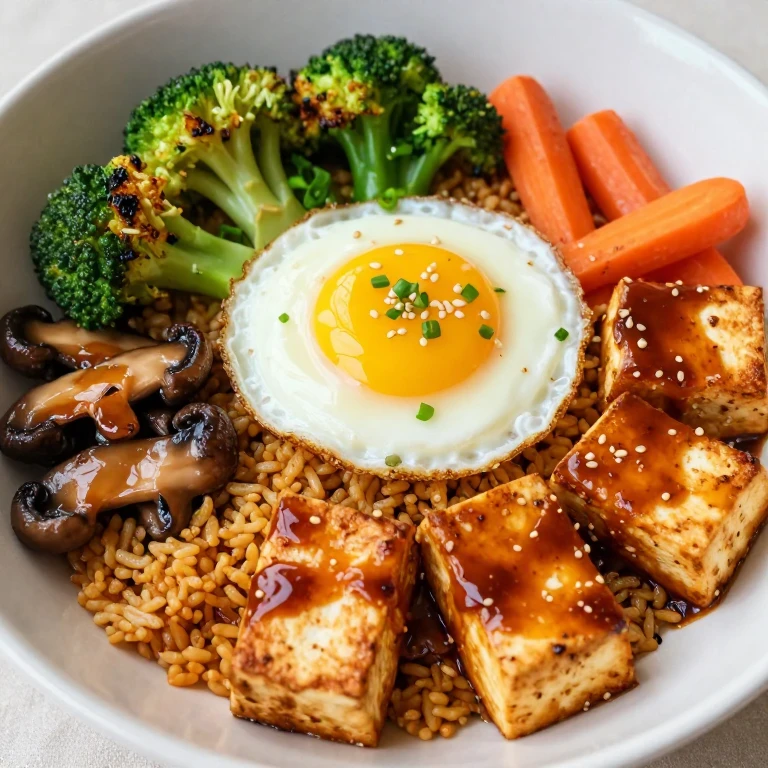
I love this version when I want plant-forward flavor that doesn’t skimp on umami. Pressed tofu gets a spicy-sweet glaze and a quick pan-sear for crispy edges, while roasted carrots and mushrooms add earthiness. The gochujang sauce ties everything together with heat and depth, and that crispy rice base keeps the whole bowl interesting from first bite to last.
Ingredients
- 2 cups cooked jasmine rice
- 14 oz firm tofu, pressed and cubed
- 3 tbsp gochujang paste
- 2 tbsp soy sauce
- 1 tbsp maple syrup
- 1 tbsp sesame oil
- 2 cups mixed mushrooms, halved
- 2 carrots, cut into batons
- 1 cup broccoli florets
- 2 eggs
- Sesame seeds and scallions for garnish
Instructions
- Toss mushrooms, carrots, and broccoli with 1 tbsp oil and salt. Roast at 425°F for 12–15 minutes while you prep the rice.
- Heat 2 tbsp oil in a skillet over medium-high heat. Sear tofu cubes on all sides (3–4 minutes total) until golden. Toss with gochujang, soy sauce, and maple syrup; set aside.
- In the same skillet, press cooked rice into a single layer. Cook 4–5 minutes until crispy on the bottom.
- Fry eggs while vegetables finish roasting.
- Build your bowl: crispy rice base, roasted vegetables, glazed tofu, fried egg. Finish with sesame seeds and scallions.
Weeknight win: Roasting happens in parallel with rice crisping. You’re not standing over the stove the whole time.
Make-ahead tip: Roast vegetables and press tofu earlier in the day. Sear tofu and crisp rice right before serving for maximum texture.
3. Soy-Garlic Chicken Bibimbap with Kimchi Crunch
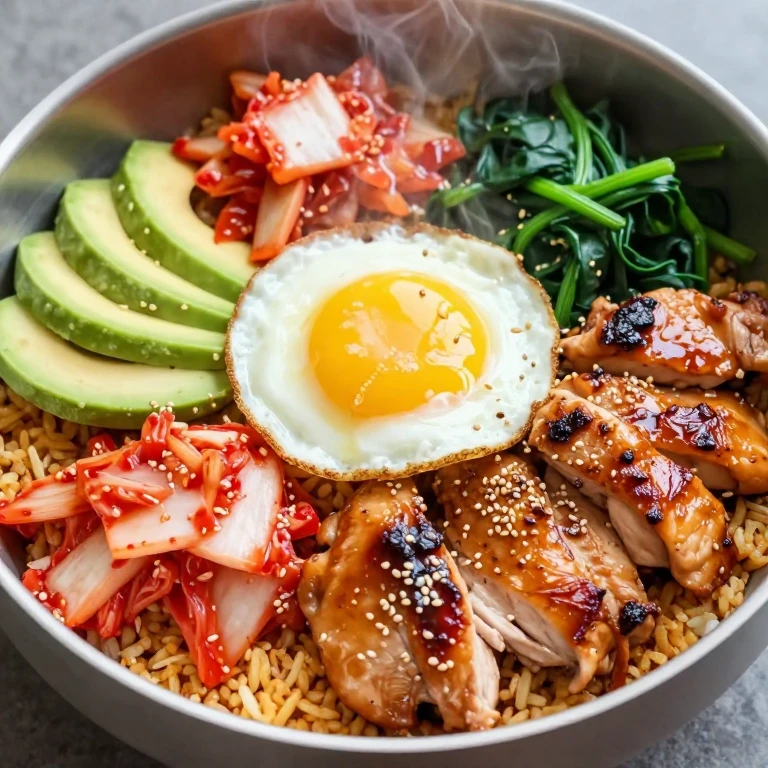
This one’s my go-to when I want bold, assertive flavors that come together fast. Chicken thighs get a garlicky soy glaze that caramelizes in minutes, while kimchi adds vinegary heat and crunch. The crispy rice holds everything together, and a simple egg yolk becomes your sauce when you break it open. It’s confident, textured, and done in 28 minutes flat.
Ingredients
- 2 cups cooked jasmine rice
- 1 lb boneless chicken thighs, sliced thin
- 4 cloves garlic, minced
- 3 tbsp soy sauce
- 1 tbsp sesame oil
- 1 tsp ginger, grated
- 1 cup kimchi, roughly chopped
- 2 cups spinach
- 1 avocado, sliced
- 2 eggs
- Sesame seeds
Instructions
- Heat 1 tbsp oil in a large skillet over medium-high heat. Sear chicken until cooked through and edges brown (5–6 minutes). Add garlic, ginger, soy sauce, and sesame oil; toss for 1 minute.
- Transfer chicken to a plate. In the same skillet, press cooked rice into a layer and cook 4–5 minutes until crispy.
- Quickly sauté spinach (1 minute) and set aside.
- Fry eggs to your liking.
- Assemble: crispy rice, chicken, spinach, avocado, kimchi. Top with egg and sesame seeds. Serve immediately.
Weeknight win: Chicken cooks in the time it takes to prep everything else. No slow simmers here.
Make-ahead tip: Cook and glaze chicken up to 24 hours ahead. Crisp rice fresh, then layer everything just before eating to keep spinach and avocado bright.
4. Spicy Pork Bulgogi Bibimbap with Crispy Shallots
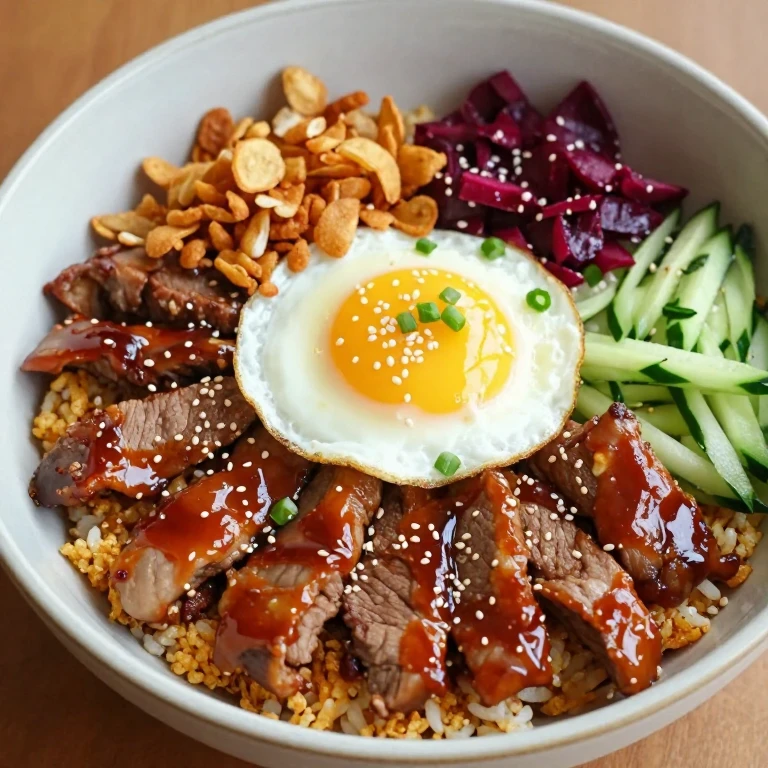
I reach for this when I want heat with a crispy textural layer that goes beyond the rice. Thin pork shoulder gets a spicy-sweet treatment with gochujang and a touch of honey, then crispy fried shallots add a salty, crunchy finish. Paired with that golden rice base, every element in this bowl has a job—and it all comes together in under 30 minutes.
Ingredients
- 2 cups cooked jasmine rice
- 1 lb pork shoulder, thinly sliced
- 3 tbsp gochujang paste
- 2 tbsp soy sauce
- 1 tbsp honey
- 1 tbsp sesame oil
- 3 shallots, thinly sliced
- Oil for frying shallots
- 2 cups cucumber, julienned
- 1 cup pickled radish
- 2 eggs
- Sesame seeds and scallions
Instructions
- Heat 2 tbsp oil in a skillet over medium-high heat. Fry shallots in batches until golden and crispy (3–4 minutes); drain on paper towels and set aside.
- In the same skillet, sear pork slices until browned (4–5 minutes). Toss with gochujang, soy sauce, honey, and sesame oil; cook 1 more minute.
- Transfer pork to a plate. Press cooked rice into the skillet and cook 4–5 minutes until crispy.
- Fry eggs while rice crisps.
- Build your bowl: crispy rice, pork, cucumber, pickled radish, egg. Crown with crispy shallots and sesame seeds.
Weeknight win: Frying shallots takes 5 minutes and elevates the whole bowl. That crunch is non-negotiable.
Make-ahead tip: Fry shallots up to 2 days ahead and store in an airtight container. Slice pork and vegetables earlier in the day, then cook everything fresh at dinner time.
Bibimbap-Style Rice Bowl Recipes for Dinner Party — Impressive, Elegant, Make-Ahead Ready
When I’m cooking for guests, I want something that looks composed and tastes intentional, but doesn’t trap me in the kitchen. These bibimbap bowls let you prep components ahead and assemble at the table or just before serving. Your guests get the full sensory experience—the sizzle, the aroma, the visual drama—without you breaking a sweat.
5. Beef Short Rib Bibimbap with Gochujang Aioli
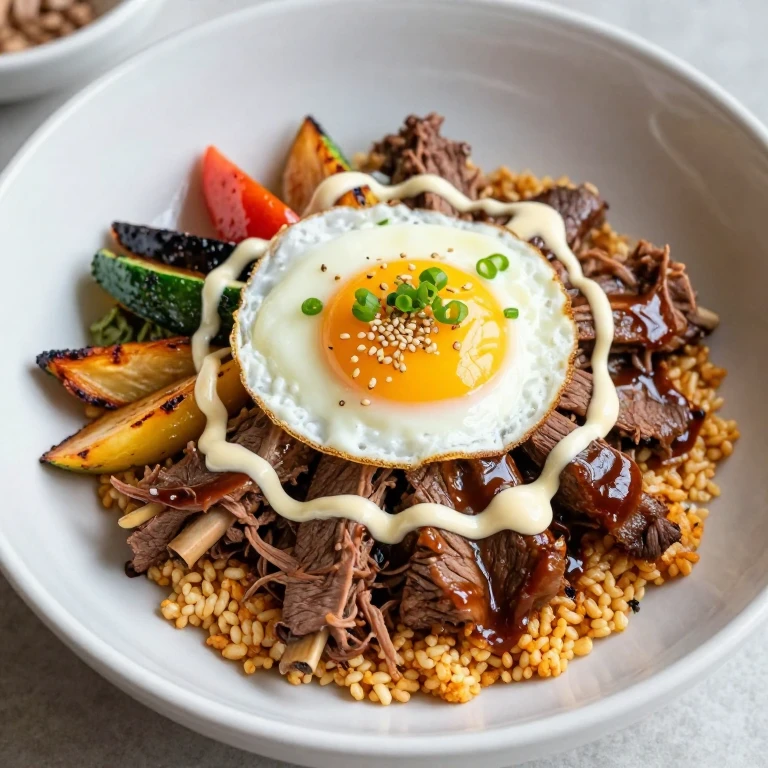
This is the version I make when I want to impress without fussing. Slow-braised beef short ribs become tender and rich, then get finished with a silky gochujang aioli that brings heat and creaminess at once. The crispy rice base is your anchor, and every topping—roasted vegetables, fresh herbs, a perfectly cooked egg—has a reason to be there. It’s sophisticated without being fussy, and most of the work happens hours ahead.
Ingredients
- 2 lbs beef short ribs
- 3 cups beef broth
- 4 tbsp gochujang paste
- 3 tbsp soy sauce
- 2 tbsp mirin
- 1 tbsp sesame oil
- 4 cloves garlic, smashed
- 1 tbsp ginger, sliced
- 2 cups cooked jasmine rice per serving
- Roasted vegetables, eggs, sesame seeds, scallions
Instructions
- Braise short ribs at 325°F in a covered Dutch oven with broth, gochujang, soy sauce, mirin, garlic, and ginger for 2.5–3 hours until fork-tender. Cool, shred, and store in braising liquid (up to 2 days ahead).
- Make gochujang aioli: blend 1/2 cup mayo with 2 tbsp gochujang, 1 tbsp rice vinegar, and 1 clove minced garlic until smooth. Chill until service.
- Just before serving, reheat short ribs gently in their braising liquid (10 minutes on the stovetop).
- Crisp rice in a hot skillet (4–5 minutes per bowl).
- Assemble: crispy rice, shredded short rib, roasted vegetables, fried egg. Drizzle with gochujang aioli and finish with sesame seeds and scallions.
Dinner party move: Short ribs can braise up to 2 days ahead. Reheat gently while you crisp rice and fry eggs just before serving.
Make-ahead note: Prep all vegetables and make aioli the morning of. Shred beef and store in braising liquid. Assemble bowls individually at the table for maximum drama.
6. Seared Scallop Bibimbap with Yuzu Gochujang Sauce
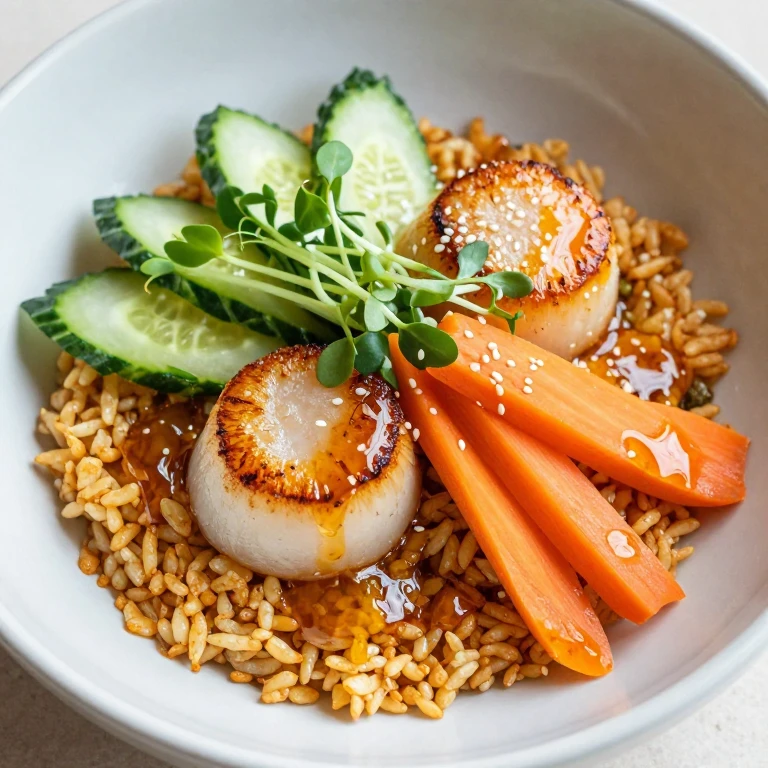
I love this version for a dinner party that leans elegant and refined. Scallops get a quick, hot sear that creates a golden crust while staying tender inside. A yuzu-spiked gochujang sauce adds brightness and complexity, while crispy rice and fresh vegetables provide grounding. It’s restaurant-quality and comes together in 20 minutes, which means you’re with your guests, not stressed in the kitchen.
Ingredients
- 2 cups cooked jasmine rice per serving
- 4–6 large sea scallops per person
- 3 tbsp gochujang paste
- 2 tbsp yuzu juice (or lemon juice)
- 1 tbsp soy sauce
- 1 tbsp sesame oil
- 1 tsp honey
- Microgreens or pea shoots
- Thinly sliced cucumber
- Shaved carrot
- Sesame seeds
Instructions
- Make yuzu gochujang sauce: whisk gochujang, yuzu juice, soy sauce, sesame oil, and honey until smooth. Set aside.
- Pat scallops completely dry. Heat a skillet over high heat with a touch of oil until smoking. Sear scallops 1.5–2 minutes per side until golden and just cooked through. Season with salt and pepper.
- Crisp rice in a hot skillet (4–5 minutes).
- Assemble per bowl: crispy rice, microgreens, cucumber, carrot. Top with seared scallops and drizzle with yuzu gochujang sauce. Finish with sesame seeds.
Dinner party move: Sear scallops à la minute—they take 4 minutes total and your guests will smell the butter and care you put in.
Make-ahead note: Make sauce and prep vegetables the morning of. Slice scallops and pat dry just before service. Crisp rice while scallops sear.
7. Marinated Lamb Bibimbap with Pomegranate and Herbs
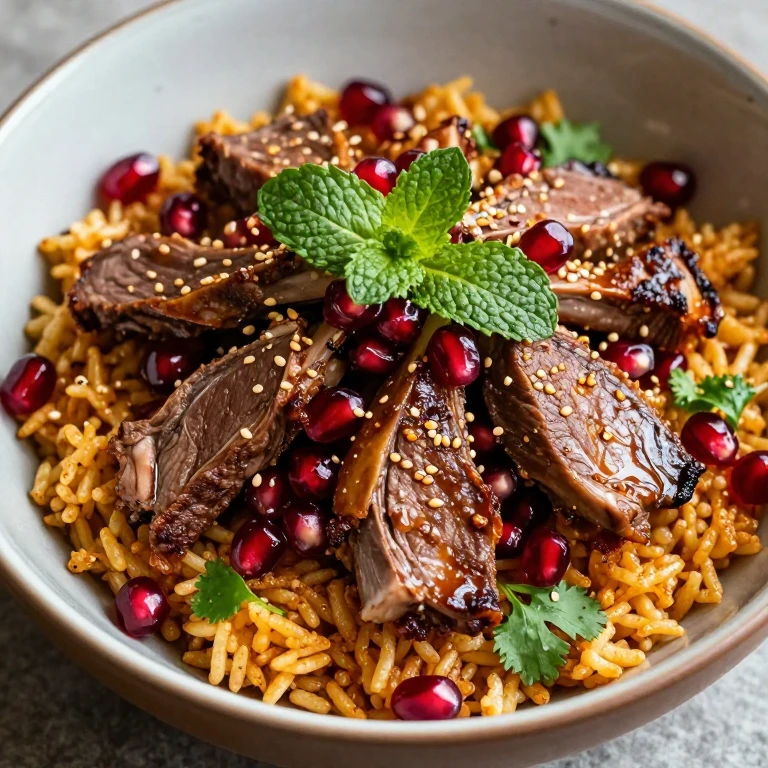
This is my version when I want to show off a little. Lamb gets a bold marinade with gochujang, soy, and warm spices, then a quick sear that leaves it pink and juicy inside. Pomegranate seeds add tartness and visual pop, while fresh herbs brighten the whole bowl. The crispy rice base ties it all together, and it’s a dish that feels special without requiring special skills.
Ingredients
- 1.5 lbs lamb sirloin or leg, thinly sliced
- 3 tbsp gochujang paste
- 2 tbsp soy sauce
- 1 tbsp sesame oil
- 2 cloves garlic, minced
- 1 tsp cumin
- 1/2 tsp cinnamon
- 2 cups cooked jasmine rice per serving
- 1/2 cup pomegranate seeds
- Fresh mint and cilantro
- Sesame seeds
Instructions
- Marinate lamb in gochujang, soy sauce, sesame oil, garlic, cumin, and cinnamon for at least 2 hours (or up to 24 hours ahead).
- Heat a skillet over high heat. Sear lamb slices 1–2 minutes per side until caramelized outside and pink inside. Don’t overcrowd the pan.
- Crisp rice in a hot skillet (4–5 minutes).
- Assemble: crispy rice, lamb, pomegranate seeds, fresh herbs. Drizzle with any remaining marinade mixed with a splash of water. Top with sesame seeds.
Dinner party move: Marinate lamb up to 24 hours ahead. Sear just before serving for the most tender, juicy result.
Make-ahead note: Marinate lamb overnight for deeper flavor. Prep pomegranate and herbs the morning of. Sear lamb and crisp rice in the final 10 minutes.
Bibimbap-Style Rice Bowl Recipes for Meal Prep — Batch-Friendly, Reheat-Ready, Texture-Proof
I use meal prep bibimbap bowls to set myself up for success through the week. The trick is keeping crispy rice and fresh components separate until you eat, so textures stay intact. These recipes are designed to taste just as good on day three as they do on day one, with simple reheating that restores crunch and keeps flavors bold.
8. Ground Turkey Bibimbap Bowl with Roasted Root Vegetables
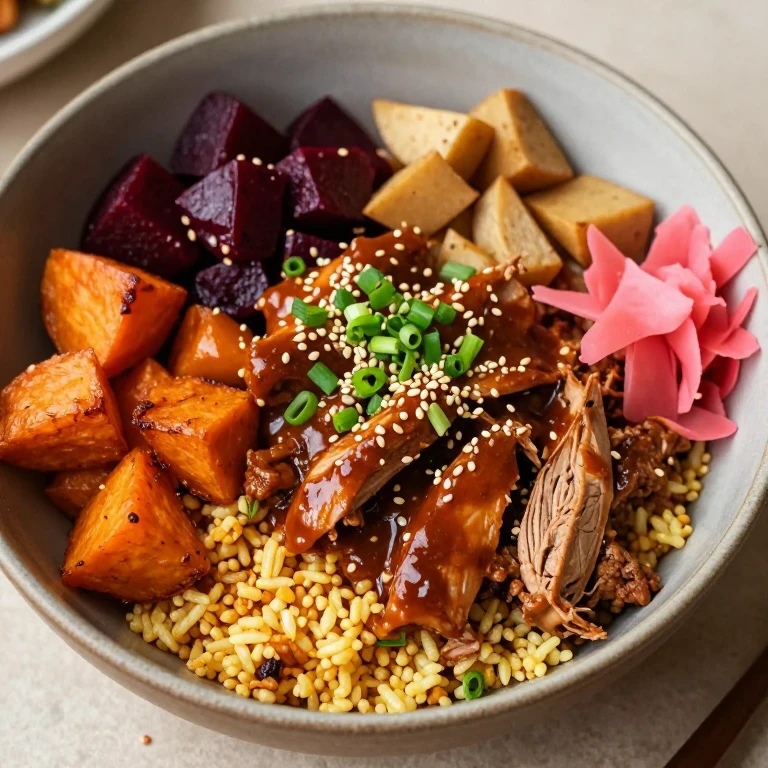
This is my workhorse meal prep recipe. Ground turkey cooks in a spiced gochujang sauce and stores beautifully for five days. Roasted root vegetables add substance and sweetness, while crispy rice (stored separately) stays crunchy when you reheat it fresh. Build your bowls Sunday, and you’ve got lunch ready all week—no soggy rice, no compromised texture.
Ingredients
- 2 lbs ground turkey
- 4 tbsp gochujang paste
- 3 tbsp soy sauce
- 2 tbsp sesame oil
- 4 cloves garlic, minced
- 1 tbsp ginger, grated
- 2 cups sweet potato, cubed
- 2 cups beets, cubed
- 1 cup parsnip, cubed
- Cooked jasmine rice for crisping
- Sesame seeds, scallions, pickled ginger
Instructions
- Toss root vegetables with 2 tbsp oil and salt. Roast at 400°F for 20–25 minutes until caramelized. Cool and store in an airtight container (up to 5 days).
- Brown ground turkey in a large skillet over medium-high heat (6–7 minutes). Drain excess fat. Stir in gochujang, soy sauce, sesame oil, garlic, and ginger. Simmer 3 minutes. Cool and store in an airtight container (up to 5 days).
- Portion cooked jasmine rice into containers. Store separately.
- To serve: heat rice in a skillet over medium-high heat with a touch of oil until crispy (4–5 minutes). Warm turkey mixture gently. Assemble bowl with crispy rice, turkey, roasted vegetables, and toppings. Finish with sesame seeds and scallions.
Meal prep win: Everything stores separately, so you control texture when you reheat. Crispy rice takes 5 minutes fresh.
Storage note: Turkey keeps 5 days. Roasted vegetables keep 5 days. Rice keeps 4 days. Reheat turkey in a skillet with a splash of water to restore sauce consistency. Crisp rice fresh every time.
9. Lentil and Mushroom Bibimbap with Miso Depth
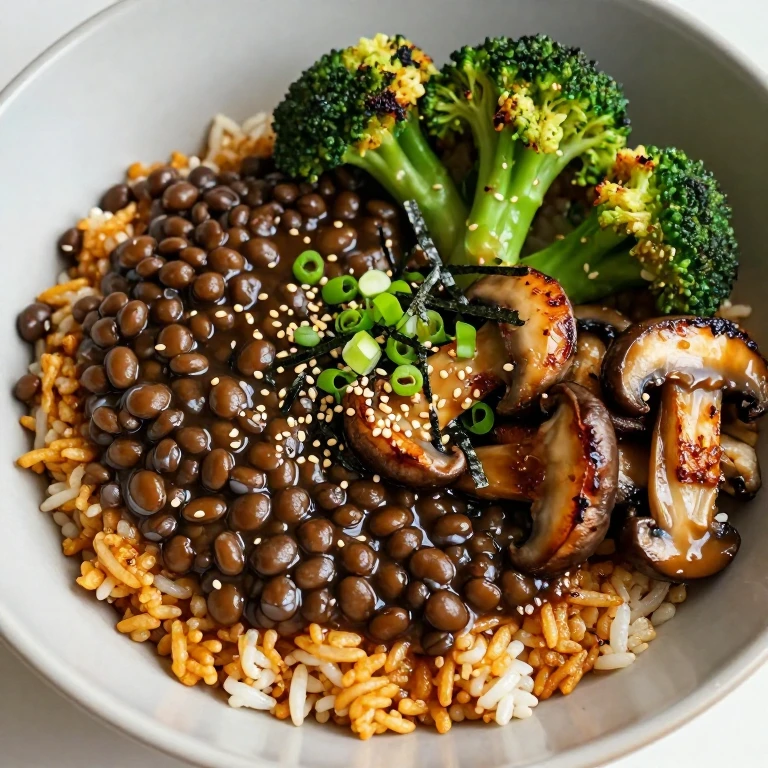
I developed this version to prove that plant-forward meal prep can be just as satisfying as meat-based bowls. Lentils get a miso-gochujang treatment that deepens over time, while roasted mushrooms add umami and chew. The crispy rice base is your textural anchor, and everything reheats beautifully without losing its punch. This is serious comfort food that happens to be vegan.
Ingredients
- 1.5 cups cooked brown lentils
- 2 tbsp white miso paste
- 3 tbsp gochujang paste
- 2 tbsp soy sauce
- 1 tbsp sesame oil
- 2 tbsp mirin
- 4 cloves garlic, minced
- 4 cups mixed mushrooms, halved
- 2 cups broccoli florets
- Cooked jasmine rice
- Sesame seeds, scallions, nori strips
Instructions
- Toss mushrooms and broccoli with 2 tbsp oil and salt. Roast at 425°F for 15–18 minutes until caramelized. Cool and store (up to 5 days).
- In a pot, combine cooked lentils, miso, gochujang, soy sauce, sesame oil, mirin, and garlic. Simmer 5 minutes, stirring gently. Cool and store (up to 5 days). The flavors deepen as it sits.
- Portion rice into containers. Store separately.
- To serve: crisp rice in a skillet with a touch of oil (4–5 minutes). Warm lentil mixture gently in a pot or microwave. Assemble: crispy rice, lentil mixture, roasted vegetables. Top with sesame seeds, scallions, and nori.
Meal prep win: Miso-gochujang lentils taste better on day three than day one. The umami builds.
Storage note: Lentil mixture keeps 5 days and actually improves. Roasted vegetables keep 5 days. Rice keeps 4 days. Reheat lentils gently on the stovetop with a splash of water if needed. Crisp rice fresh.
10. Shredded Chicken and Kimchi Bibimbap for the Freezer
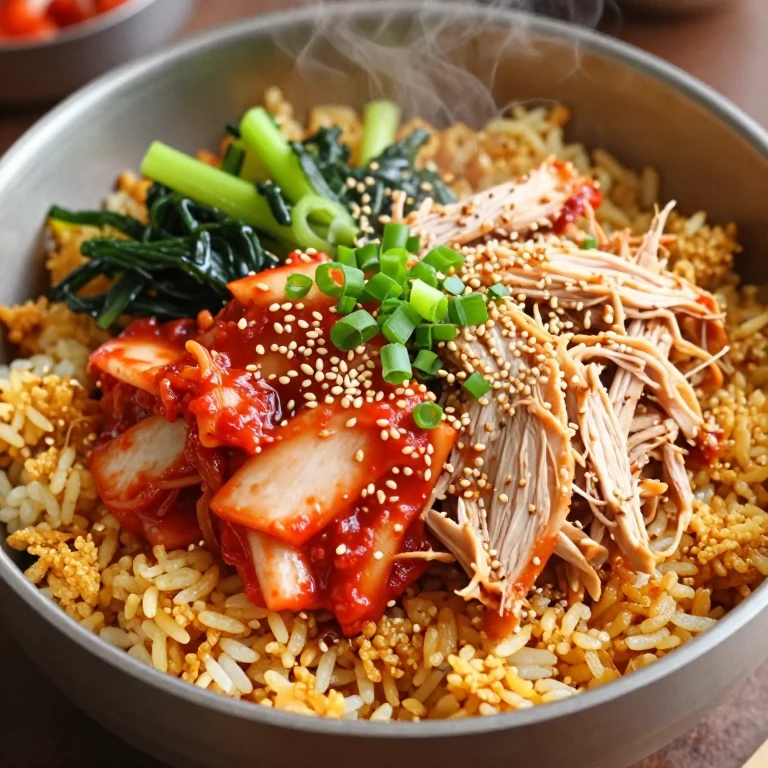
This is my version when I want to batch cook and freeze for the month ahead. Shredded chicken in a spicy kimchi sauce freezes beautifully and reheats without drying out. Layer it with crispy rice (made fresh) and you’ve got a bowl that tastes like you made it today, even though you prepped it weeks ago. It’s the ultimate meal prep hack for busy seasons.
Ingredients
- 2 lbs boneless chicken thighs
- 3 cups chicken broth
- 1 cup kimchi, chopped
- 3 tbsp gochujang paste
- 2 tbsp soy sauce
- 1 tbsp sesame oil
- 4 cloves garlic, minced
- 1 tbsp ginger, grated
- Cooked jasmine rice
- Sesame seeds, scallions, pickled vegetables
Instructions
- Poach chicken thighs in broth for 15–18 minutes until cooked through. Cool, shred, and return to pot.
- Stir in kimchi, gochujang, soy sauce, sesame oil, garlic, and ginger. Simmer 5 minutes. Cool completely.
- Divide into freezer-safe containers (up to 3 months). Portion rice separately.
- To serve: thaw chicken mixture in the refrigerator overnight. Reheat gently in a pot over medium heat, adding a splash of water if needed (5–7 minutes). Crisp rice in a skillet (4–5 minutes). Assemble and top with sesame seeds and scallions.
Meal prep win: Freeze this in portions and you’ve got emergency dinner ready for weeks.
Storage note: Chicken mixture freezes up to 3 months. Thaw overnight in the refrigerator. Reheat gently on the stovetop. Crisp rice fresh every time for maximum texture contrast.
Bibimbap-Style Rice Bowl Recipes for Family-Friendly — Approachable, Customizable, Kid-Adaptable
When I’m cooking for the whole family, I want something that works for different tastes and heat tolerances without making multiple meals. These bibimbap bowls are built for customization—mild components, bold sauce on the side, and toppings that let everyone build their own experience. Kids get to choose their heat level, and you get a meal that actually comes together without drama.
11. Mild Beef and Vegetable Bibimbap with Side Sauce
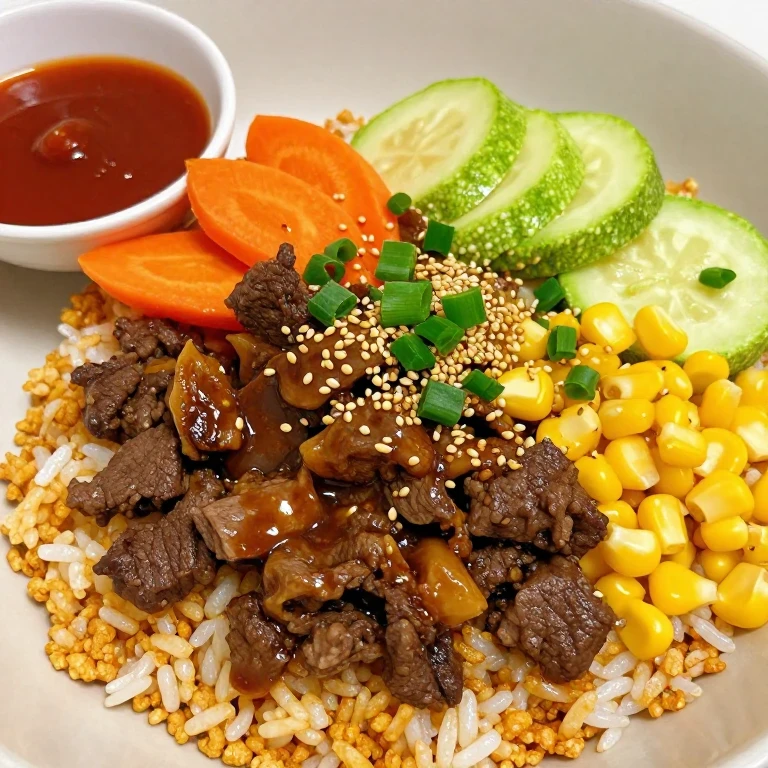
This is my approach when I’m feeding a mixed crowd. Ground beef gets a gentle soy-sesame treatment (no gochujang in the meat itself), while roasted vegetables are naturally sweet and approachable. The gochujang sauce lives on the side, so kids can add as much or as little heat as they want. Crispy rice is the star, and everyone’s happy at the table.
Ingredients
- 1.5 lbs ground beef
- 3 tbsp soy sauce
- 2 tbsp sesame oil
- 4 cloves garlic, minced
- 1 tbsp honey
- 2 cups carrots, sliced
- 2 cups zucchini, sliced
- 1 cup corn kernels
- Cooked jasmine rice
- Gochujang sauce (for serving)
- Sesame seeds, scallions
Instructions
- Brown ground beef in a large skillet over medium-high heat (6–7 minutes). Drain fat. Stir in soy sauce, sesame oil, garlic, and honey. Simmer 2 minutes and set aside.
- In the same skillet, sauté carrots, zucchini, and corn until tender-crisp (5–6 minutes). Season with salt and pepper.
- Crisp rice in a hot skillet (4–5 minutes).
- Assemble: crispy rice, beef, vegetables. Let everyone drizzle their own gochujang sauce. Top with sesame seeds and scallions.
Family-friendly move: Sauce on the side means everyone controls their own heat level. No complaints at the table.
Kid-adaptable note: The beef and vegetables are naturally mild. Gochujang sauce is optional, so kids can taste the crispy rice and toppings first. Gradually introduce heat as their palates develop.
12. Tofu and Edamame Bibimbap with Peanut Gochujang Sauce
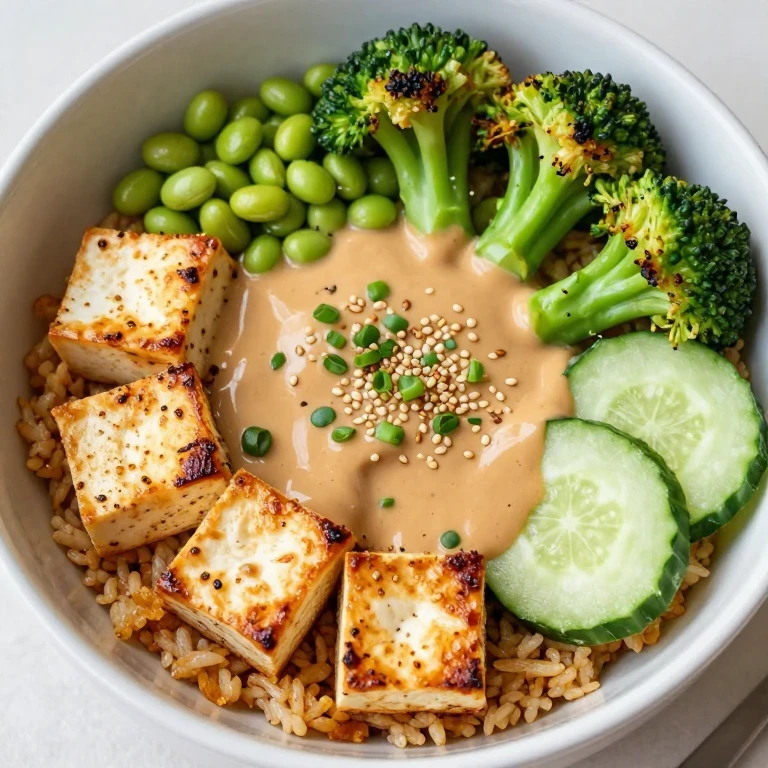
I created this one for families with mixed dietary preferences. Crispy-edged tofu, steamed edamame, and roasted broccoli are all familiar and approachable. A peanut-gochujang sauce adds richness and depth without being intimidating. The crispy rice base is the textural anchor, and the whole bowl feels substantial without relying on meat. It’s the version that brings everyone to the table happily.
Ingredients
- 2 cups cooked jasmine rice per serving
- 14 oz firm tofu, pressed and cubed
- 1.5 cups shelled edamame
- 2 cups broccoli florets
- 3 tbsp gochujang paste
- 2 tbsp natural peanut butter
- 2 tbsp soy sauce
- 1 tbsp sesame oil
- 1 tbsp rice vinegar
- 1 clove garlic, minced
- Sesame seeds, scallions, cucumber slices
Instructions
- Make peanut gochujang sauce: whisk gochujang, peanut butter, soy sauce, sesame oil, rice vinegar, and garlic until smooth. Thin with water if needed.
- Heat 2 tbsp oil in a skillet over medium-high heat. Sear tofu cubes on all sides until golden (4–5 minutes total). Season with salt.
- Steam edamame for 5 minutes. Roast broccoli at 400°F for 12–15 minutes until crispy-edged.
- Crisp rice in a hot skillet (4–5 minutes).
- Assemble: crispy rice, tofu, edamame, broccoli, cucumber. Drizzle with peanut gochujang sauce. Top with sesame seeds and scallions.
Family-friendly move: Peanut butter makes the sauce familiar and creamy. Kids recognize the flavors, and adults get depth.
Kid-adaptable note: All components are mild on their own. The peanut gochujang sauce adds richness without overwhelming heat. Let kids try a small amount of sauce first, then add more if they want.
FAQ
What’s the secret to crispy rice in a bibimbap bowl?
The crispy layer comes from pressing cooked rice into a hot, oiled skillet and leaving it undisturbed for 4–5 minutes. You want the bottom to turn golden and caramelized—that’s your textural contrast. The rice should still be tender inside; you’re only crisping the bottom layer. Medium-high heat is key; too low and you’ll steam the rice, too high and you’ll burn it. If you’re making multiple bowls, you can crisp rice ahead and rewarm it in a hot skillet with a touch of oil for 2 minutes to restore crunch.
Can I prep bibimbap components the night before?
Absolutely. Cook your protein, roast your vegetables, and prep toppings the night before. Store everything separately in airtight containers so textures stay intact. The only thing you should do fresh is crisp the rice and fry the egg. Crispy rice is best made just before serving, and a fried egg with a runny yolk is a textural anchor that matters. If you’re doing this for meal prep, keep rice in a separate container and crisp it fresh when you eat.
What’s the best way to reheat a bibimbap bowl from the fridge or freezer?
If your protein and vegetables are stored separately from rice, reheat them gently in a skillet or pot over medium heat, adding a splash of water or broth if needed (3–5 minutes). Then crisp your rice fresh in a hot skillet with a touch of oil (4–5 minutes). If you’ve frozen the protein mixture, thaw it overnight in the refrigerator and reheat gently. Never microwave crispy rice—it will steam and lose its crunch. The fresh crisp is what makes reheated bibimbap taste like you made it today.
How do I balance heat in a bibimbap bowl?
Gochujang paste is your heat control. Start with 2–3 tablespoons per four servings, then adjust to taste. If you’re cooking for mixed heat tolerances, make the sauce on the side so everyone can customize. Kimchi, pickled vegetables, and vinegar add brightness and cut through spice, so layering those toppings helps balance heat naturally. A runny egg yolk also mellows the spice when you mix it in. Taste as you go, and remember that flavors intensify as bowls sit, so err on the side of slightly milder when you’re first building.
Can I use a different rice for bibimbap?
Jasmine rice is traditional because it’s starchy enough to crisp beautifully and tender enough to eat easily. Short-grain sushi rice will also crisp well. Brown rice and wild rice can work but won’t crisp as dramatically—they’ll develop a golden exterior but stay chewier inside. If you prefer those grains, embrace the texture you get. Avoid long-grain white rice like basmati; it crisps unevenly and won’t give you that satisfying caramelized layer.
What proteins work best for bibimbap bowls?
Thinly sliced beef, pork, and lamb are traditional and cook quickly. Ground turkey and chicken are excellent for meal prep because they store well. Tofu and lentils deliver on umami and substance for plant-forward versions. Shrimp, scallops, and fish work beautifully for lighter bowls—just keep cooking times short so they don’t dry out. The key is choosing something that develops flavor through a glaze or sauce, because that’s what ties the whole bowl together.