

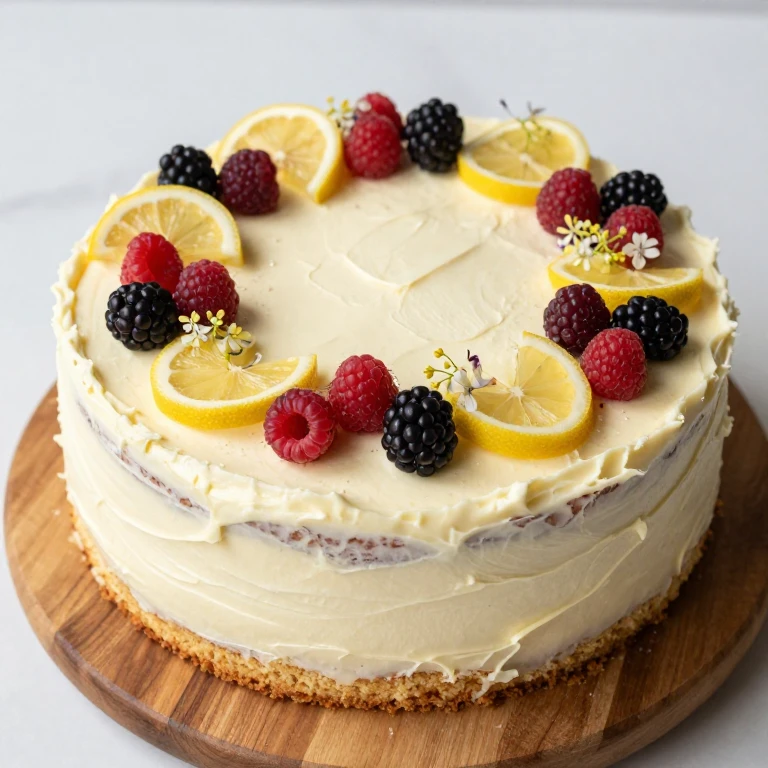
This rustic wedding sheet cake marries bright lemon with floral elderflower, topped with a textured buttercream that looks deliberately undone—and that’s exactly the point. I’ve built this design around a stable, make-ahead crumb that holds up outdoors, paired with a palette-knife finish that reads as effortlessly elegant rather than fussy. The result is a cake that serves 24-30 guests, slices clean, and tastes like you spent far more time than you actually did. Whether you’re hosting a backyard celebration or feeding a crowd, this sheet cake delivers that “did-you-make-this” moment without the stress.
Why You’ll Love This
- Bakes in one 18×13-inch pan—no layering, no crumb coat anxiety
- Stable buttercream holds its texture in warm weather and won’t weep under fondant or fresh flowers
- Make-ahead friendly: bake the day before, frost the morning of, decorate up to 4 hours ahead
- Lemon-elderflower combination is modern and memorable without tasting overly floral or artificial
- Textured finish requires no piping skills—palette knife strokes and natural accents do the work
- Slices cleanly because the crumb structure is tight and the frosting sets properly
Ingredient Breakdown in Groups
For the Cake
- 2 cups all-purpose flour
- 1½ teaspoons baking powder
- ½ teaspoon baking soda
- ½ teaspoon fine sea salt
- ½ cup unsalted butter, softened to room temperature
- 1 cup granulated sugar
- 2 large eggs, room temperature
- ¾ cup full-fat sour cream, room temperature
- ¼ cup fresh lemon juice (about 2 lemons)
- 2 tablespoons elderflower cordial (such as St. Germain or similar)
- 1 tablespoon lemon zest
- 1 teaspoon vanilla extract
For the Elderflower Lemon Buttercream
- 1 pound unsalted butter, softened to cool room temperature (this is critical for stability)
- 4 cups powdered sugar, sifted
- 2 tablespoons elderflower cordial
- 2 tablespoons fresh lemon juice
- 1 tablespoon lemon zest
- ¼ teaspoon fine sea salt
- 2-3 tablespoons heavy cream (if needed for consistency)
For Finishing
- Fresh edible flowers (pansies, violas, cornflowers, or borage)
- Fresh herbs (lemon balm, mint, or thyme sprigs)
- Seasonal berries (raspberries, blackberries, or currants)
- Candied lemon slices (optional, for elegant accent)
Ingredient notes: Elderflower cordial is the signature here—it’s not overpowering but adds a subtle floral note that lemon alone can’t deliver. If you can’t find it, see substitutions below. Room-temperature butter is non-negotiable for the buttercream; cold butter won’t whip to the right texture and warm butter breaks the emulsion. Sour cream keeps the crumb tender and adds slight tang that balances the floral sweetness.
Whirl Hook
The twist here is the pairing: lemon provides brightness and structure, while elderflower adds a delicate floral whisper that feels sophisticated without tasting like perfume. The texture contrast comes from a tender, tight crumb against a slightly loose, palette-knife frosting that looks intentionally rustic. This isn’t a polished mirror finish—it’s controlled texture that reads as modern and intentional.
Flavor Spin
Elderflower cordial is the hero ingredient that transforms a standard lemon cake into something memorable. The cordial dissolves seamlessly into both the batter and buttercream, creating a flavor profile that’s bright, slightly herbal, and distinctly grown-up. I pair it with enough lemon zest and juice to keep the cake from tilting too floral—the citrus anchors the elderflower and prevents it from tasting like soap or perfume. The result is a cake that tastes like a garden in spring, not a synthetic interpretation of one.
Whirl Factor
Flavor: Lemon-elderflower is a classic pairing in British baking, but rarely seen in American wedding cakes. It reads as sophisticated and seasonal without being trendy or difficult to execute.
Texture: The textured buttercream is where the rustic element lives. Rather than a smooth fondant finish, I use a palette knife to create loose, organic strokes that look deliberately undone. Fresh flowers, herbs, and berries settle into the peaks and valleys, creating visual depth without fussy piping work.
Step-by-Step
Prepare
- Preheat your oven to 350°F. Line an 18×13-inch sheet pan with parchment paper, allowing it to overhang slightly on all sides for easy removal.
- Sift together flour, baking powder, baking soda, and salt in a medium bowl. Set aside.
Mix the Batter
- In a large bowl, cream softened butter and granulated sugar together on medium-high speed for 3-4 minutes until pale and fluffy, scraping the bowl halfway through.
- Add eggs one at a time, beating on medium speed for about 30 seconds after each addition until fully incorporated.
- In a small bowl, whisk together sour cream, lemon juice, elderflower cordial, lemon zest, and vanilla extract.
- Alternate adding the dry ingredients and the sour cream mixture to the butter mixture, starting and ending with dry ingredients. Begin with one-third of the dry mixture, then half of the sour cream mixture, then another third of dry, then the remaining sour cream mixture, and finally the last third of dry. Mix on low speed until just combined after each addition—do not overmix, or the cake will be tough.
- Pour the batter into your prepared pan and smooth the top with an offset spatula. The batter should be even but not compressed.
Bake
- Bake for 28-32 minutes, until a toothpick inserted into the center comes out with just a few moist crumbs and the edges are set but the center still has a slight jiggle when you gently shake the pan. The top should be pale golden and spring back when lightly touched.
- Remove from the oven and cool in the pan for 15-20 minutes. The cake will continue to cook slightly from residual heat.
- Turn the cake out onto a wire rack (or leave it in the pan if you’re frosting in place) and cool completely to room temperature, about 1 hour. This step is critical—frosting a warm cake will cause the buttercream to melt and slide.
Make the Buttercream
- In a large bowl, beat softened butter on medium-high speed for 2-3 minutes until pale and creamy, scraping the bowl frequently.
- Sift powdered sugar directly into the bowl in three additions, beating on low speed after each addition to prevent a sugar cloud. Once all sugar is incorporated, increase speed to medium-high and beat for 3-4 minutes until light and fluffy.
- Add elderflower cordial, lemon juice, lemon zest, and salt. Beat on medium speed for 1-2 minutes until fully combined and the buttercream is smooth. If the consistency is too thick, add heavy cream one tablespoon at a time until you reach a spreadable texture.
Frost and Finish
- If the cake is still in the pan, you can frost it there. If it’s on a rack, transfer it to a serving platter or cake board. Spread the buttercream over the top and sides using an offset spatula or palette knife, working in loose, organic strokes rather than trying to smooth it perfectly.
- While the buttercream is still soft (within 30 minutes of frosting), arrange fresh edible flowers, herbs, and berries across the top. Press them gently into the frosting so they stay put. If using candied lemon slices, arrange them in a scattered pattern for visual interest.
- Let the cake set at cool room temperature for 30-45 minutes before serving, or refrigerate for up to 4 hours if you need to transport it. The buttercream will firm up and hold its texture.
Visual Cooking Timeline
- 0:00 — Preheat oven to 350°F, line sheet pan with parchment, sift dry ingredients
- 0:10 — Cream butter and sugar until fluffy, add eggs one at a time
- 0:15 — Whisk sour cream mixture, alternate adding dry and wet to butter mixture
- 0:20 — Pour batter into pan, smooth top, place in oven
- 0:50 — Remove from oven (baked 28-32 minutes), cool in pan 15-20 minutes
- 1:10 — Turn out onto rack or leave in pan, cool completely to room temperature (about 1 hour total from oven)
- 2:10 — Beat butter for buttercream, add sugar in three additions, add flavorings
- 2:25 — Frost cake with loose, textured strokes, add fresh flowers and herbs
- 3:10 — Cake is set and ready to serve or transport
Spin Options
Option 1: Lavender-Lemon Variation
Swap elderflower cordial for lavender simple syrup (equal parts sugar and water steeped with dried culinary lavender, then strained). Use the same volume and proceed as written. The result is slightly earthier and works beautifully with dried lavender buds as a finishing touch. Lavender can read as soapy if overused, so don’t increase the amount—the lemon keeps it grounded.
Option 2: Honey-Thyme Rustic Cake
Replace elderflower cordial with 2 tablespoons of good-quality honey mixed into the sour cream mixture. Add 1 teaspoon of fresh thyme leaves to the dry ingredients. Frost with the lemon buttercream as written, but finish with fresh thyme sprigs and candied lemon instead of flowers. This version is less floral and more herbaceous—perfect for a garden or farmhouse celebration.
Option 3: Raspberry-Lemon Sheet Cake
Keep the elderflower cordial but reduce it to 1 tablespoon and fold 1 cup of fresh or frozen raspberries (gently, to avoid breaking them apart) into the batter just before pouring into the pan. The raspberries add tartness and visual interest. Frost as written and top with fresh raspberries and lemon balm. The cake will bake 2-3 minutes longer due to the added moisture.
Whirl Finish
Serving: Slice with a long, thin-bladed knife dipped in hot water and wiped clean between cuts. The textured frosting and fresh accents look best when the knife is clean, and the buttercream slices neatly when it’s been chilled. Serve at cool room temperature for the best flavor and texture.
Storage: Keep the frosted cake covered loosely with plastic wrap at room temperature for up to 8 hours, or refrigerate for up to 3 days. The buttercream firms up when cold, so remove the cake from the fridge 20-30 minutes before serving to let it come to a more pleasant eating temperature. Do not freeze a frosted cake with fresh flowers—freeze the unfrosted layers instead.
Quick Tips
- Butter temperature matters: Softened butter that’s slightly cool (around 65-70°F) whips to the right texture. If your kitchen is warm, chill the butter for 10 minutes before beating.
- Avoid elderflower overload: Elderflower cordial is potent. More isn’t better—stick to the amounts given or you’ll end up with a soapy-tasting cake.
- Room-temperature eggs and sour cream: Cold dairy won’t emulsify properly with the butter, leading to a grainy batter. Pull them from the fridge 20 minutes before mixing.
- Don’t overmix the batter: Once the dry ingredients are combined with the wet, stop. Overmixing develops gluten and makes the cake tough and dense.
- Test for doneness with the jiggle method: A toothpick test can be misleading for sheet cakes. Instead, look for slight jiggle in the center and edges that are visibly set. The cake continues cooking after it comes out of the oven.
- Textured frosting is forgiving: If your frosting strokes look messy, that’s the point. The palette knife technique is meant to look organic and intentional, not perfectly smooth.
Substitution Ideas
- No elderflower cordial? → Use 2 tablespoons of honey or 1 tablespoon of rose water mixed into the sour cream. Rose water is more assertive, so start with ½ tablespoon and taste. The cake will taste more purely lemon-forward but still delicious.
- Dairy-free buttercream → Replace butter with vegan butter (such as Miyoko’s or Earth Balance) in equal amounts. The texture will be slightly softer, so chill for 30-45 minutes before frosting. Use plant-based heavy cream if you need to adjust consistency.
- Gluten-free cake → Swap all-purpose flour for a 1:1 gluten-free blend (such as Bob’s Red Mill). The crumb will be slightly less tender but still good. Add ¼ teaspoon of xanthan gum if your blend doesn’t contain it.
- Almond or coconut flour addition → Replace ¼ cup of all-purpose flour with almond flour for a nuttier crumb, or use coconut flour (reduce to 2 tablespoons coconut flour plus 2 tablespoons all-purpose flour, as coconut flour absorbs liquid differently). Both options add subtle flavor and keep the crumb tender.
- Lemon extract instead of zest → If you don’t have fresh lemons, use ½ teaspoon of lemon extract in the batter and ½ teaspoon in the buttercream. The flavor will be brighter but slightly less nuanced than fresh zest.
Make-Ahead Options
Day Before: Bake the cake completely, cool, and wrap tightly in plastic wrap. Store at room temperature or refrigerate. Make the buttercream, transfer to an airtight container, and refrigerate. Both the cake and frosting are stable for 24 hours. The next morning, remove the buttercream from the fridge 30 minutes before frosting to bring it to spreadable consistency.
Morning Of (for same-day service): If you baked the day before, remove both cake and buttercream from the fridge 1 hour before frosting. Frost the cake 3-4 hours before serving, then add fresh flowers and herbs up to 2 hours ahead. This timing ensures the frosting is set but the flowers look fresh.
4 Hours Before Service: Frost and decorate the fully cooled cake. Cover loosely with plastic wrap and keep at cool room temperature. Do not refrigerate at this stage if you want the frosting to stay at a pleasant eating temperature—cold buttercream is stiff and less flavorful.
What NOT to make ahead: Don’t add fresh flowers more than 4 hours before serving; they’ll wilt or brown at the edges. Don’t freeze a frosted cake with fresh accents—the flowers will turn to mush when thawed. If you need to freeze, bake the unfrosted layers, wrap in plastic and foil, and freeze for up to 1 month. Thaw at room temperature, then frost and decorate the day of service.
FAQ
Can I make this cake in a 9×13-inch pan instead of 18×13?
Yes, but reduce all cake ingredients by half. The bake time will increase to 32-36 minutes because the batter will be thicker. Check for doneness using the jiggle method rather than relying on time alone. You’ll have enough frosting for either pan size, though you may have some leftover.
What if I can’t find fresh edible flowers?
Fresh herbs (lemon balm, mint, thyme, or rosemary sprigs) and berries work beautifully on their own. You can also use candied lemon slices, candied ginger, or even toasted nuts scattered across the top. The textured frosting is the star—the accents are just visual interest.
How do I transport this cake to a venue?
Chill the frosted, decorated cake for at least 1 hour so the buttercream firms up. Transport it in a sturdy cake box on a flat surface in your car. If it’s a warm day, bring a small cooler with an ice pack (not touching the cake directly) to keep it cool during transport. Remove it from the cooler 30 minutes before serving so the frosting softens slightly and tastes its best.
Can I make this cake smaller for a dinner party?
Absolutely. Halve all ingredients and bake in a 9×9-inch square pan for 22-26 minutes. This yields about 9-12 servings. The batter volume is smaller, so watch it carefully—it may bake slightly faster than the full recipe.
Is the buttercream stable enough for an outdoor summer wedding?
Yes, this buttercream is more stable than American buttercream because it’s properly emulsified and the ratio of butter to sugar is balanced. It won’t weep in heat like a poorly made frosting, but it will soften in direct sun or extreme heat (above 85°F). Keep the cake in the shade or under a tent, and remove it from the fridge 20 minutes before guests arrive. If it’s very hot, you can add 1-2 tablespoons of meringue powder or pasteurized egg white powder to the buttercream for extra stability.
What’s the difference between palette knife texture and piped frosting?
Palette knife frosting is loose, organic, and requires no piping skills—just strokes and swirls with the flat side of the knife. It reads as rustic and intentional. Piped frosting is precise and uniform. For this recipe, the palette knife approach matches the rustic aesthetic and is faster to execute, especially on a large sheet cake.
Rustic Wedding Sheet Cake With Lemon Elderflower
Ingredients
Method
- Preheat your oven to 350°F. Line an 18×13-inch sheet pan with parchment paper, letting it overhang slightly on two sides for easy removal.
- Whisk together flour, baking powder, and salt in a medium bowl. Set aside.
- In a large bowl, cream butter and sugar together for 3-4 minutes until pale and fluffy, scraping down the bowl halfway through.
- Add eggs one at a time, beating well after each addition. The mixture should look light and homogeneous.
- Combine lemon juice and elderflower cordial in a small cup. Alternate adding the dry mixture and lemon mixture to the butter mixture, starting and ending with dry ingredients. Begin with one-third of the dry mixture, then one-half of the lemon mixture, then one-third of the dry mixture, then the remaining lemon mixture, then the final dry mixture. Mix on low speed after each addition until just combined.
- Fold in lemon zest with a spatula until evenly distributed.
- Pour batter into the prepared pan and smooth the top with a spatula. The batter should be level but not compressed.
- Bake for 26-30 minutes, until a toothpick inserted in the center comes out with just a few moist crumbs and the edges are light golden brown. The cake should spring back lightly when touched in the center.
- Cool in the pan for 15-20 minutes, then turn out onto a wire rack to cool completely (at least 1 hour, or up to 4 hours). This step is critical for stability when frosting.
- While the cake cools, prepare the buttercream. Beat room-temperature butter in a large bowl for 2-3 minutes until pale and creamy.
- Add powdered sugar in three additions, beating on low speed after each addition to avoid a sugar cloud. Once all sugar is incorporated, increase speed to medium and beat for 2-3 minutes until fluffy.
- Add lemon juice, elderflower cordial, and salt. Beat on medium speed for 1-2 minutes until fully combined and smooth. If the frosting seems too thick, add heavy cream 1 tablespoon at a time until you reach a spreadable consistency (it should hold a peak but not be stiff).
- Place the cooled cake on a serving board or cake base. Using an offset spatula or palette knife, spread buttercream across the top and sides in loose, textured strokes—aim for visible brushstrokes and uneven coverage for that rustic look. This should take 10-15 minutes.
- Scatter fresh raspberries, blackberries, or edible flowers across the top in a loose, natural pattern. Add lemon wheels or slices if desired. A light sprinkle of fleur de sel adds a subtle finishing touch.
- Chill for 20-30 minutes before serving if your kitchen is warm, or serve at room temperature. The cake holds beautifully for 4-6 hours before frosting begins to soften.