

There’s something about the sound of a cast-iron skillet hitting a hot stovetop that signals breakfast is about to get serious. I crack eggs into a golden hash of potatoes and onions, watch the whites set at the edges while the yolks stay soft, and suddenly the kitchen smells like smoke and thyme and possibility. This is the kind of breakfast that doesn’t apologize—it shows up loud, feeds you well, and asks nothing but your attention for twenty minutes.
I’ve made this skillet a hundred different ways, but the version I keep coming back to pairs crispy roasted potatoes with the simplest finish: paprika-seasoned hash, a couple of eggs, and enough heat to pull it all together. It’s one pan, minimal cleanup, and the kind of dish that tastes like you’ve been cooking all morning when really you’ve just been patient with the sizzle.
What Makes This Dish Special
This isn’t a scrambled-egg situation. The Whirl Hook here is the contrast between shatteringly crisp potatoes and the soft, barely-set yolk that pools into them. I pan-roast diced Yukon Golds in olive oil until their edges turn golden and crispy—the kind of crust that cracks when you press it. Then I season the hash with smoked paprika and thyme, which adds a savory depth that standard breakfast potatoes miss entirely.
The second move is the eggs themselves. Instead of scrambling them in, I create two small wells in the hash, crack in whole eggs, and cover the skillet just long enough for the whites to set while the yolks stay jammy. This gives you textural contrast in every bite: the crunch of potato, the soft give of egg white, the richness of the yolk breaking into the hash. It’s a texture story, not just a flavor one.
Flavor Profile Breakdown
The base is savory and grounding—caramelized onions and paprika build a warm, slightly smoky foundation. The mid-palate is where the thyme and a whisper of garlic add complexity without noise. Then the yolk arrives as the finishing move, its richness cutting through the salt and smoke, and a final scatter of fresh parsley brings brightness that keeps the whole thing from feeling heavy. A swipe of hot sauce at the end adds acid and a sharp kick that pulls everything into focus.
Ingredient Highlights
Yukon Gold potatoes are non-negotiable here. They hold their shape when diced and roasted, develop a golden crust, and have enough starch to crisp up properly. Waxy potatoes like reds work in a pinch, but russets will break down. I always use smoked paprika rather than sweet paprika—it’s the ingredient that gives this dish its signature flavor note. If you can’t find smoked paprika, regular paprika plus a tiny pinch of liquid smoke works, though the effect isn’t quite the same.
Olive oil is your fat of choice here because it tolerates the heat and adds its own subtle flavor to the crust. I use about three tablespoons for a skillet that serves two, which might sound like a lot until you remember that you’re building a crust, not sautéing. Fresh thyme matters more than dried—the oils are brighter and more aromatic. If you only have dried thyme, use about one-third the amount and add it earlier in cooking so it has time to hydrate and release its flavor.
Whirl Hook
The core twist is textural contrast: shatteringly crisp potatoes meet soft-set eggs in one skillet, finished with a hit of smoked paprika that makes this breakfast taste intentional and bold. This isn’t a standard hash-and-eggs situation—it’s a texture story where every element plays a specific role.
Flavor Spin
Smoked paprika and thyme transform ordinary breakfast potatoes into something with real depth. The paprika adds warmth and a subtle smokiness that suggests you’ve been tending this skillet for hours, even though you haven’t. Fresh parsley at the end brings green brightness that keeps the whole dish from feeling heavy or one-note.
Cooking Walkthrough
Ingredients:
- 3 tablespoons olive oil
- 1 pound Yukon Gold potatoes, diced into ½-inch pieces
- 1 medium yellow onion, diced
- 2 cloves garlic, minced
- 1 teaspoon smoked paprika
- 1 teaspoon fresh thyme leaves (or ⅓ teaspoon dried)
- Sea salt and cracked black pepper to taste
- 2 large eggs
- Fresh flat-leaf parsley, chopped
- Hot sauce for serving (optional)
Step 1: Start the potatoes. Heat olive oil in a 10-inch cast-iron or stainless-steel skillet over medium-high heat. When the oil shimmers and moves easily across the pan, add diced potatoes in a single layer. Don’t stir immediately—let them sit for three to four minutes. You’re building a crust here, not scrambling. The bottom surfaces should turn golden and crispy.
Step 2: Build the hash. After the first crust develops, stir the potatoes and let them sit again for another three to four minutes. Repeat this process two more times over the next ten to twelve minutes. What you’re looking for is potatoes that are cooked through (a fork should pierce them easily) and have golden, crispy edges. The process takes patience, but it’s what separates this from mushy breakfast potatoes.
Step 3: Add aromatics. When the potatoes are nearly done, push them to the side of the skillet and add diced onion to the cleared space. Let the onion sit for two minutes to start softening, then stir it into the potatoes. Add minced garlic and cook for another minute until fragrant. The garlic should smell sweet, not acrid—if it smells sharp, you’ve cooked it too long.
Step 4: Season the hash. Sprinkle smoked paprika and fresh thyme over the potatoes and onions. Stir well to distribute the seasoning evenly. Taste and season with salt and cracked black pepper. Remember that eggs are coming, so don’t over-salt—you can always add more at the table.
Step 5: Make wells for the eggs. Using the back of a wooden spoon, create two small wells in the hash, pressing down gently so each well is about an inch deep. These wells hold the eggs in place and help them cook evenly.
Step 6: Crack in the eggs. Crack one egg into each well. The yolk should sit in the center, and the whites should flow into the hash. If an egg breaks, don’t panic—the hash will still taste great, but the presentation won’t be as clean. Reduce heat to medium and cover the skillet with a lid or a baking sheet.
Step 7: Cook until set. Cook covered for four to six minutes, checking after four. The egg whites should be opaque and set, while the yolks should still jiggle slightly when you shake the pan. If you prefer fully cooked yolks, cook for another minute or two. Remove from heat.
Step 8: Finish and serve. Scatter fresh parsley over the top. A swipe of hot sauce adds brightness and a sharp kick. Serve straight from the skillet with crusty bread or toast on the side.
Whirl Factor
The textural contrast is everything: crispy potato crust meets soft egg white meets jammy yolk, all in one bite. The smoked paprika gives this breakfast a savory, intentional flavor profile that keeps it from tasting like any other egg-and-potato situation. This is breakfast that tastes like you planned it.
Chef Notes
- I always use a cast-iron skillet for this because the heat retention helps build that crispy potato crust. If you don’t have cast iron, a heavy stainless-steel skillet works, but it won’t hold heat quite as well.
- Don’t skip the resting periods between stirring. That’s when the crust forms. If you stir constantly, you’ll end up with soft potatoes instead of crispy ones.
- Yukon Golds are waxy enough to hold their shape but starchy enough to crisp up. I’ve tried other potatoes, and this variety is the sweet spot.
- In my kitchen, I prep the potatoes and onions the night before and keep them in separate containers in the fridge. Cold potatoes take slightly longer to cook, but the crust is even better because the moisture has time to evaporate.
- If your eggs are cooking faster than your potatoes, lower the heat slightly. The goal is for everything to finish at the same time.
Spin Options
Chorizo and Pepper Remix: Add diced chorizo when you cook the onions, and include diced bell pepper (red or yellow) in the hash for sweetness and color. The chorizo adds fat and spice, so you can reduce the olive oil slightly. This version feeds three people instead of two.
Herb and Cheese Finish: Top the finished skillet with crumbled feta or sharp cheddar before serving. The cheese melts slightly from the residual heat and adds a tangy richness. Scatter extra fresh parsley and a pinch of paprika on top.
Roasted Vegetable Version: Replace half the potatoes with roasted mushrooms, zucchini, or asparagus. Roast the vegetables separately until they have color, then add them to the skillet in the final minutes of cooking. This version is lighter but still satisfying.
Texture & Taste Expectations
The finished skillet should look golden and a bit rustic—the potatoes have visible crispy edges, the eggs sit in the center with whites set and yolks still soft, and fresh green parsley provides color contrast. The first bite combines the satisfying crunch of the potato crust with the soft give of the egg white and the rich, jammy yolk that pools into everything. The taste is savory and slightly smoky from the paprika, warm from the thyme, and brightened by the parsley. A swipe of hot sauce adds a sharp, acidic finish that keeps the whole dish from feeling heavy.
Customization Ideas
- Dairy-free: This recipe is naturally dairy-free as written. If you add cheese in the Spin Options, swap it for nutritional yeast or a dairy-free cheese alternative.
- Gluten-free: The recipe is gluten-free as written. Serve with gluten-free toast if you want bread on the side.
- Spice level: Increase the smoked paprika to 1½ teaspoons if you want more heat, or add a pinch of cayenne pepper to the hash. Alternatively, use hot paprika instead of smoked paprika.
- Potato swap: Red potatoes work if you prefer a waxy texture, though they’re slightly less crispy. Cut them into smaller pieces (¼-inch) so they cook through in the same time frame. Avoid russets—they break down too easily.
- Egg variation: If you prefer scrambled eggs, break them directly into the hash after seasoning, stir gently, and cook until set. The texture will be different, but the flavor is still excellent.
Whirl Finish
Serve the skillet straight from the stovetop with crusty bread or toast on the side. If you’re making this for guests, transfer it to a warm serving platter and garnish with extra fresh parsley and a final pinch of smoked paprika. Leftovers reheat beautifully in a 350°F oven for about ten minutes, though the potato crust won’t be quite as crispy. Store covered in the refrigerator for up to three days.
Pairing Ideas
A strong cup of coffee or espresso cuts through the richness of the eggs and potato crust. If you’re serving this for brunch, a crisp white wine like Sauvignon Blanc or a light rosé pairs beautifully. For a heartier meal, serve alongside a simple green salad dressed with lemon vinaigrette to add brightness and cut through the savory density of the skillet. A slice of crusty sourdough bread is essential for soaking up any remaining yolk and potato bits.
FAQ
Can I make this recipe ahead of time?
You can prep the potatoes and onions the night before and store them separately in the refrigerator. Cook the skillet fresh in the morning—the whole process takes about twenty minutes from start to finish. The crispy crust is best enjoyed immediately after cooking.
What’s the best way to reheat leftovers?
Transfer leftovers to a 350°F oven and heat for about ten minutes until warmed through. The stovetop can work, but it tends to overcook the eggs. The potato crust won’t be quite as crispy on the second day, but the flavor is still excellent.
Can I use a non-stick skillet instead of cast iron?
Cast iron is ideal because of its heat retention, but a heavy stainless-steel or well-seasoned non-stick skillet works. Non-stick pans won’t develop quite as dark a crust, so watch the heat carefully and reduce it slightly if the potatoes are browning too quickly.
How do I know when the eggs are cooked to my preference?
After four minutes of cooking covered, peek under the lid. The egg whites should be opaque and set, while the yolks should still jiggle slightly when you shake the pan. If you prefer fully cooked yolks, cook for one to two minutes longer. If you like runnier yolks, reduce the cooking time by a minute.
What’s the difference between smoked paprika and regular paprika?
Smoked paprika is made from peppers that are dried over smoke, giving it a deeper, slightly smoky flavor. Regular paprika is just ground dried peppers without the smoke. In this recipe, smoked paprika is essential to the flavor profile—it adds a savory depth that regular paprika can’t match. If you only have regular paprika, you can add a tiny pinch of liquid smoke to approximate the effect.
Can I add vegetables to this recipe?
Absolutely. Diced bell peppers, mushrooms, or zucchini can be added when you cook the onions. Keep the pieces small so they cook through in the same time frame as the potatoes. Roasted vegetables can be added in the final minutes of cooking. Just remember that adding vegetables increases the total cooking time slightly.
Is this recipe suitable for meal prep?
This recipe is best enjoyed fresh, but you can store leftovers in an airtight container in the refrigerator for up to three days. Reheat gently in a 350°F oven rather than on the stovetop to avoid overcooking the eggs. The texture won’t be quite the same as fresh, but the flavor is still solid.
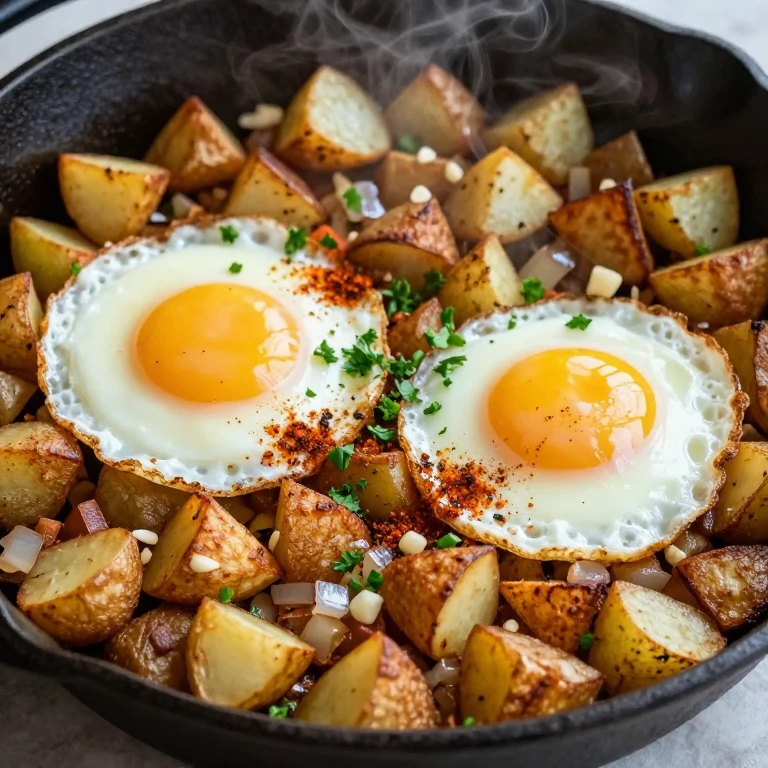
Crispy Potato Skillet With Paprika Eggs
Ingredients
Method
- Heat olive oil in a 10-inch cast-iron or stainless-steel skillet over medium-high heat. When the oil shimmers and moves easily across the pan, add diced potatoes in a single layer. Don't stir immediately—let them sit for three to four minutes. You're building a crust here, not scrambling. The bottom surfaces should turn golden and crispy.
- After the first crust develops, stir the potatoes and let them sit again for another three to four minutes. Repeat this process two more times over the next ten to twelve minutes. What you're looking for is potatoes that are cooked through (a fork should pierce them easily) and have golden, crispy edges.
- When the potatoes are nearly done, push them to the side of the skillet and add diced onion to the cleared space. Let the onion sit for two minutes to start softening, then stir it into the potatoes. Add minced garlic and cook for another minute until fragrant.
- Sprinkle smoked paprika and fresh thyme over the potatoes and onions. Stir well to distribute the seasoning evenly. Taste and season with salt and cracked black pepper.
- Using the back of a wooden spoon, create two small wells in the hash, pressing down gently so each well is about an inch deep. These wells hold the eggs in place and help them cook evenly.
- Crack one egg into each well. The yolk should sit in the center, and the whites should flow into the hash. Reduce heat to medium and cover the skillet with a lid or a baking sheet.
- Cook covered for four to six minutes, checking after four. The egg whites should be opaque and set, while the yolks should still jiggle slightly when you shake the pan. If you prefer fully cooked yolks, cook for another minute or two.
- Scatter fresh parsley over the top. A swipe of hot sauce adds brightness and a sharp kick. Serve straight from the skillet with crusty bread or toast on the side.