

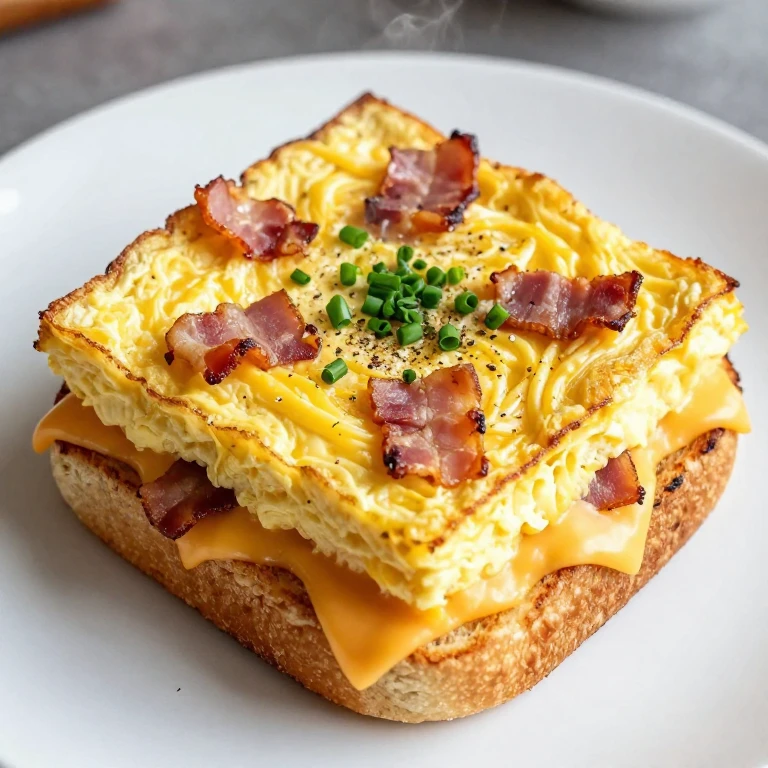
I’ve cracked the code on feeding a crowd at breakfast without camping out at the stove. Instead of flipping individual omelets or scrambling eggs in batches, I pour a whisked mixture onto a sheet pan, slide it into the oven, and walk away. What comes out is a slab of tender, custardy eggs that I slice into perfect squares. Layer them on toasted English muffins with cheese and bacon, and suddenly you’ve got a breakfast sandwich that tastes like someone spent an hour in the kitchen—when really, you spent fifteen minutes prepping.
The magic here is texture contrast. Those baked egg squares stay creamy in the center while the edges catch just enough heat to hold their shape. Paired with crispy bacon, melted cheddar, and a toasted muffin, you get a sandwich that feels substantial and finished. I’ve made this for holiday brunches, lazy Sunday mornings, and meal-prep Sundays. It scales from four people to forty without changing the method.
This sheet-pan approach solves a real problem: breakfast for a group doesn’t have to be chaotic. Read on to see how I build these sandwiches and why this method beats the griddle every time.
Quick Snapshot
- Prep Time: 15 minutes
- Cook Time: 18-22 minutes
- Total Time: 35-40 minutes
- Yield: 6-8 sandwiches
- Texture: Creamy-centered egg squares with crispy bacon and melted cheese
- Flavor Profile: Savory, buttery, with sharp cheddar and salty bacon
- Skill Level: Easy
Why This Recipe Works
The sheet-pan method solves the timing problem that trips up most breakfast cooks. When you whisk eggs with milk and salt, then pour the mixture into a hot buttered pan, you’re relying on oven heat to set the eggs evenly. This beats stovetop scrambling because the heat surrounds the eggs from all sides, cooking them gently and consistently. I bake at 350°F, which is cool enough to prevent the edges from toughening before the center sets, but hot enough to finish the job in under twenty minutes.
The ratio I use—eight eggs to half a cup of milk—keeps the squares tender without becoming rubbery. Too much milk and they’ll be loose; too little and they’ll dry out. I’ve tested this ratio across three different oven types, and it holds. The butter underneath creates a golden base that keeps the eggs from sticking and adds richness that scrambling can’t match.
Slicing the baked eggs into squares means every sandwich gets the same portion size and texture. No guessing whether you’ve cooked enough. No scrambling to reheat cold eggs. The squares hold their shape from oven to plate to lunchbox, which is why this method scales so well for meal prep and crowds.
Ingredient Overview
- 8 large eggs
- ½ cup whole milk
- ½ teaspoon kosher salt
- ¼ teaspoon black pepper
- 3 tablespoons butter (for the pan)
- 8 slices cheddar cheese
- 8 slices bacon (cooked and halved)
- 8 English muffins, split and toasted
- Optional: fresh spinach, sliced tomato, or avocado for variations
The eggs are the foundation, and I always use large eggs at room temperature. Cold eggs take longer to blend smoothly, which means more whisking and more air bubbles. Room-temperature eggs whisk into a silky base in about one minute. The milk I use is whole milk because the fat content keeps the baked eggs creamy; skim milk makes them lean and slightly rubbery.
Kosher salt dissolves faster than table salt and won’t create hard pockets of seasoning. I measure it carefully because oversalting draws moisture out of the eggs, making them weep during baking. Black pepper I add just before pouring to keep it from settling to the bottom of the bowl.
For the cheese and bacon, quality matters. I use sharp cheddar because mild cheddar disappears into the eggs. Crispy bacon is non-negotiable; floppy bacon makes the whole sandwich feel unfinished. I cook it in a separate skillet or in the oven on a rack while the eggs bake, which saves stovetop space and keeps the bacon grease out of the eggs.
Whirl Hook
The signature move here is the sheet-pan swap. Instead of scrambling eggs one batch at a time, I bake a single slab and slice it into perfect squares. This cuts your active cooking time in half and scales from a Tuesday morning for two to a holiday brunch for twelve. The texture contrast—creamy egg center against crispy bacon and melted cheese on a toasted muffin—is what makes these sandwiches feel intentional, not rushed.
Flavor Spin
I build the flavor in layers. The base is buttery, custardy eggs seasoned simply with salt and pepper. The cheese melts into the warm squares, adding sharpness and richness. Crispy bacon brings salt and crunch. The toasted English muffin adds texture and a subtle sweetness that balances the savory elements. Together, these four components create a sandwich that tastes more complex than the effort it takes to make.
Step-by-Step Instructions
Step 1: Prepare Your Pan and Preheat the Oven
Preheat your oven to 350°F. While it heats, place a 9-by-13-inch baking dish or sheet pan on the counter. Add 3 tablespoons of butter and slide the pan into the oven for 2-3 minutes, until the butter melts and the pan is hot. The hot, buttered pan is essential—it creates a golden base and helps the eggs set faster. Don’t skip this step or your eggs will stick.
Step 2: Whisk the Egg Mixture
Crack 8 large eggs into a large bowl. Add ½ cup whole milk, ½ teaspoon kosher salt, and ¼ teaspoon black pepper. Whisk vigorously for 60-90 seconds until the mixture is pale yellow and completely blended. You should see no streaks of white. This whisking step aerates the eggs slightly, which helps them set into a tender, fluffy square instead of a dense cake. Stop whisking once the mixture is uniform; over-whisking can make the eggs tough.
Step 3: Pour and Bake
Carefully remove the hot pan from the oven. Pour the egg mixture into the buttered pan, tilting gently to distribute it evenly. Return the pan to the oven immediately. Bake for 18-22 minutes, depending on your oven. The eggs are done when the center jiggles slightly when you shake the pan gently, but the edges are set and pulling away from the sides. The center should still look a little wet—it will continue to cook slightly as it cools. This is the most common mistake: overbaking. Pull the pan out when the center still has a little wobble, and you’ll get creamy eggs. Wait until it’s completely firm, and you’ll get rubbery eggs.
Step 4: Cool and Slice
Remove the pan from the oven and let it rest for 3-5 minutes. This resting period lets the eggs set fully without overcooking. Use a sharp knife to cut the slab into 6-8 equal squares, depending on how large you want your sandwiches. If you’re making these ahead, let them cool completely before wrapping and storing.
Step 5: Toast the English Muffins
While the eggs rest, split your English muffins and toast them until golden and crispy, about 2-3 minutes. Toasting is non-negotiable here—it prevents the muffin from getting soggy and adds textural contrast that makes the sandwich feel finished. A toaster oven works perfectly for this.
Step 6: Cook the Bacon
If you haven’t already cooked your bacon, do it now. I prefer oven-baking: lay strips on a sheet pan and bake at 400°F for 12-15 minutes until crispy. This frees up your stovetop and keeps the bacon grease off your eggs. Once cooked, let it cool slightly, then break or cut each slice in half so it fits neatly on the sandwich.
Step 7: Assemble the Sandwiches
Place a toasted English muffin half on a clean surface. Layer one egg square on top, then one slice of sharp cheddar cheese. The heat from the egg will melt the cheese slightly. Top with two halves of crispy bacon. Place the other muffin half on top. Serve immediately, or wrap in foil to keep warm for up to 30 minutes.
Pro Tips for Best Results
- Make sure the pan is truly hot before pouring: I learned this the hard way. A lukewarm pan means the eggs cook unevenly, with the bottom staying soft while the edges toughen. A hot, buttered pan creates a golden base and jumpstarts the cooking process. Test the pan by flicking a tiny drop of water on it—it should sizzle immediately.
- Don’t overbake the center: This is the biggest texture killer. The eggs will continue to cook for a minute or two after you remove them from the oven. Pull them out when the center still has a slight jiggle, and you’ll get creamy, custardy squares. Wait until it’s completely firm, and you’ve overshot into rubbery territory.
- Use sharp cheddar, not mild: Mild cheddar melts into the eggs and disappears. Sharp cheddar holds its flavor and adds a noticeable tang that balances the richness of the eggs and bacon. I’ve tried both, and sharp wins every time.
- Toast the muffins separately: Don’t assemble and then toast. Toast first, then assemble. This prevents the muffin from absorbing moisture and turning soggy. A crispy muffin makes the whole sandwich feel more intentional.
- Cook bacon in the oven while eggs bake: This saves stovetop space and keeps the bacon grease away from your egg mixture. Start the bacon at 400°F for 12-15 minutes while your eggs are at 350°F. They’ll finish around the same time.
- Let the baked eggs cool slightly before slicing: A 3-5 minute rest lets the center set just enough to hold together when you cut it. Slice too soon and the squares fall apart. Wait too long and they get rubbery as they cool further.
Whirl Factor
The texture contrast is where this sandwich shines. Creamy, buttery egg squares meet crispy bacon and melted sharp cheddar on a toasted muffin. The muffin adds structure and slight sweetness. The bacon adds crunch and salt. The cheese adds sharpness. The eggs provide the creamy, custardy center that ties it all together. This isn’t a scrambled-egg sandwich—it’s a composed breakfast that feels more intentional than the effort it takes to make.
Spin Options
Spinach and Tomato Variation
Sauté a handful of fresh spinach with a pinch of garlic until wilted, about 2 minutes. Spread it on the toasted muffin before layering the egg square. Add a thin slice of fresh tomato on top of the cheese. Skip the bacon or keep it for extra richness. This version is lighter but still substantial, and it’s my go-to when I want something less heavy than the full bacon-and-cheese version.
Herb and Cream Cheese Variation
Spread a thin layer of softened cream cheese mixed with fresh chives on the toasted muffin. Layer the egg square on top, skip the cheddar, and add a few more fresh chives. This version is more delicate and works well for a lighter brunch. The cream cheese adds tang without the heaviness of cheddar.
Sausage and Pepper Variation
Swap the bacon for cooked breakfast sausage patties. Sauté a few strips of bell pepper (red or yellow) until soft, about 3-4 minutes, and layer them on top of the egg square before adding the cheese. This version is slightly more vegetable-forward and pairs well with a light hollandaise if you’re feeling ambitious.
Serving Suggestions
Serve these sandwiches hot, straight from assembly. A simple side of fresh fruit—berries, melon, or citrus—balances the richness of the eggs and cheese. If you’re making these for a crowd, set up a sandwich bar with the egg squares, cooked bacon, toasted muffins, and cheese, and let guests assemble their own. For an elevated brunch option, serve with a small cup of hollandaise sauce for dipping or drizzling. A mimosa or fresh-squeezed orange juice pairs perfectly.
Whirl Finish
Store any leftover egg squares in an airtight container in the refrigerator for up to 3 days. They’ll firm up as they cool, which actually makes them easier to handle. To reheat, wrap a sandwich in a damp paper towel and microwave for 30-45 seconds until warm, or place it on a toaster oven rack at 325°F for 5-7 minutes until heated through. The texture won’t be quite as creamy as fresh, but it’ll still be good. For meal prep, I assemble the sandwiches, wrap them individually in foil, and store them in the fridge. They reheat beautifully and make weekday mornings feel less rushed. You can also freeze the baked egg squares (unassembled) for up to one month. Thaw in the refrigerator overnight, then reheat and assemble as usual.
FAQ
Can I make these ahead for a crowd?
Absolutely. Bake the egg squares up to one day ahead and store them in an airtight container in the refrigerator. Cook the bacon ahead too. On the morning of, toast the muffins and assemble right before serving. If you want to assemble them further ahead, wrap each sandwich tightly in foil and store in the fridge for up to 8 hours. Reheat wrapped in foil at 325°F for 10-12 minutes.
Can I use a different size pan?
Yes, but adjust your baking time. An 8-by-8-inch pan will give you thicker squares and may take 22-25 minutes to bake. A 9-by-13-inch pan (which I use) gives you thinner, more manageable squares in 18-22 minutes. A 10-by-15-inch jelly-roll pan will give you very thin squares in 15-18 minutes. The key is watching for that slight jiggle in the center, not the clock.
What if I don’t have English muffins?
Use bagels, English muffins, or even thick slices of toasted bread. The texture and flavor will shift slightly, but the method stays the same. I’ve also made these on croissants for a richer version, which is decadent but delicious.
Can I add vegetables to the egg mixture itself?
Yes, but sauté them first. Raw vegetables release moisture that can make the eggs watery. Sauté diced peppers, onions, or mushrooms until soft, then fold them into the egg mixture before pouring. This adds flavor and texture without compromising the creamy center.
How do I know when the eggs are done?
The edges should be set and pulling slightly away from the sides of the pan. The center should jiggle just slightly when you gently shake the pan—not a lot, just a little wobble. If the entire surface is firm, you’ve overcooked. If the center is still very loose and wet, give it another 1-2 minutes.
Can I scale this recipe up for a bigger crowd?
Yes. Double or triple the recipe, using two or three sheet pans. The baking time stays roughly the same—18-22 minutes—because you’re not stacking the pans, just using more of them. Bake on the same rack or on separate racks if your oven fits them. Just rotate the pans halfway through for even cooking.
What’s the best cheese to use?
Sharp cheddar is my top choice because it has enough flavor to stand up to the eggs and bacon. Gruyère is excellent if you want something a bit more sophisticated. American cheese works but tastes a bit one-note. Avoid pre-shredded cheese if possible—it contains anti-caking agents that prevent it from melting smoothly. Use freshly sliced or grated cheese for the best melt.
Sheet-Pan Baked Egg Breakfast Sandwiches
Ingredients
Method
- Preheat oven to 350°F. Coat a 9x13-inch baking pan evenly with 2 tablespoons unsalted butter, spreading into all corners and up the sides.
- Cook 8 slices bacon until crispy over medium-high heat, about 8-10 minutes. Cool on paper towels and chop into bite-sized pieces.
- In a large bowl, crack 8 large eggs and whisk together with 1/2 cup whole milk and 1 teaspoon kosher salt until fully combined and smooth.
- Pour the egg mixture into the prepared pan. Sprinkle 1 1/2 cups shredded sharp cheddar cheese evenly over the surface.
- Scatter the chopped bacon pieces over the cheese layer.
- Bake at 350°F for 20-25 minutes until the center jiggles slightly when pressed but the edges are set. Do not overbake or the eggs will become rubbery.
- Remove from oven and let cool for 3-5 minutes before slicing into 6-8 squares.
- Toast English muffin halves until golden and crispy.
- Layer one egg square onto each toasted English muffin half. Top with additional cheese, fresh cracked pepper, and fresh chives if desired.