

There’s a moment in every sandwich lover’s kitchen when you realize that the fillings matter less than what holds them together. For me, that moment came when I stopped buying jarred pickled onions and started making my own—a quick hot-brine method that takes fifteen minutes and transforms a humble sandwich into something with real snap and purpose. The garlic-forward brine, infused with peppercorns and a touch of vinegar heat, doesn’t just sit on the bread; it cuts through richness, brightens every layer, and gives you that textural contrast that separates a forgettable lunch from one you’ll think about for days.
This pickled onions sandwich topping is my answer to the question I ask before every meal: what’s the one element that could make this better? Whether you’re building a grilled cheese, stacking a turkey club, or layering vegetables on sourdough, these onions deliver savory snap and acidic balance in every bite. The method is forgiving, the results are repeatable, and once you have a jar in your fridge, you’ll find yourself reaching for it constantly.
What Makes This Dish Special
The core twist here is the hot-brine technique combined with thin, even slicing. Most pickled onion recipes call for long fermentation or overnight sitting—which works, but requires planning. My method uses a boiling brine poured directly over fresh onions, which softens them just enough to absorb flavor while keeping them snappy and firm enough to hold their structure on a sandwich.
The texture contrast is equally important. You’re layering crisp, yielding onions (not mushy, not raw) against creamy spreads, tender proteins, and soft bread. The peppercorns add visual texture and a subtle heat that builds as you chew. Garlic cloves steeped in the brine release their flavor gradually, so the brine tastes more complex on day two or three than it does fresh from the pot.
What I’ve found is that this method works because it respects the onion’s natural sweetness while cutting it with acid and salt. You’re not trying to hide the vegetable; you’re highlighting it as the finishing move it deserves to be.
Flavor Profile Breakdown
These pickled onions hit in layers. The first taste is the sharp bite of vinegar and salt—that immediate acidic punch that wakes up your palate. As you chew, the sweetness of the onion emerges, balanced by the garlic’s subtle savory depth and the peppercorns’ gentle heat. The finish is clean and bright, with a lingering peppery warmth that makes you reach for another bite.
The flavor interplay works because vinegar, salt, and fat (from whatever you’re pairing these with) create a complete flavor arc. The acid cuts through richness, the salt amplifies other flavors, and the onion’s natural sweetness prevents the brine from becoming one-note sharp. Garlic bridges the gap between raw and cooked, adding umami that elevates the whole sandwich.
Ingredient Highlights
The onions are the foundation—I use red onions because they hold their color, slice cleanly, and have a natural sweetness that balances vinegar well. White or yellow onions work too, but red onions give you visual pop on the plate and in the jar.
Vinegar is your acid anchor. I use white vinegar for its clean sharpness, but apple cider vinegar adds a subtle fruitiness if you prefer. Rice vinegar softens the bite slightly—use it if you want the brine to feel gentler on your palate. The ratio of vinegar to water matters: too much vinegar and the brine becomes harsh; too little and the onions won’t keep as long. I aim for a 1:1 ratio, which gives you that tangy snap without overwhelm.
Garlic cloves stay whole in the brine, releasing their flavor slowly. If you want sharper garlic presence, slice or mince them before brining. Peppercorns add heat and visual texture—I use black peppercorns, but pink or white peppercorns create different flavor notes if you want to experiment. Salt ties everything together, enhancing the vinegar’s bite and drawing out the onion’s sweetness. Kosher salt dissolves evenly and doesn’t add iodine flavor like table salt.
Whirl Hook
Here’s what makes this method stand out: you’re building a hot-brine sandwich topping that delivers crisp-tender onions with garlic-forward heat in fifteen minutes, no fermentation required. The payoff is a jar of pickled onions that stays fresh for three weeks and transforms every sandwich you build with it. This is the texture contrast that separates a good sandwich from one worth remembering.
Flavor Spin
The core twist is the balance between vinegar’s sharp bite and the onion’s natural sweetness, anchored by whole garlic cloves that release flavor gradually. The peppercorns aren’t just seasoning—they’re texture, visual interest, and a subtle heat that builds as you eat. This isn’t fermented funk or overnight mellowness; this is immediate, repeatable flavor that works every single time you open the jar.
Whirl Factor
The texture contrast is crisp-tender onions layered against creamy spreads, tender proteins, and soft bread. The peppercorns add crunch and heat. The flavor contrast is the sharp vinegar bite against the onion’s sweetness, with garlic’s savory depth bridging both. This is a finishing move that amplifies every element of your sandwich without overpowering it.
Cooking Walkthrough
Ingredients:
- 2 large red onions
- 1 cup white vinegar
- 1 cup water
- 2 tablespoons kosher salt
- 1 tablespoon sugar
- 4 garlic cloves, peeled and left whole
- 1 tablespoon black peppercorns
- 2 bay leaves (optional)
- 1/2 teaspoon red pepper flakes (optional)
Steps:
1. Slice the onions evenly. I use a sharp knife and aim for 1/4-inch slices—thin enough to absorb the brine quickly but thick enough to hold their structure on a sandwich. Consistency matters here: uneven slices will cook at different rates, and you’ll end up with some soft pieces and some that stay too crisp. If you have a mandoline, use it for perfect uniformity. Separate the onion slices into rings and place them in a heat-safe glass jar or bowl.
2. Build the brine. In a small pot, combine vinegar, water, salt, and sugar. The sugar isn’t about sweetness—it balances the vinegar’s sharpness and helps the brine penetrate the onion. Stir over medium heat until the salt and sugar dissolve completely. This takes about two minutes. You want the liquid clear and homogeneous before you add heat.
3. Add aromatics to the brine. Once the salt and sugar are dissolved, add the garlic cloves, peppercorns, bay leaves, and red pepper flakes if using. Let the brine simmer for one minute—just long enough for the aromatics to begin releasing their oils into the liquid. You’ll notice the smell change slightly, becoming more complex. Don’t let it boil hard; a gentle simmer is all you need.
4. Pour the hot brine over the onions. Remove the pot from heat and carefully pour the hot brine (including the garlic and peppercorns) over the sliced onions. The heat will soften the onions slightly and help them absorb the flavors. You should hear a gentle sizzle as the hot liquid hits the cold onions. Stir gently to ensure all the onions are submerged and the aromatics are distributed evenly throughout the jar.
5. Cool and refrigerate. Let the jar sit at room temperature for at least one hour before refrigerating. During this time, the onions continue to soften and absorb the brine. Once cooled, cover the jar and refrigerate. The pickled onions are ready to use immediately, but they taste noticeably better after two to three hours in the fridge, when the flavors have melded and the onions have fully softened. They’ll keep refrigerated for up to three weeks, though the flavor is brightest in the first two weeks.
Chef Notes
I always make a double batch of this brine and keep two jars going at once. Once you start using pickled onions on sandwiches, salads, tacos, and grain bowls, you’ll realize how quickly a jar empties. Having backup in the fridge means you’re never caught without them.
In my kitchen, I’ve learned that the thickness of your onion slice directly affects how fast they absorb the brine and how they feel on the sandwich. Thinner slices (1/8-inch) absorb flavor faster and soften more, which is great if you like them almost melting into your sandwich. Thicker slices (3/8-inch) stay crunchier longer, which I prefer because they maintain that textural contrast. Find your preference and stick with it.
When I’m building a sandwich, I always place the pickled onions on top of the protein or spread, not directly against the bread. This prevents the bread from getting soggy while keeping the onions’ crispness intact. The brine drains off slightly as the sandwich sits, which is exactly what you want.
I’ve found that adding a touch of maple syrup (1/2 teaspoon) to the brine creates a subtle sweetness that some people prefer—it rounds out the vinegar’s sharpness without making the onions taste sugary. If you go this route, reduce the sugar slightly so the balance stays right.
One more thing: if your onions seem too soft after a day or two, they’ve absorbed too much brine. Next time, use slightly thicker slices or reduce the brining time by pouring the brine when it’s slightly cooler. The goal is tender-crisp, not mushy.
Spin Options
Dill & Lemon Variation: Add 1 tablespoon fresh dill and two lemon slices to the brine before pouring. This version works beautifully on smoked salmon sandwiches and with cream cheese spreads. The dill adds an herbaceous note that brightens the vinegar, and the lemon introduces citrus complexity. The flavor profile shifts from pure vinegar-sharp to more nuanced and garden-fresh.
Maple & Thyme Variation: Replace the sugar with 1 tablespoon maple syrup and add 2-3 fresh thyme sprigs to the brine. This version pairs exceptionally well with pulled pork, roasted chicken, and aged cheddar. The maple adds subtle sweetness that balances the vinegar, and thyme introduces an earthy note that elevates the whole sandwich. This is my go-to for autumn and winter sandwiches.
Spiced & Smoky Variation: Add 1/2 teaspoon smoked paprika, 2-3 whole allspice berries, and a pinch of cayenne to the brine. This version transforms the pickled onions into something with real heat and depth. Use it on barbecue sandwiches, turkey clubs, and anything with smoked meats. The paprika adds color and subtle smokiness, the allspice brings warmth, and the cayenne builds heat as you eat.
Whirl Finish
Store your pickled onions in a clean glass jar in the refrigerator, covered. They’ll keep for up to three weeks, though the flavor is brightest in the first two weeks. The brine becomes more concentrated as the onions release their liquid, so if you want to extend the life of your batch, you can add a splash of fresh vinegar and water if the brine seems too intense.
Use these pickled onions on any sandwich where you want acidic brightness and textural contrast. Layer them on grilled cheese for a savory-sharp counterpoint to melted cheese. Stack them on turkey clubs for complexity that balances rich mayonnaise. Pile them on veggie sandwiches for a finishing move that elevates simple ingredients. They’re also exceptional on grain bowls, salads, tacos, and as a condiment alongside charcuterie.
Texture & Taste Expectations
Your finished pickled onions should be tender but still crisp enough to hold their shape on a sandwich. The color will deepen slightly from the raw onion’s brightness to a deeper red-purple as they absorb the brine. When you bite into them, you’ll feel that initial crunch from the peppercorns, followed by the soft yield of the onion, then the sharp vinegar bite and subtle garlic warmth. The finish is clean and bright, with a peppery heat that lingers and makes you want another bite. This is what success looks like: onions that enhance every element of your sandwich without dominating it.
Customization Ideas
- Softer onions: Use thinner slices (1/8-inch) or let them sit in the brine for 24 hours before using. They’ll be more tender but still hold their shape on bread.
- Crunchier onions: Use thicker slices (3/8-inch) and use them within the first day or two. The longer they sit, the softer they become.
- Milder vinegar bite: Replace half the vinegar with apple cider vinegar or add 1/2 teaspoon of maple syrup. This rounds out the sharpness without losing the pickled quality.
- Spicier version: Add 1/2 to 1 teaspoon red pepper flakes to the brine, or include a sliced fresh chile. The heat will build over time as the onions sit.
- Herbaceous twist: Add fresh dill, thyme, or rosemary to the brine. Use 1-2 tablespoons fresh herbs or 1-2 teaspoons dried. This works especially well if you’re using these onions on sandwiches with fish or chicken.
- Sweet-savory balance: Add 1/2 to 1 tablespoon honey or maple syrup to the brine. This creates a subtle sweetness that some people prefer and makes the onions work better with aged cheeses and cured meats.
Pairing Ideas
These pickled onions shine on grilled cheese made with aged cheddar or fontina—the acidic brightness cuts through the richness of melted cheese and creates a complete flavor arc. They’re equally exceptional on smoked turkey clubs with crispy bacon and creamy mayo, where their sharpness balances the richness of the proteins. For something unexpected, try them on a simple cream cheese and cucumber sandwich on whole grain bread: the pickled onions add savory depth that transforms a light lunch into something with real character. They’re also outstanding on pulled pork sandwiches, roasted vegetable stacks, and as a condiment alongside grilled sausages.
FAQ
Can I use white or yellow onions instead of red?
Yes, absolutely. Red onions have a natural sweetness and hold their color beautifully, but white and yellow onions work just as well. White onions are slightly sharper and less sweet, which some people prefer. Yellow onions are milder and more mellow. The brine method stays the same regardless of which type you choose.
How long do these pickled onions keep in the fridge?
They’ll keep refrigerated for up to three weeks, though the flavor is brightest in the first two weeks. After that, the vinegar becomes more concentrated and the onions soften further. If you want to extend the life, add a splash of fresh vinegar and water if the brine seems too intense.
Can I make these without the peppercorns?
Yes, but you’ll lose some of the textural contrast and subtle heat. If you’re skipping the peppercorns, consider adding another aromatic like a bay leaf, a sprig of thyme, or a slice of fresh ginger. The goal is to build flavor layers, and the peppercorns contribute both texture and taste.
Do I need to sterilize the jar?
For short-term storage (three weeks or less), a clean jar is fine. The vinegar acts as a preservative. If you’re planning to keep these longer or want extra safety, wash the jar in hot soapy water and dry it thoroughly, or run it through the dishwasher before filling.
Can I use these pickled onions on other dishes besides sandwiches?
Absolutely. They’re exceptional on grain bowls, salads, tacos, hot dogs, nachos, and charcuterie boards. I also use them as a condiment alongside grilled meats and fish. Anywhere you want acidic brightness and textural contrast, these onions work.
What if my onions are too soft after a few days?
This means they’ve absorbed too much brine. Next time, use slightly thicker slices (3/8-inch instead of 1/4-inch) or use them within the first 24 hours. You can also pour the hot brine when it’s slightly cooler—let it cool for five minutes before pouring over the onions.
Can I freeze these pickled onions?
Freezing isn’t recommended. The onions will become mushy when thawed because ice crystals damage the cell structure. They’re best kept refrigerated in their brine, where they maintain their crisp-tender texture for up to three weeks.
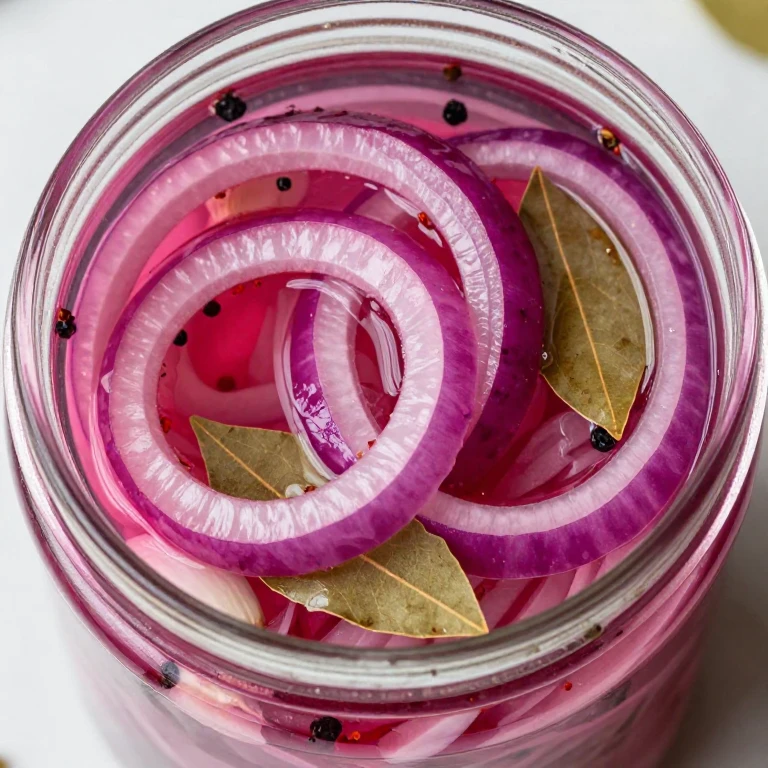
Pickled Onions Sandwich Topping With Garlic & Spice
Ingredients
Method
- Slice the onions evenly into 1/4-inch rings. Consistency matters: uneven slices will cook at different rates. Separate the onion slices into rings and place them in a heat-safe glass jar or bowl.
- In a small pot, combine vinegar, water, salt, and sugar. Stir over medium heat until the salt and sugar dissolve completely, about two minutes. You want the liquid clear and homogeneous before adding heat.
- Once the salt and sugar are dissolved, add the garlic cloves, peppercorns, bay leaves, and red pepper flakes. Let the brine simmer for one minute—just long enough for the aromatics to begin releasing their oils. Don't let it boil hard; a gentle simmer is all you need.
- Remove the pot from heat and carefully pour the hot brine (including the garlic and peppercorns) over the sliced onions. Stir gently to ensure all the onions are submerged and the aromatics are distributed evenly throughout the jar.
- Let the jar sit at room temperature for at least one hour before refrigerating. During this time, the onions continue to soften and absorb the brine. Once cooled, cover the jar and refrigerate. The pickled onions are ready to use immediately, but they taste noticeably better after two to three hours in the fridge.