

Pickled red onions are one of those kitchen staples that transform a plate the moment you add them. I’ve found that the best versions aren’t complicated—they’re just built on a few smart choices: thin slices that absorb the brine fast, a balanced vinegar-to-water ratio that keeps them crisp instead of mushy, and enough salt to brighten without overwhelming. When I make these at home, I get restaurant-quality results in under 15 minutes of active time, then let the fridge do the rest.
What makes this method worth your time is reliability. No canning equipment, no guesswork about doneness, no risk of over-softening. You heat the brine, pour it over raw onions, let it cool, then refrigerate. The onions stay snappy for a week or more, and the color stays vivid—that deep magenta that signals freshness and adds visual punch to tacos, salads, grain bowls, and burgers. I always keep a jar on hand because once you taste the difference between homemade and store-bought, you won’t go back.
Let me walk you through exactly how I do this, from slice thickness to storage, so you can build your own reliable batch starting today.
Quick Snapshot
- Prep Time: 15 minutes
- Cook Time: 5 minutes
- Total Time: 20 minutes (plus 1 hour chill)
- Yield: About 2 cups
- Texture: Crisp, snappy, tender at edges
- Flavor Profile: Bright, tangy, lightly sweet
- Skill Level: Beginner
Why This Recipe Works
I slice the onions thin—about 1/8 inch—so they absorb the brine evenly and soften just enough to lose their raw bite while keeping their crunch. Thick slices sit raw in the center; thin ones pickle through in an hour or two. The brine ratio matters too: I use equal parts vinegar and water (1 cup each) with 1 tablespoon salt and 1 teaspoon sugar. That balance keeps the acid from tasting harsh and the salt from tasting one-note.
Heating the brine before pouring it over raw onions matters more than you’d think. The heat opens the onion cells just enough for the liquid to penetrate deeply, and it also helps dissolve the salt and sugar completely so there’s no grittiness. I let the brine cool slightly before pouring—still warm but not steaming—so the onions start softening right away without getting cooked. One hour in the fridge and they’re ready; overnight and they’re even better.
Ingredient Overview
- Onions & Brine Base:
- 2 large red onions (about 1.5 pounds)
- 1 cup red wine vinegar or distilled white vinegar
- 1 cup water
- 1 tablespoon kosher salt
- 1 teaspoon sugar
- Optional Aromatics:
- 2-3 bay leaves
- 1 teaspoon black peppercorns
- 2-3 sprigs fresh dill
- 1-2 jalapeños, sliced (for heat)
- 1/2 teaspoon red pepper flakes
Red onions are non-negotiable here—their natural sweetness balances the acid and their color stays vibrant through pickling. I use red wine vinegar most often because it adds subtle depth, but white vinegar works fine if you want a cleaner, sharper taste. The salt dissolves the onion’s harshness and draws out moisture, while the sugar rounds the edges without making anything sweet. You’ll notice I keep sugar minimal; this isn’t a sweet pickle.
For aromatics, I vary based on what I’m serving with. Dill and bay go with tacos and salads. Peppercorns and bay work for grain bowls and roasted vegetables. Jalapeños spike heat for anyone who wants it. Add these to the jar before pouring the brine so they infuse as the onions chill.
Whirl Hook
The magic move here is pouring warm brine over raw onions and letting time do the work. No cooking the onions down, no special equipment—just thin slices, balanced brine, and patience. The result is crisp-tender pickled onions that brighten any plate and keep for days.
Flavor Spin
The core twist is the ratio: equal vinegar and water keeps the bite sharp without tasting aggressive, while salt and a touch of sugar make the onions themselves the star instead of the brine. I’m after balance here—bright enough to cut through rich foods like tacos and burgers, but not so aggressive that they dominate the plate.
Whirl Factor
Texture contrast is everything. The onions soften just enough to lose their raw harshness, but they stay snappy—that satisfying crunch when you bite through the layers. The warm brine cools against the cold onions, creating that textural play. Paired with soft tortillas, creamy avocado, or tender roasted vegetables, the pickled onions add the contrast that makes each bite interesting.
Step-by-Step Instructions
Slice the Onions
Cut the red onions in half from root to tip, then peel away the papery skin and first layer if it’s damaged. Lay each half flat on a cutting board and slice crosswise into thin half-moons, about 1/8 inch thick. Thinner slices pickle faster and more evenly. You should have about 4 cups of sliced onions. Don’t worry if they’re not perfectly uniform—slight variation in thickness is fine and actually helps texture.
Prepare the Jar
While you’re slicing, grab a clean quart-sized jar or two pint jars. If you’re using aromatics (bay leaves, dill, peppercorns, jalapeños), place them in the bottom of the jar now. This way they’ll infuse the brine as everything cools. If you’re keeping it simple, skip this step and add them later if you want.
Heat the Brine
In a small saucepan, combine 1 cup vinegar, 1 cup water, 1 tablespoon salt, and 1 teaspoon sugar. Heat over medium heat, stirring occasionally, until the mixture reaches a gentle simmer—you’ll see small bubbles forming at the edges, around 3-4 minutes. The salt and sugar should dissolve completely. Taste it: it should taste bright and balanced, not aggressively sour or salty. If it’s too sharp, add a pinch more sugar; if it’s flat, add a splash more vinegar.
Pack the Onions
Transfer the sliced onions to your prepared jar or jars, packing them down gently but not crushing them. Fill to about 1 inch from the rim. The onions will compact as they absorb liquid, so don’t leave too much headspace. You want them mostly submerged or at least touching the brine that’s about to go in.
Pour the Warm Brine
Carefully pour the warm brine over the onions, making sure they’re fully covered. If some onions float above the liquid, press them down gently with the back of a spoon or a clean fork. The brine should cover everything by at least 1/2 inch. If you don’t have enough brine, make a quick batch: equal parts vinegar and water with a pinch of salt and sugar, heat it, and add it. Most common mistake: leaving onions exposed to air, which causes discoloration and faster spoilage.
Cool and Refrigerate
Let the jar sit on the counter until the brine cools to room temperature, about 30-45 minutes. You’ll notice the onions starting to soften and turn a deeper magenta as the acid penetrates. Once cooled, cover the jar and refrigerate. They’ll be lightly pickled and snappy after 1 hour, but I prefer them after 4-6 hours or overnight when the flavors have melded and the texture is perfectly tender-crisp.
Pro Tips for Best Results
- Slice consistently for even pickling. If some onion slices are thick and others paper-thin, the thin ones will turn mushy while the thick ones stay raw. I use a mandoline for uniformity, but a sharp knife and a steady hand work fine. Aim for 1/8 inch across the board.
- Don’t skip heating the brine. Cold brine poured over raw onions takes much longer to penetrate and the result is less flavorful. Warm brine opens the onion cells and dissolves the salt and sugar evenly, so you get better flavor and texture faster.
- Taste the brine before pouring. This is your only chance to adjust seasoning. If it tastes off—too sour, too salty, too bland—fix it now. Once it’s on the onions, you’re committed to the flavor profile for the next week.
- Pack the jar firmly but don’t crush. Onions that float above the brine will oxidize and turn brown. Press them down gently so they stay submerged, but don’t mash them or you’ll end up with mush.
- Keep them cold and covered. Refrigeration slows oxidation and keeps the color vivid. An uncovered jar in a warm kitchen will fade fast. Covered in the fridge, they stay bright and crisp for 7-10 days.
- Make a double batch for meal prep. These keep so well that I often make two jars at once—one for the week and one as backup. They’re ready to grab for tacos, salads, or any plate that needs brightness.
Spin Options
Spiced Pickled Onions
Add 1 teaspoon whole coriander seeds, 1/2 teaspoon whole cumin seeds, and 3-4 whole cloves to the brine before heating. These warm spices pair beautifully with Indian-inspired bowls, roasted chickpeas, and curried dishes. The flavor develops over 24 hours, so these are worth making a day ahead if you can.
Dill & Peppercorn Pickled Onions
Add 2-3 sprigs fresh dill and 1 teaspoon black peppercorns to the jar before pouring the brine. These are my go-to for deli-style sandwiches, grain bowls with smoked fish, and roasted beet salads. The dill stays bright and fresh-tasting even after a week in the fridge.
Spicy Jalapeño Pickled Onions
Slice 1-2 jalapeños and add them to the jar along with 1/2 teaspoon red pepper flakes and 2 bay leaves. These bring heat and complexity to tacos, nachos, and any plate that can handle a kick. The heat mellows slightly over time, so taste them at different stages to find your preference.
Whirl Finish
These pickled onions shine on tacos (especially carnitas or al pastor), scattered over salads for crunch and tang, piled on burgers and sandwiches, or mixed into grain bowls alongside roasted vegetables and protein. I also use them as a condiment for charcuterie boards, spooned over cream cheese on crostini, or mixed into sour cream for a bright dip. The possibilities multiply once you have a jar in the fridge.
Serving Suggestions
Layer pickled red onions on soft corn or flour tortillas with carnitas, cotija cheese, and fresh cilantro for a taco that tastes like a restaurant made it. The onions add brightness and crunch that elevates simple fillings into something memorable.
Toss them into a grain bowl with roasted sweet potato, black beans, avocado, and lime crema. The acidity cuts through the richness and adds visual pop that makes the bowl look intentional and restaurant-quality.
For an elevated option, pile them onto smoked salmon, cream cheese, and dill on toasted rye bread, or scatter them over a composed salad with beets, goat cheese, and candied walnuts. In both cases, the pickled onions provide the acidic counterpoint that makes all the other flavors sing.
Storage & Reheating
Pickled red onions don’t need reheating—they’re best served cold straight from the jar. Store them in a covered jar in the refrigerator for up to 10 days. The longer they sit, the more the flavors meld and the softer they become, so use them within the first week if you prefer maximum crunch. If you want to extend their life, make sure they stay fully submerged in brine and keep the jar covered. Once you open the jar repeatedly or leave it uncovered, they’ll start to fade and soften faster.
These don’t freeze well because the texture suffers—the onions become mushy when thawed. Stick to refrigerator storage for best results. If you have extra and they’re approaching their 10-day mark, use them up in a batch of tacos, a big salad, or mixed into a quick slaw rather than trying to preserve them further.
FAQ
Can I use white onions instead of red onions?
You can, but you’ll lose the visual appeal and the subtle sweetness that red onions bring. White onions are sharper and won’t turn that beautiful magenta color. If you must substitute, use red onions for this recipe—they’re the whole point texture and color-wise.
How thin should I slice the onions?
Aim for about 1/8 inch thick. This is thin enough to pickle evenly and absorb the brine in 1-2 hours, but thick enough to stay snappy instead of turning to mush. A mandoline set to 1/8 inch is your best bet, but a sharp knife works fine if you’re careful and consistent.
Do I have to use red wine vinegar?
No. White vinegar, apple cider vinegar, or even rice vinegar all work. Red wine vinegar adds subtle depth and pairs beautifully with the red onions, but if you want a cleaner, sharper taste, white vinegar is your move. Avoid malt vinegar—it’s too strong and will overpower the onions.
Can I make these without the sugar?
You can, but the brine will taste sharper and one-note. The sugar isn’t about sweetness—it’s about balance. Just 1 teaspoon rounds the acid and makes the onions taste more like themselves. If you’re avoiding sugar entirely, use a tiny pinch of honey or skip it, but expect a more aggressive pickle.
How long do pickled red onions last?
In a covered jar in the refrigerator, they last 7-10 days. After that, they start to fade in color and soften more than most people prefer. I make a fresh batch weekly during taco season because I use them so fast. If you want them to last longer, make sure they stay fully submerged and keep the jar covered between uses.
Can I make these in a hot water bath for shelf-stable storage?
Technically yes, but I don’t recommend it for a home cook. The USDA guidelines for safe canning require specific procedures that are easy to get wrong. These refrigerator pickles are safer, faster, and taste fresher. Make them fresh weekly instead of trying to can them.
What if my pickled onions turn brown or fade?
Browning happens when onions are exposed to air for too long or stored at room temperature. Fading happens naturally over 7-10 days and is just oxidation—they’re still safe to eat, but the color and texture aren’t as vibrant. Store them covered in the fridge from day one, and use them within a week for best results.
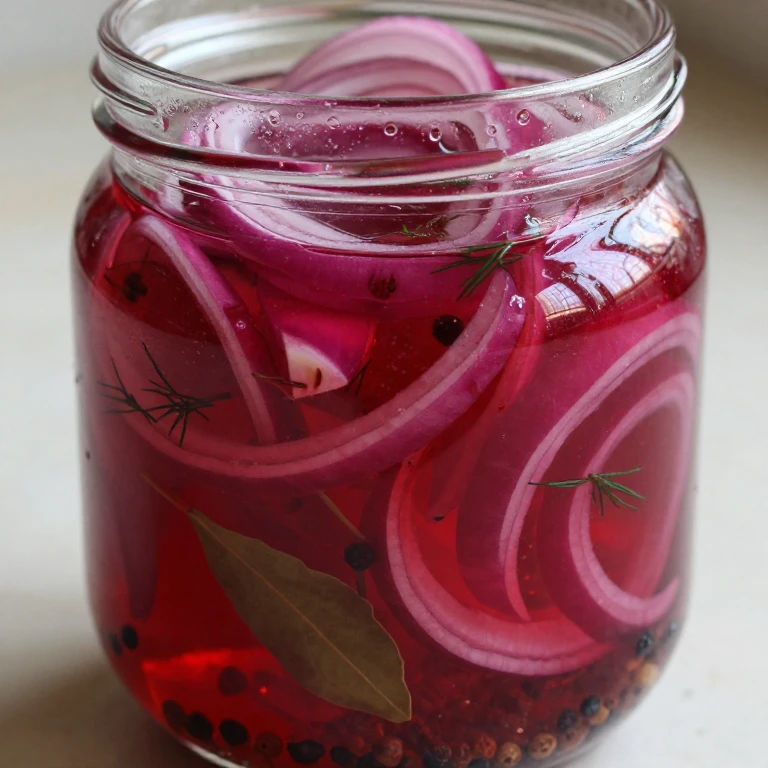
How to Make Pickled Red Onions at Home, Step by Step
Ingredients
Method
- Cut the red onions in half from root to tip, then peel away the papery skin and first layer if it's damaged. Lay each half flat on a cutting board and slice crosswise into thin half-moons, about 1/8 inch thick. Thinner slices pickle faster and more evenly. You should have about 4 cups of sliced onions.
- While you're slicing, grab a clean quart-sized jar or two pint jars. If you're using aromatics like bay leaves, dill, peppercorns, or jalapeños, place them in the bottom of the jar now so they'll infuse the brine as everything cools.
- In a small saucepan, combine 1 cup vinegar, 1 cup water, 1 tablespoon salt, and 1 teaspoon sugar. Heat over medium heat, stirring occasionally, until the mixture reaches a gentle simmer around 3-4 minutes. The salt and sugar should dissolve completely. Taste it to ensure it's bright and balanced.
- Transfer the sliced onions to your prepared jar or jars, packing them down gently but not crushing them. Fill to about 1 inch from the rim. The onions will compact as they absorb liquid, so don't leave too much headspace.
- Carefully pour the warm brine over the onions, making sure they're fully covered. If some onions float above the liquid, press them down gently with the back of a spoon. The brine should cover everything by at least 1/2 inch.
- Let the jar sit on the counter until the brine cools to room temperature, about 30-45 minutes. You'll notice the onions starting to soften and turn a deeper magenta. Once cooled, cover the jar and refrigerate. They'll be lightly pickled and snappy after 1 hour, but they're better after 4-6 hours or overnight.