

Pickled onions are the burger topping that changes everything. I’ve found that a quick hot brine with dill and mustard seeds transforms thin-sliced red onions into a crisp, tangy crunch that cuts through rich beef, brightens turkey patties, and adds serious snap to veggie burgers. You’ll get restaurant-quality toppings in about 15 minutes of hands-on time, with the real magic happening in your fridge while you prep everything else. This isn’t a complicated ferment—it’s a refrigerator quick pickle that stays bright and crunchy for weeks, ready whenever burger night calls.
Why You’ll Love This
- Ready in 15 minutes with zero special equipment beyond a mason jar
- Crisp texture that holds up under burger weight and condiments
- Tangy, complex flavor from dill fronds and mustard seeds—not just vinegar heat
- Makes enough for 8-10 burgers and keeps for 3 weeks refrigerated
- Works on beef, turkey, chicken, plant-based, or breakfast sandwiches
- Hands-off once the brine hits the onions—perfect for meal prep
Ingredient Breakdown
For the Pickled Onions
- 2 large red onions (about 1 pound), peeled and thinly sliced into rings
- 1 cup red wine vinegar
- 1 cup water
- 3 tablespoons sugar
- 1 tablespoon kosher salt
- 1 tablespoon yellow mustard seeds
- 1 tablespoon brown mustard seeds
- 6-8 fresh dill fronds
- 1 teaspoon black peppercorns
- 2 bay leaves
The mustard seeds bring a subtle earthiness and slight bite, while fresh dill keeps these pickles bright instead of flat. Red wine vinegar gives depth that white vinegar can’t match—this is where the flavor twist lives. I always use fresh dill fronds rather than dried; the difference in crispness is worth the trip to the produce section.
Whirl Hook
This pickled onion recipe is built on one core idea: a hot brine that softens the onion’s raw bite while the dill and dual mustard seeds add complexity that makes these toppings taste intentional, not like an afterthought from a jar. The texture contrast—crisp rings against a tangy, herbaceous brine—is what elevates any burger from good to memorable.
Flavor Spin
The dill fronds and mustard seed combination is the signature move here. Yellow mustard seeds are milder and slightly sweet, while brown mustard seeds bring a peppery edge. Together with fresh dill, they create a flavor profile that’s savory and aromatic without overpowering the burger itself. This isn’t a spicy pickle—it’s a sophisticated one.
Step-by-Step
- Slice the red onions thinly (about 1/4-inch rings) and place them in a clean mason jar or glass container.
- In a small saucepan, combine the red wine vinegar, water, sugar, and kosher salt over medium-high heat.
- Stir until the sugar and salt dissolve completely, about 2-3 minutes. You should see no crystals on the bottom of the pan.
- Add the yellow mustard seeds, brown mustard seeds, fresh dill fronds, black peppercorns, and bay leaves to the hot brine and stir gently.
- Pour the hot brine over the onions in the jar, making sure all rings are submerged. If needed, add a splash more vinegar or water to cover.
- Let the jar cool to room temperature, about 20-30 minutes, then cover and refrigerate.
- Taste after 2 hours—they’ll be lightly pickled and crisp. After 4-6 hours, the flavor deepens and the texture softens slightly. I prefer them at the 4-hour mark for maximum crunch.
Visual Cooking Timeline
- 0:00 — Slice red onions into thin rings, place in jar
- 0:05 — Combine vinegar, water, sugar, and salt in saucepan, bring to medium-high heat
- 0:08 — Sugar and salt dissolve, brine is clear
- 0:10 — Add mustard seeds, dill, peppercorns, and bay leaves to hot brine
- 0:12 — Pour hot brine over onions, ensure full submersion
- 0:35 — Jar has cooled, cover and move to fridge
- 2:35 — Pickles are ready to taste and use (lightly pickled, maximum crunch)
- 4:35 — Flavor has deepened, texture is softer but still crisp
Whirl Factor
The texture contrast here is everything: crisp, tender onion rings against a bright, herbaceous brine that’s complex enough to stand on its own. Dill adds a fresh, almost floral note that cuts through burger richness, while the mustard seeds bring subtle earthiness and a tiny peppery edge. This isn’t a one-note pickle—it’s a finishing move that tastes intentional.
Quick Tips
- Slice onions as thin as you can manage—thinner rings pickle faster and stay crispier longer. A mandoline is the move here if you have one.
- Use the hot brine immediately after dissolving the sugar and salt. The heat helps the onions soften slightly and absorb flavor faster.
- Don’t skip the fresh dill fronds. Dried dill tastes flat by comparison and won’t give you that bright, herbaceous finish.
- Taste at the 2-hour mark, then again at 4-6 hours. You’ll find your preferred crunch-to-flavor ratio—I prefer them at 4 hours.
- Keep the jar covered in the fridge and they’ll stay crisp and bright for up to 3 weeks. The longer they sit, the softer they become, so use them within the first 2 weeks for maximum texture.
Substitution Ideas
- White onions → Red onions — White onions are milder and slightly sweeter; they’ll pickle faster and soften more quickly. Use them if you prefer a softer bite.
- Red wine vinegar → Apple cider vinegar — Cider vinegar is slightly sweeter and more mellow. The pickles will taste less sophisticated but still bright—good swap if you want less complexity.
- Fresh dill → Fresh tarragon or chives — Tarragon brings an anise-like note that’s interesting on beef burgers; chives are milder and work well on turkey or chicken.
- Yellow and brown mustard seeds → Whole grain mustard (2 tablespoons) — Whole grain mustard adds texture and a sharper mustard bite. The pickles will be slightly spicier and less herbaceous.
- Black peppercorns → Coriander seeds or red pepper flakes — Coriander adds warmth and subtle citrus; red pepper flakes bring heat. Either changes the flavor direction without affecting texture.
Make-Ahead Options
The night before: Make the full batch and refrigerate. They’ll be perfect by burger time the next day. Morning of: Slice the onions and store them in an airtight container at room temperature (up to 4 hours). Make the brine separately and store it covered. Pour the hot brine over the onions 4-6 hours before serving. Two hours before: If you’re short on time, slice the onions and have the brine ingredients measured and ready. Once the brine is hot, it takes 2 minutes to pour and cool. The pickles will be lightly pickled and still very crisp—perfect for a last-minute burger night. Storage note: Don’t slice the onions more than 4 hours ahead unless they’re already in the brine; they’ll start to oxidize and lose color. The finished pickles keep covered in the fridge for up to 3 weeks, though they’re best within the first 2 weeks for maximum crunch.
Spin Options
Garlic & Thyme Remix
Skip the dill and mustard seeds. Add 4-5 smashed garlic cloves, 3-4 fresh thyme sprigs, and 1/2 teaspoon red pepper flakes to the brine. The result is deeper, more savory, and slightly spicy—excellent on beef burgers or steak sandwiches. Garlic pickles soften faster, so use them within 10 days.
Spiced Bourbon Remix
Replace half the red wine vinegar with bourbon (1/2 cup vinegar, 1/2 cup bourbon). Add 1 cinnamon stick, 4-5 whole cloves, and skip the dill. These pickles taste warm and complex—perfect for smash burgers or pulled pork sandwiches. The bourbon adds sweetness and depth that’s completely different from the original.
Citrus & Coriander Remix
Add the zest of 1 lemon and 1 tablespoon coriander seeds instead of mustard seeds. Include 2-3 fresh rosemary sprigs. The result is bright, herbaceous, and slightly floral—excellent on chicken burgers or lamb patties. These pickles stay crisp longer because the citrus acid is gentler on the onion structure.
Whirl Finish
Stack these pickled onions on your burger just before serving—they should go on after the patty but before the top bun so they stay crisp and don’t get crushed. One generous handful (about 1/4 cup) per burger is the right amount; more than that and they’ll overpower the beef. Serve immediately. Leftover pickles are excellent on tacos, in grain bowls, or alongside charcuterie—they’re a finishing move that works everywhere.
FAQ
How thin should I slice the onions?
Aim for 1/4-inch rings, or even thinner if you have a mandoline. Thinner onions pickle faster and stay crispier longer. If your rings are too thick, they’ll stay raw-tasting even after 6 hours in the brine.
Can I use white or yellow onions instead of red?
Yes, but they’ll taste milder and sweeter, and they’ll soften faster. White onions are my second choice if you want a less sharp bite. Yellow onions are milder still and work well if you’re serving these to people who find raw onion harsh.
Do I have to use fresh dill?
Fresh dill is really the signature here—dried dill tastes flat and one-dimensional by comparison. If you don’t have fresh dill on hand, tarragon or fresh basil are better swaps than dried herbs. The flavor won’t be the same, but it’ll still be good.
How long do these keep?
Covered in the fridge, up to 3 weeks. They’re crispest in the first 2 weeks. After that, the onions soften more and the flavor becomes sharper. I use them within 10-14 days for the best texture contrast.
Can I make these without sugar?
You can reduce the sugar to 1 tablespoon, but the brine will taste sharper and one-dimensional. The 3 tablespoons of sugar isn’t about sweetness—it’s about balance. It rounds out the vinegar’s edge and lets the dill and mustard seeds shine. If you’re avoiding sugar entirely, try a small pinch of honey instead, though the flavor will shift slightly.
What if my pickles taste too vinegary?
You probably used them too early or sliced them too thick. Taste after 4-6 hours, not before. If they’re still too sharp, add a splash of water to the jar and let them sit another 2 hours. Thinner slices also absorb the brine more evenly, so the vinegar doesn’t hit as hard.
Can I use these on other sandwiches besides burgers?
Absolutely. They’re excellent on pulled pork sandwiches, chicken sandwiches, tacos, grain bowls, or alongside charcuterie. Any sandwich that needs brightness and crunch is a good candidate. They also work as a side condiment for grilled meats or roasted vegetables.
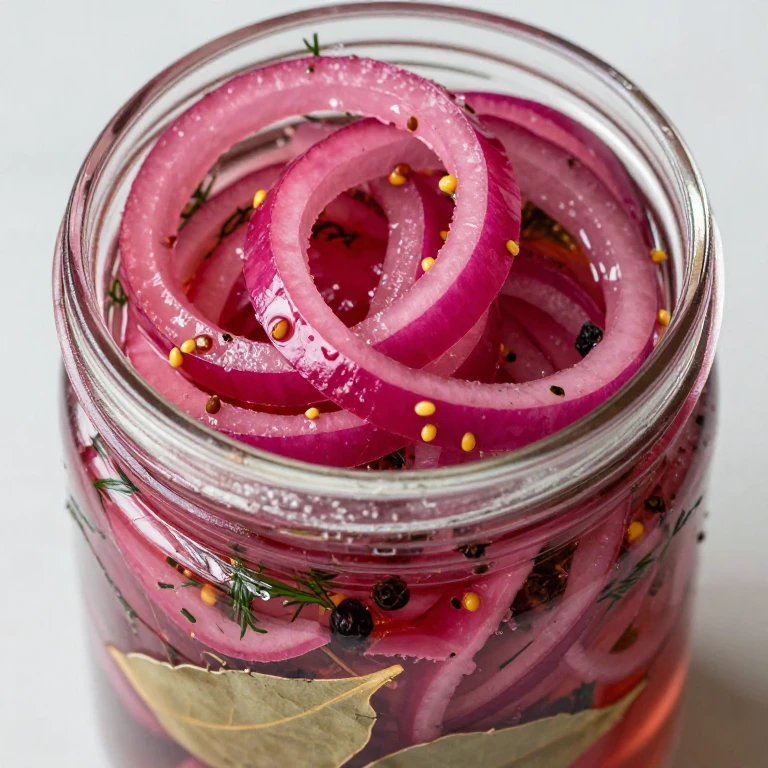
Pickled Onions Burger Topping With Dill & Mustard
Ingredients
Method
- Slice the red onions thinly (about 1/4-inch rings) and place them in a clean mason jar or glass container.
- In a small saucepan, combine the red wine vinegar, water, sugar, and kosher salt over medium-high heat.
- Stir until the sugar and salt dissolve completely, about 2-3 minutes. You should see no crystals on the bottom of the pan.
- Add the yellow mustard seeds, brown mustard seeds, fresh dill fronds, black peppercorns, and bay leaves to the hot brine and stir gently.
- Pour the hot brine over the onions in the jar, making sure all rings are submerged. If needed, add a splash more vinegar or water to cover.
- Let the jar cool to room temperature, about 20-30 minutes, then cover and refrigerate.
- Taste after 2 hours—they'll be lightly pickled and crisp. After 4-6 hours, the flavor deepens and the texture softens slightly. Use at the 4-hour mark for maximum crunch.