

This breakfast egg sandwich recipe nails the diner classic at home with one critical move: soft-scrambling eggs in butter until they’re custardy, then melting cheddar directly into the folds so it wraps every bite. I stack them on a toasted brioche with crispy bacon or tomato, a swipe of hot sauce or Dijon, and the result is a deeply satisfying sandwich that’s ready in under 10 minutes. The key is gentle heat, a warm bun, and understanding that the eggs are the star—everything else amplifies that creamy, savory core. If you’ve been settling for rubbery scrambled eggs or cold buns, this is the shift that changes breakfast.
Why You’ll Love This
- Ready in under 10 minutes from stovetop to plate
- Soft-scrambled eggs stay custardy and melt into every bite—no dry, overcooked texture
- Cheddar melts directly into the eggs for integrated flavor, not a separate cheese layer
- Customizable with bacon, tomato, greens, or sauce without changing the core method
- One skillet plus a toaster—minimal cleanup for a restaurant-quality breakfast
- Works for single-serve mornings or scales easily for two
Ingredient Breakdown
For the Eggs
- 3 large eggs
- 2 tablespoons unsalted butter
- 1/2 cup sharp cheddar, shredded
- Kosher salt and fresh black pepper to taste
- 1 pinch red pepper flakes (optional)
For Assembly
- 1 brioche bun or soft roll, split
- 2-3 strips bacon, cooked until crispy (or 2-3 slices tomato)
- 1 teaspoon hot sauce or Dijon mustard
- Small handful fresh spinach or arugula (optional)
The sharpness of aged cheddar matters here—it cuts through the richness of the eggs and butter. If you only have mild cheddar, use a bit more. Brioche holds up to the heat and moisture without falling apart; if you prefer a sturdier bun, ciabatta or a soft potato roll works too.
Whirl Hook
The signature move in this sandwich is the soft-scramble-and-melt: I’m not cooking eggs until they’re set, then adding cheese on top. Instead, I’m building the cheese into the eggs themselves while they’re still moving in the pan, so the cheddar melts into the folds and becomes part of the texture, not a topping. That’s the difference between a good egg sandwich and one you’ll crave again.
Step-by-Step
- Crack eggs into a small bowl, add a pinch of salt and pepper, and whisk until fully combined and no streaks of white remain.
- Place a small nonstick skillet over medium-low heat and add 1 tablespoon of butter, swirling to coat the pan evenly.
- Once the butter is foaming but not browning (about 1-2 minutes), pour in the eggs and let them sit undisturbed for 15-20 seconds.
- Using a silicone spatula, gently push the eggs from the edges toward the center, tilting the pan so uncooked egg flows to the edges. Repeat every 15-20 seconds—this keeps curds small and creamy.
- When the eggs are mostly set but still visibly wet on top (about 4-5 minutes total), sprinkle the shredded cheddar over the eggs and add the remaining 1 tablespoon of butter in small dots.
- Continue stirring gently for another 30-45 seconds until the cheese is fully melted and the eggs are soft and custardy, not firm.
- Remove from heat immediately—the residual heat will continue to cook them slightly.
- While the eggs finish, place the brioche bun cut-side down in a separate skillet or toaster oven at medium heat for 1-2 minutes until golden and warm.
- Spread hot sauce or mustard on the bottom bun, layer bacon or tomato, then carefully slide the scrambled eggs onto the bottom bun using the spatula.
- Add greens if using, cap with the top bun, and serve immediately while everything is warm.
Visual Cooking Timeline
- 0:00 — Crack and whisk eggs; start bacon in a separate skillet if making fresh (or grab pre-cooked)
- 1:00 — Butter is foaming in the egg pan; pour in eggs
- 2:00 — Begin gentle stirring cycle; eggs starting to set at edges
- 5:00 — Eggs mostly set but still wet on top; add cheese and remaining butter
- 6:00 — Cheese melted, eggs custardy; remove from heat and start toasting bun
- 7:00 — Bun is toasted and warm; assemble sandwich with sauce, bacon, and greens
- 8:00 — Serve immediately
Whirl Factor
The texture contrast here is custardy, folded eggs meeting the crisp-warm exterior of toasted brioche, with the sharp bite of cheddar and the snap of bacon or brightness of fresh tomato. The soft scramble is the anchor—it’s forgiving, elegant, and deeply satisfying. The melted cheese isn’t a separate layer; it’s integrated into the eggs themselves, so every bite has that savory, creamy depth. The toasted bun isn’t just warm; it’s firm enough to hold the moisture without getting soggy, and that warmth makes the cheese and eggs meld into a cohesive whole. That’s the Whirl Factor: texture contrast that makes the sandwich feel intentional and restaurant-quality.
Spin Options
Remix 1: The Smoked Salmon & Dill
Skip the bacon and tomato. Layer 2 ounces smoked salmon on the bottom bun, add a small dollop of crème fraîche mixed with fresh dill, then top with the scrambled eggs and cheddar. The cool, briny salmon plays against the warm, custardy eggs. Finish with a squeeze of fresh lemon juice.
Remix 2: The Spicy Breakfast Melt
Cook 1/4 diced jalapeño with the butter before adding eggs for a subtle heat that builds. Use pepper jack instead of cheddar, add crispy bacon, and finish with a swipe of sriracha mayo on the top bun. The heat lingers without overwhelming the soft eggs.
Remix 3: The Veggie-Forward Green
Sauté a small handful of spinach or kale in the same skillet after removing the eggs, then layer it on the bun with the scrambled eggs. Add sliced tomato, a pinch of red pepper flakes, and a touch of pesto mayo. This shifts the sandwich toward brunch-forward without losing the creamy egg core.
Quick Tips
- Medium-low heat is non-negotiable—high heat scrambles eggs fast but makes them grainy and tough. Slow and gentle gives you that custardy texture.
- Don’t walk away once you add the cheese; it melts in 30-45 seconds, and you want to catch it while the eggs are still moving.
- Toasting the bun while the eggs finish means everything hits the plate at the same temperature—warm bun, warm eggs, no temperature shock.
- If your eggs start looking too firm before the cheese melts, remove from heat immediately. Residual heat continues the cooking; you can’t undo overcooked eggs.
- Prep your bacon, sauce, and greens before you start the eggs—once the eggs are done, you’re on a 30-second timeline to assembly.
- A silicone spatula is gentler on nonstick pans than metal and gives you better control over the egg curds.
Substitution Ideas
- Cheddar → Gruyère or fontina — Nuttier flavor, slightly more sophisticated. Melts just as smoothly.
- Brioche → English muffin or ciabatta — English muffins are sturdier if you want more structure; ciabatta is chewier. Both handle the moisture well.
- Bacon → Sausage patty, smoked salmon, or sautéed mushrooms — Sausage adds savory depth; salmon brings briny elegance; mushrooms keep it vegetarian and earthy.
- Hot sauce → Pesto, chimichurri, or herb butter — These add brightness without heat. Spread on the bun before assembly.
- Eggs (if you need extra protein) — Stick with 3 large eggs for the sandwich structure; adding more makes it harder to handle and throws off the cook time. Make a second sandwich instead.
Make-Ahead Options
Day before: Cook bacon until crispy, let cool, and store in an airtight container in the fridge. Shred your cheddar and store in a separate container. Wash and dry greens if using, and store in a paper-towel-lined container to keep them crisp.
2 hours before: Whisk eggs in a small bowl, cover with plastic wrap, and refrigerate. They’ll come to room temperature quickly when you cook them, and this saves you a step in the morning. Have your sauce or spread ready in a small bowl.
Morning of: Don’t make-ahead the scrambled eggs themselves—they’re best made fresh and eaten immediately. The texture degrades quickly once cooled and reheated. Toast your bun just before assembly so it’s warm and firm. If you’re prepping for two, you can whisk both sets of eggs at once, then cook them sequentially in the same skillet (wipe it clean between batches if switching proteins).
FAQ
Can I make this ahead and reheat it?
The sandwich doesn’t reheat well because the eggs toughen and the bun gets soggy. Make it fresh each time—the whole process is under 10 minutes, so it’s faster than reheating. If you’re meal-prepping, prep the components (bacon, greens, sauce) and cook the eggs fresh in the morning.
What if I don’t have a nonstick pan?
A regular stainless steel or cast-iron skillet works, but use a bit more butter (about 3 tablespoons total) to prevent sticking. The butter also adds richness to the eggs, so it’s not a bad trade-off. Stir more frequently to prevent sticking.
Why are my eggs rubbery?
You’re cooking them too hot or too long. Medium-low heat is essential, and remove the pan from heat while the eggs still look slightly wet on top—they’ll firm up as they rest. If they’re already rubbery, lower the heat further next time and stir more gently.
Can I use egg whites or a liquid egg product?
Technically yes, but the texture won’t be as rich or custardy. Whole eggs have the yolk fat that creates that creamy mouthfeel. If you’re watching fat, use 2 whole eggs plus 2 egg whites as a compromise.
How do I keep the cheese from clumping?
Make sure your cheddar is freshly shredded (not pre-shredded with anti-caking agents), and add it when the eggs are still moving in the pan. Stir gently but continuously for 30-45 seconds. If the cheese starts to clump, reduce heat immediately and keep stirring.
Can I scale this for two people?
Yes—make two sandwiches sequentially using the same skillet. Wipe the pan clean between batches if you’re switching proteins, or just add more butter and make the second batch back-to-back. Both sandwiches will stay warm if you toast both buns and assemble them at the same time.
What’s the best condiment for this sandwich?
Hot sauce, Dijon mustard, and sriracha mayo are my go-tos. Avoid mayo-heavy condiments that can make the sandwich feel greasy—you already have butter and cheese. A light spread of pesto or herb butter is also excellent.
Whirl Finish
Serve immediately on a warm plate while the eggs are still custardy and the bun is crisp. The window for eating this sandwich at its best is about 5 minutes—after that, the bun starts to soften and the eggs cool. Pair it with coffee, fresh juice, or a quick side salad if you want something bright. Store any leftover bacon in an airtight container in the fridge for up to 4 days; reheat gently in a skillet or oven. Don’t store the assembled sandwich—the components separate and the texture falls apart. Make it fresh every time.
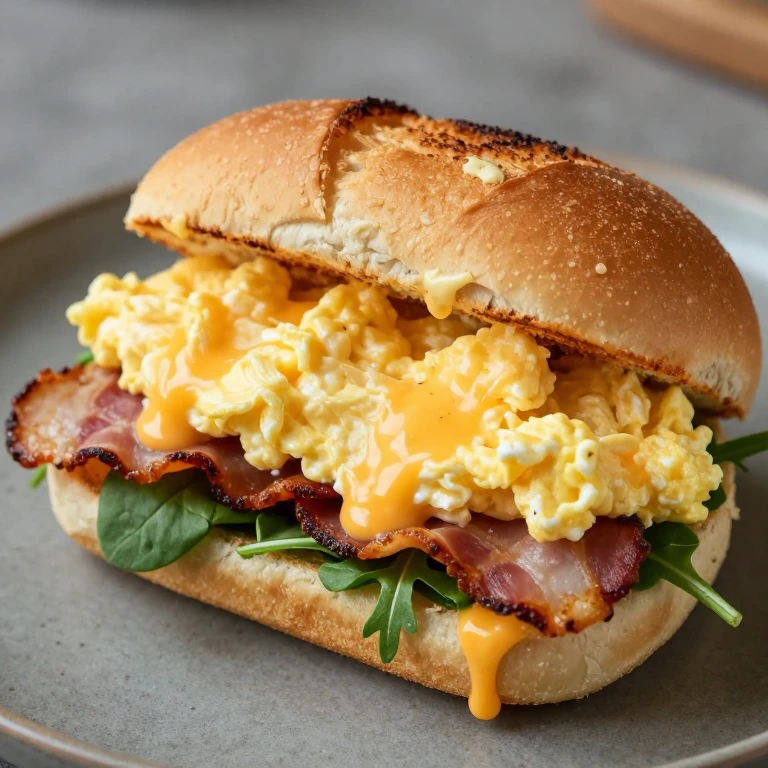
Cheddar Soft-Scramble Breakfast Egg Sandwich
Ingredients
Method
- Crack eggs into a small bowl, add a pinch of salt and pepper, and whisk until fully combined and no streaks of white remain.
- Place a small nonstick skillet over medium-low heat and add 1 tablespoon of butter, swirling to coat the pan evenly.
- Once the butter is foaming but not browning (about 1-2 minutes), pour in the eggs and let them sit undisturbed for 15-20 seconds.
- Using a silicone spatula, gently push the eggs from the edges toward the center, tilting the pan so uncooked egg flows to the edges. Repeat every 15-20 seconds—this keeps curds small and creamy.
- When the eggs are mostly set but still visibly wet on top (about 4-5 minutes total), sprinkle the shredded cheddar over the eggs and add the remaining 1 tablespoon of butter in small dots.
- Continue stirring gently for another 30-45 seconds until the cheese is fully melted and the eggs are soft and custardy, not firm.
- Remove from heat immediately—the residual heat will continue to cook them slightly.
- While the eggs finish, place the brioche bun cut-side down in a separate skillet or toaster oven at medium heat for 1-2 minutes until golden and warm.
- Spread hot sauce or mustard on the bottom bun, layer bacon or tomato, then carefully slide the scrambled eggs onto the bottom bun using the spatula.
- Add greens if using, cap with the top bun, and serve immediately while everything is warm.