
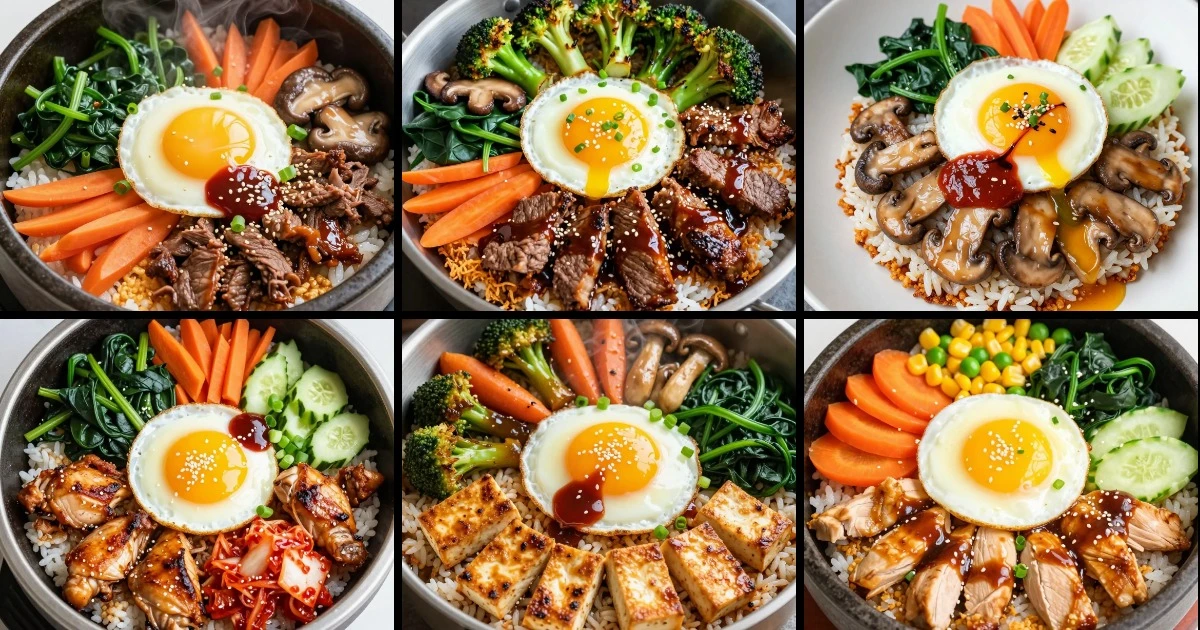

Whether you’re craving the signature sizzle of a weeknight dinner or planning an impressive spread for guests, stone bowl bibimbap hits different. I’ve found that this Korean classic—with its crispy, shattering rice crust, bold toppings, and gochujang punch—works across every occasion. The magic lives in the dolsot (that heavy stone bowl), the heat, and the ritual of mixing it all together. Here are 10 ways I make bibimbap at home, each one built around a specific twist that transforms how the dish tastes and feels.
Stone Bowl Bibimbap Recipes for Weeknight — Fast, Foolproof Versions
Weeknight bibimbap is about speed without sacrifice. I keep these versions under 30 minutes by prepping components ahead or choosing quick-cooking proteins. The dolsot does the heavy lifting—high heat means you get that crackling rice crust while everything else comes together on the side.
1. Classic Bulgogi Bibimbap
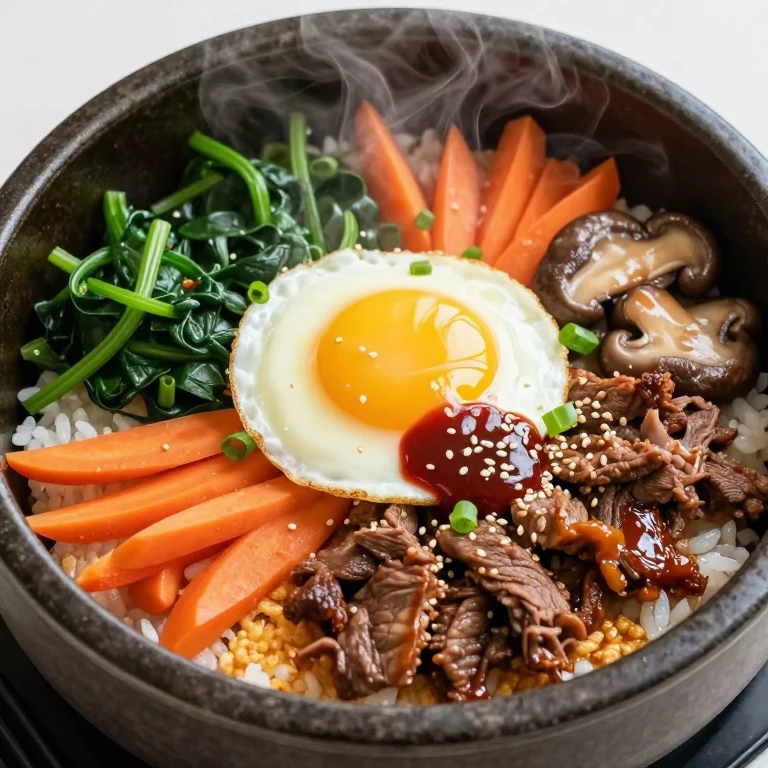
This is my go-to when I want restaurant-quality results in under 25 minutes. Thinly sliced beef gets a quick sear with soy, sesame, and garlic, while the stone bowl works its magic on the rice. The meat’s caramelized edges and the crispy rice base create that essential texture contrast I always chase.
Ingredients
- 1 cup cooked short-grain rice
- 8 oz thinly sliced beef (ribeye or sirloin)
- 3 tbsp soy sauce
- 1 tbsp sesame oil
- 2 cloves garlic, minced
- 1 tsp sugar
- 2 cups mixed vegetables (spinach, carrots, mushrooms)
- 1 fried egg
- 2 tbsp gochujang
- Sesame seeds and scallions for garnish
Instructions
- Heat a dolsot or heavy skillet over high heat for 3–4 minutes until smoking.
- While heating, combine soy sauce, sesame oil, garlic, and sugar; toss beef to coat and sear in a hot pan for 2–3 minutes until browned at edges.
- Add 1 tbsp sesame oil to the dolsot, then add rice in an even layer; let it sit undisturbed for 2–3 minutes until you hear a crackling sound.
- Arrange cooked beef and blanched vegetables in sections on top of the rice.
- Top with a fried egg, gochujang dollop, sesame seeds, and scallions.
- Serve immediately in the dolsot; stir everything together at the table.
Weeknight win: I prep vegetables the night before and keep cooked rice in the fridge. Beef cooks in the time it takes rice to crisp.
Make-ahead note: Marinate beef in the morning; sear it fresh at dinner for best crust.
2. Spicy Pork Belly Bibimbap
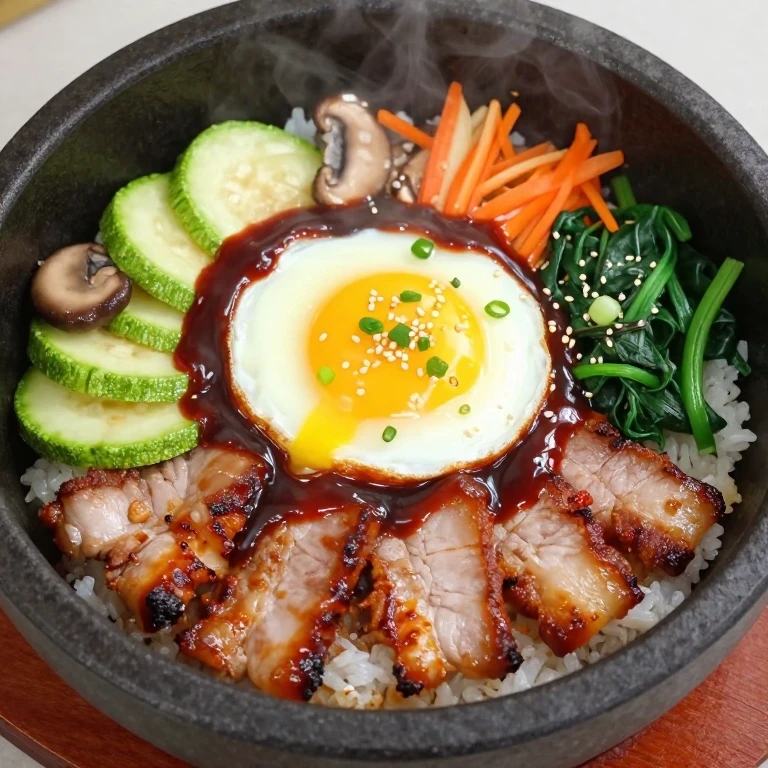
When I want heat and richness, pork belly delivers both. Thin slices render their fat in a hot pan and develop a caramelized crust while gochujang builds in the background. The dolsot’s heat amplifies the spice and creates that crackling rice foundation that makes every bite satisfying.
Ingredients
- 1 cup cooked short-grain rice
- 8 oz thinly sliced pork belly
- 3 tbsp gochujang
- 2 tbsp soy sauce
- 1 tbsp honey
- 2 cloves garlic, minced
- 1 tsp gochugaru (Korean red chili flakes)
- 2 cups mixed vegetables (zucchini, mushrooms, spinach)
- 1 fried egg
- Sesame oil and scallions for finish
Instructions
- Preheat dolsot over high heat for 3–4 minutes.
- Whisk together gochujang, soy sauce, honey, garlic, and gochugaru; coat pork belly and sear in a hot pan for 3–4 minutes until edges crisp.
- Drizzle sesame oil into the dolsot and add rice; let it sizzle for 2–3 minutes undisturbed.
- Arrange pork and blanched vegetables in sections on rice.
- Top with fried egg, extra gochujang, scallions, and sesame seeds.
- Stir and eat immediately while rice crackles.
Weeknight win: Pork belly cooks faster than beef because it renders quickly. Total active time is 15 minutes.
Make-ahead note: Marinate pork in the gochujang mixture up to 4 hours ahead; sear fresh when ready to serve.
3. Kimchi and Tofu Bibimbap
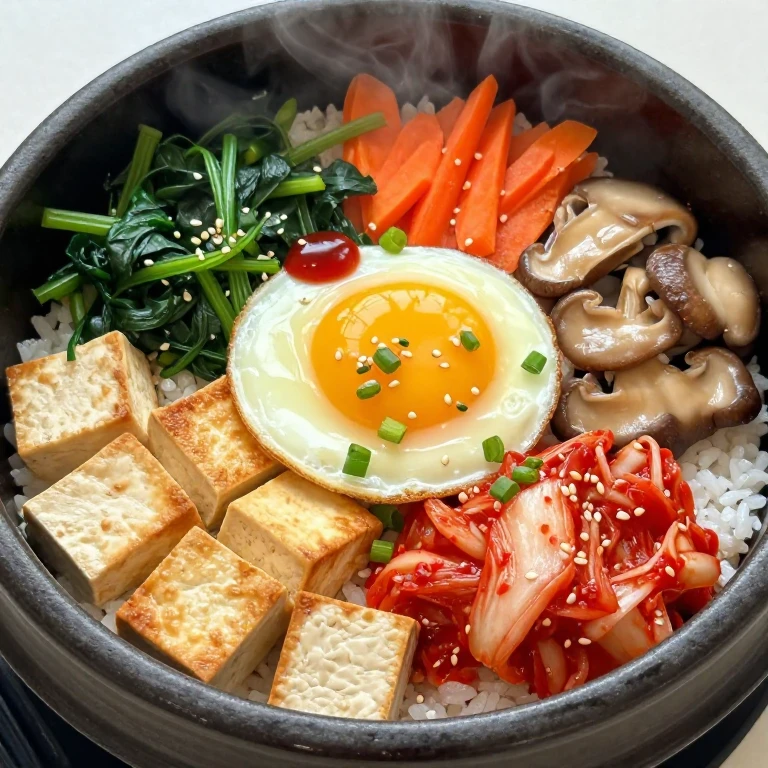
I reach for this version when I want vegetarian punch without sacrificing flavor depth. Crispy-edged tofu and funky, spicy kimchi create the texture and taste contrast that makes bibimbap sing. The dolsot’s heat turns the rice into a shatteringly crisp base that holds everything together.
Ingredients
- 1 cup cooked short-grain rice
- 14 oz firm tofu, pressed and cubed
- 1 cup kimchi, chopped
- 3 tbsp gochujang
- 2 tbsp soy sauce
- 1 tbsp sesame oil
- 2 cups mixed vegetables (spinach, carrots, mushrooms)
- 1 fried egg
- Scallions and sesame seeds for garnish
Instructions
- Heat dolsot over high heat for 3–4 minutes until very hot.
- Pan-fry pressed tofu cubes in a separate skillet over medium-high heat for 4–5 minutes until golden on all sides; season with soy sauce and sesame oil.
- Add sesame oil to dolsot, then rice; let it crisp for 2–3 minutes without stirring.
- Arrange tofu, kimchi, and blanched vegetables in sections on rice.
- Top with fried egg, gochujang, scallions, and sesame seeds.
- Mix at the table and serve immediately.
Weeknight win: Tofu crisps while rice does its thing. No marinating required; total time is 20 minutes.
Make-ahead note: Press tofu in the morning. Blanch vegetables the night before.
Stone Bowl Bibimbap Recipes for Dinner Party — Show-Stopping Versions
For dinner party bibimbap, I focus on components that impress and elements you can prep ahead. The dolsot becomes the centerpiece—your guests watch the rice sizzle and smell that toasted sesame aroma. These versions let you assemble at the last minute while looking completely in control.
4. Beef Bulgogi with Charred Broccoli Bibimbap
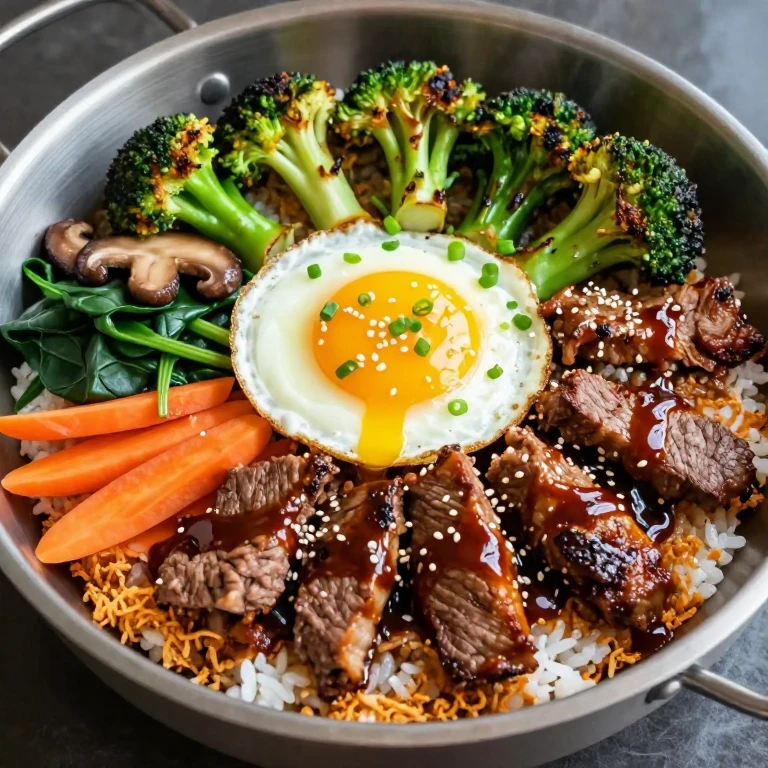
This is the version I make when I want to impress without sweating in the kitchen. Bulgogi beef gets its caramel-soy glaze hours ahead, charred broccoli adds a modern green-vegetable spin, and the dolsot’s heat ties everything into a cohesive, restaurant-quality dish. The texture contrast between crispy rice, tender beef, and charred broccoli is exactly what makes bibimbap special.
Ingredients
- 1 cup cooked short-grain rice per serving
- 1 lb beef bulgogi (marinated and ready to sear)
- 2 cups broccoli florets
- 3 tbsp gochujang
- 2 tbsp sesame oil
- 2 cloves garlic, minced
- 1 tbsp honey
- 2 cups mixed vegetables (spinach, mushrooms, carrots)
- 4 fried eggs (1 per serving)
- Sesame seeds and scallions for garnish
Instructions
- Marinate beef bulgogi 4–8 hours ahead (or use store-bought); bring to room temperature 15 minutes before serving.
- Char broccoli in a hot skillet with sesame oil for 4–5 minutes until edges blacken; season with salt.
- Heat dolsot over high heat for 4–5 minutes until smoking.
- Whisk gochujang with sesame oil, garlic, and honey for serving sauce.
- Add sesame oil to dolsot, then rice; let it sizzle for 2–3 minutes undisturbed.
- Sear marinated beef in a separate pan for 2–3 minutes until caramelized, then arrange on rice with charred broccoli and other vegetables.
- Top with fried egg, gochujang sauce, sesame seeds, and scallions; serve immediately.
Dinner party move: Marinate beef the morning of your party. Char broccoli 30 minutes before guests arrive. Everything else comes together in 10 minutes.
Make-ahead note: Bulgogi marinade develops deeper flavor over 24 hours. Blanch spinach and cook carrots the day before; reheat gently before plating.
5. Seafood Bibimbap with Shrimp and Scallops
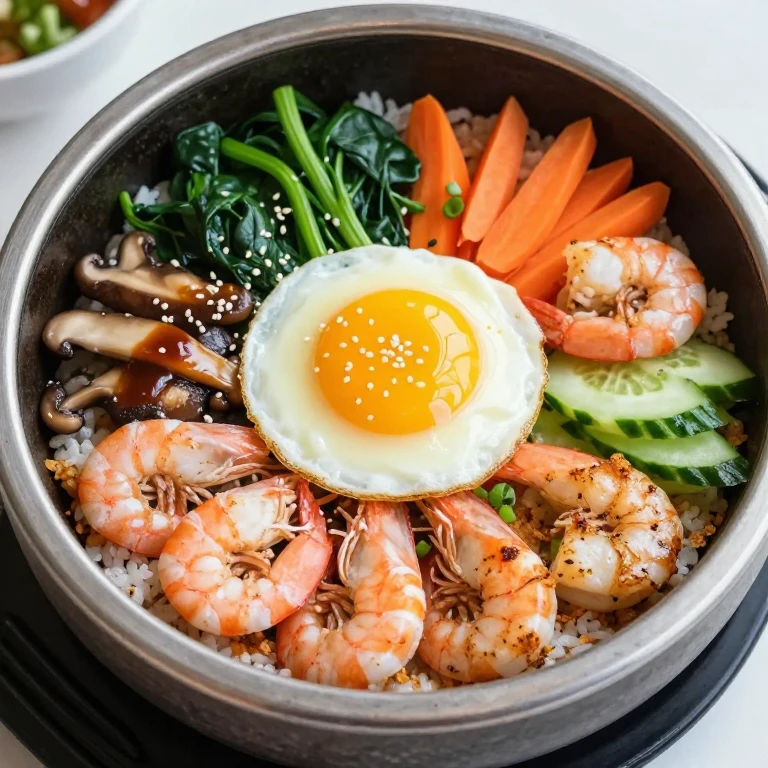
When I want to elevate bibimbap for a special dinner, seafood is my move. Shrimp and scallops cook in minutes, bringing briny sweetness that contrasts beautifully with spicy gochujang and crispy rice. This version feels elegant without requiring advanced technique.
Ingredients
- 1 cup cooked short-grain rice per serving
- 8 oz large shrimp, peeled and deveined
- 6 oz sea scallops
- 3 tbsp sesame oil
- 3 cloves garlic, minced
- 2 tbsp soy sauce
- 1 tbsp rice vinegar
- 2 cups mixed vegetables (spinach, mushrooms, carrots, cucumber)
- 3 tbsp gochujang
- 4 fried eggs
- Scallions and sesame seeds for garnish
Instructions
- Pat shrimp and scallops dry; season with salt and pepper.
- Heat dolsot over high heat for 4–5 minutes until smoking.
- In a separate skillet, heat 2 tbsp sesame oil over high heat; sear shrimp for 2 minutes per side, then scallops for 1.5 minutes per side. Remove and set aside.
- Deglaze the pan with soy sauce and rice vinegar; add garlic and cook 30 seconds.
- Add sesame oil to dolsot, then rice; let it crisp for 2–3 minutes.
- Arrange seafood and blanched vegetables on rice; top with fried egg, gochujang, scallions, and sesame seeds.
- Drizzle pan sauce over everything and serve immediately.
Dinner party move: Prep all vegetables and cook rice ahead. Sear seafood fresh just before serving for the best texture.
Make-ahead note: Blanch vegetables and prep the gochujang sauce 4 hours ahead. Cook seafood within 5 minutes of serving.
6. Mushroom and Egg Bibimbap with Truffle Oil
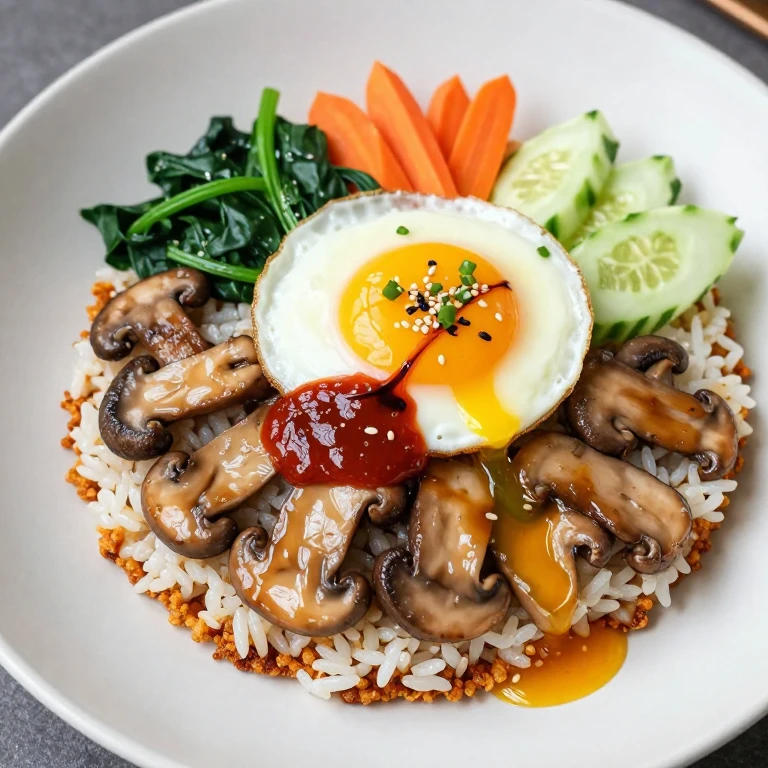
This is my vegetarian showstopper that even meat-eaters request. Earthy mushrooms, crispy rice, a perfectly runny egg yolk, and a whisper of truffle oil create layers of flavor and texture that feel indulgent without being heavy. The dolsot’s heat makes the rice sing while mushrooms develop a deep, caramelized crust.
Ingredients
- 1 cup cooked short-grain rice per serving
- 2 cups mixed mushrooms (cremini, shiitake, oyster), sliced
- 4 tbsp sesame oil
- 4 cloves garlic, minced
- 3 tbsp soy sauce
- 1 tbsp honey
- 2 cups mixed vegetables (spinach, carrots, cucumber)
- 4 soft-fried eggs (yolk still runny)
- 3 tbsp gochujang
- 1 tsp truffle oil
- Scallions and sesame seeds for garnish
Instructions
- Sauté mushrooms in 2 tbsp sesame oil over medium-high heat for 6–7 minutes until golden and liquid evaporates.
- Add garlic, soy sauce, and honey; cook 1 minute more until mushrooms are glazed and tender.
- Heat dolsot over high heat for 4–5 minutes until very hot.
- Add sesame oil to dolsot, then rice; let it sizzle for 2–3 minutes undisturbed.
- Arrange mushrooms and blanched vegetables on rice in sections.
- Top with soft-fried egg (yolk runny), gochujang, a drizzle of truffle oil, scallions, and sesame seeds.
- Serve immediately; the runny yolk becomes your sauce when you stir.
Dinner party move: Sauté mushrooms 2 hours ahead and reheat gently before plating. The truffle oil whisper makes this feel restaurant-quality without fuss.
Make-ahead note: Cook mushrooms up to 4 hours ahead. Blanch vegetables the day before. Fry eggs fresh, keeping yolks runny for maximum impact.
Stone Bowl Bibimbap Recipes for Meal Prep — Batch-Friendly Versions
Meal prep bibimbap is about components that hold up and reheat beautifully. I cook rice and proteins ahead, portion vegetables into containers, and assemble the dolsot version fresh on serving days. These recipes scale easily and taste just as good reheated as they do fresh.
7. Marinated Beef Bibimbap Bowls
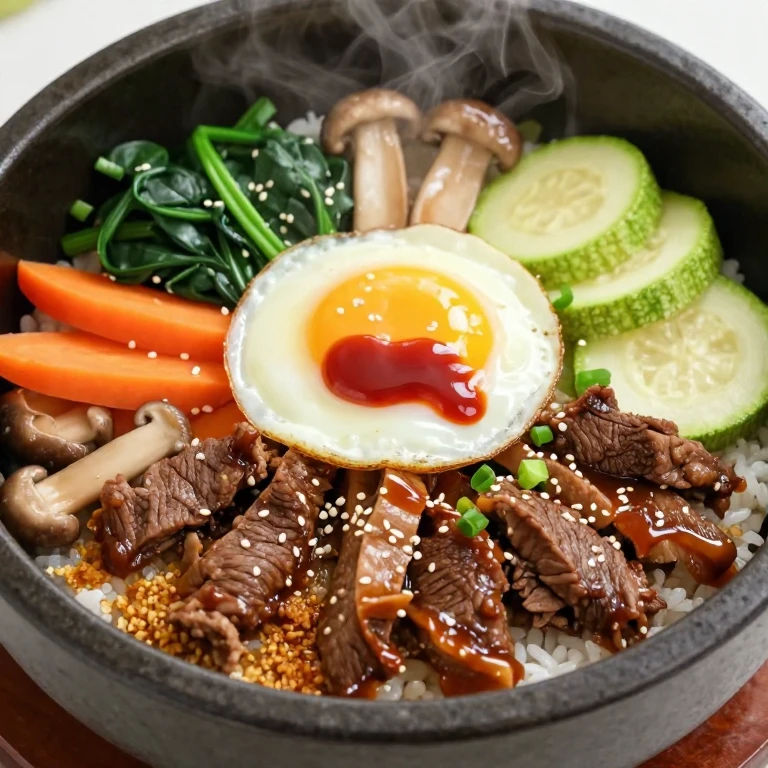
This is my most-prepped version because every component survives the fridge beautifully. Marinated beef actually deepens in flavor over 3 days, rice holds its texture when stored properly, and vegetables stay crisp in separate containers. When I’m ready to eat, I heat the dolsot, crisp the rice, and assemble in 5 minutes.
Ingredients
- 3 cups cooked short-grain rice (divided into 4 portions)
- 1.5 lbs beef bulgogi
- 1/4 cup soy sauce
- 3 tbsp sesame oil
- 4 cloves garlic, minced
- 2 tbsp honey
- 1 tbsp gochugaru
- 6 cups mixed vegetables (spinach, carrots, mushrooms, zucchini)
- 4 fried eggs
- 4 tbsp gochujang
- Sesame seeds and scallions for garnish
Instructions
- Combine soy sauce, sesame oil, garlic, honey, and gochugaru; marinate beef for 4 hours or up to 3 days in the fridge.
- Divide cooked rice into 4 meal prep containers; store covered in the fridge up to 4 days.
- Blanch vegetables separately (spinach 2 minutes, carrots 3 minutes, mushrooms sautéed); cool and store in separate containers up to 4 days.
- When ready to serve, heat dolsot over high heat for 3–4 minutes.
- Sear marinated beef in a hot pan for 2–3 minutes until caramelized.
- Add sesame oil to dolsot, then rice; let it crisp for 2–3 minutes.
- Arrange beef and vegetables on rice; top with fried egg, gochujang, sesame seeds, and scallions.
- Stir and serve immediately in the dolsot.
Meal prep move: Marinate beef on Sunday, portion rice and vegetables on Sunday evening. You have 4 ready-to-assemble bowls for the week.
Storage note: Keep marinated beef, cooked rice, and blanched vegetables in separate containers. Assemble with fresh heat on serving day for best rice crispness. Beef keeps 3 days; vegetables keep 4 days; rice keeps 4 days.
8. Chicken and Kimchi Meal Prep Bibimbap
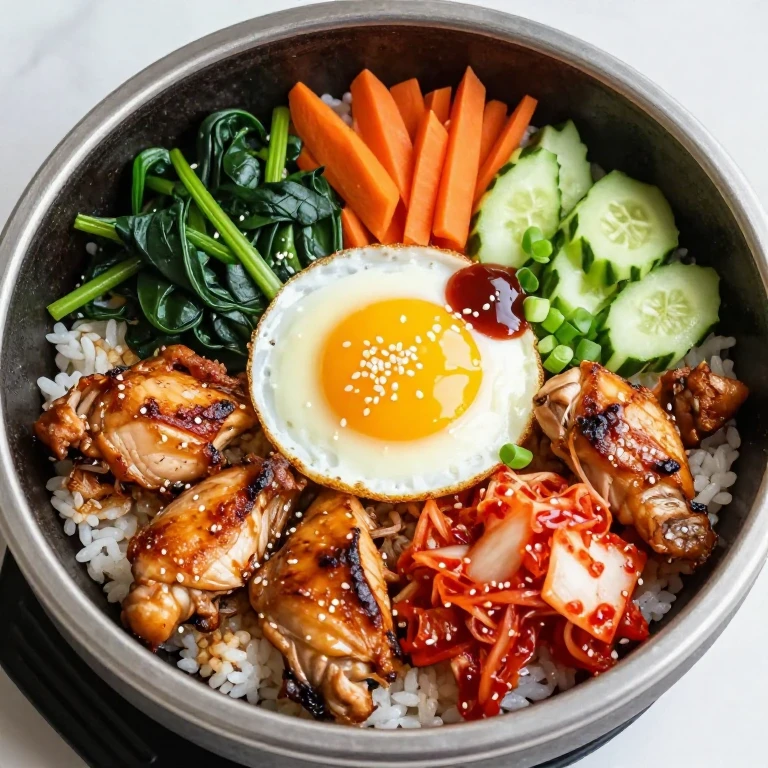
When I want lighter protein for meal prep, chicken thighs are my choice—they stay juicy when reheated and pair beautifully with kimchi’s funk. I cook everything on Sunday, portion into containers, and have 4 days of ready-to-heat bowls. Kimchi actually improves in the fridge, becoming more complex and funky.
Ingredients
- 3 cups cooked short-grain rice (divided into 4 portions)
- 1.5 lbs chicken thighs, cubed
- 3 tbsp gochujang
- 2 tbsp soy sauce
- 2 tbsp sesame oil
- 3 cloves garlic, minced
- 1 tbsp honey
- 1.5 cups kimchi, chopped
- 4 cups mixed vegetables (spinach, carrots, cucumber)
- 4 fried eggs
- Scallions and sesame seeds for garnish
Instructions
- Marinate chicken in gochujang, soy sauce, sesame oil, garlic, and honey for 4 hours or overnight.
- Roast marinated chicken at 400°F for 20–25 minutes until cooked through and edges caramelize.
- Cool and portion into 4 meal prep containers with cooked rice.
- Blanch vegetables separately; cool and store in separate containers.
- Divide kimchi into 4 containers (it keeps up to 2 weeks).
- When ready to serve, heat dolsot over high heat for 3–4 minutes.
- Add sesame oil to dolsot, then rice; let it crisp for 2–3 minutes.
- Arrange chicken, kimchi, and vegetables on rice; top with fried egg, extra gochujang, scallions, and sesame seeds.
- Stir and serve immediately.
Meal prep move: Roast all chicken on Sunday. The gochujang marinade means it reheats beautifully without drying out. Kimchi’s funk actually deepens over the week.
Storage note: Keep chicken and rice together (reheats as one unit). Store kimchi and vegetables separately. Everything keeps 4 days. Reheat chicken and rice together in a skillet before transferring to the dolsot.
9. Tofu and Vegetable Bibimbap (Freezer-Friendly)
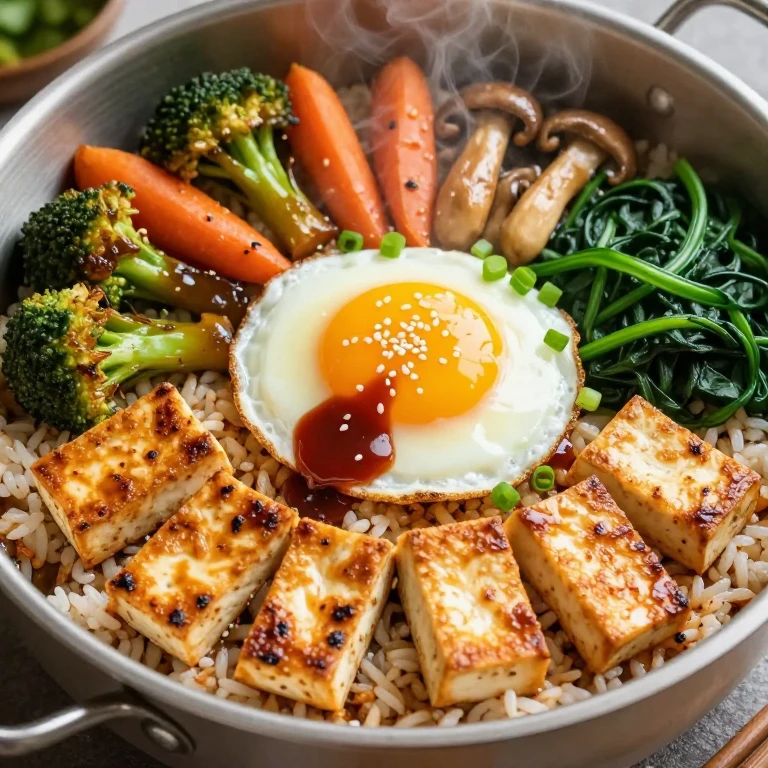
This is my vegetarian meal prep that freezes beautifully for up to 3 months. Crispy tofu and roasted vegetables hold their texture through the freeze-thaw cycle, while rice actually benefits from being frozen and reheated (it becomes fluffier). I make a triple batch on one Sunday and have bibimbap ready for emergency dinners all month.
Ingredients
- 3 cups cooked short-grain rice (divided into 4 portions)
- 2 lbs firm tofu, pressed and cubed
- 4 tbsp sesame oil
- 4 cloves garlic, minced
- 3 tbsp soy sauce
- 1 tbsp honey
- 6 cups mixed vegetables (broccoli, carrots, mushrooms, spinach)
- 4 tbsp gochujang
- 4 fried eggs (fry fresh, don’t freeze)
- Scallions and sesame seeds for garnish
Instructions
- Pan-fry pressed tofu cubes in sesame oil over medium-high heat for 5–6 minutes until golden on all sides; season with soy sauce, garlic, and honey.
- Roast vegetables (except spinach) at 400°F for 20 minutes until caramelized; blanch spinach separately.
- Cool completely, then portion tofu, rice, and vegetables into 4 freezer containers (keep separate).
- Label with date; freeze up to 3 months.
- To serve, thaw overnight in fridge or reheat from frozen: heat dolsot over medium heat for 4–5 minutes, add sesame oil, then rice; let it warm for 3–4 minutes until rice begins to crisp.
- Arrange thawed tofu and vegetables on rice; top with fresh fried egg, gochujang, scallions, and sesame seeds.
- Serve immediately.
Meal prep move: Make 3 batches on one Sunday. You have 12 freezer-ready bowls for the month. Thaw overnight for fastest assembly.
Storage note: Freeze tofu, rice, and vegetables separately in meal prep containers for 3 months. Fry eggs fresh on serving day. Reheat gently to preserve rice texture; the dolsot’s heat will re-crisp the bottom layer.
Stone Bowl Bibimbap Recipes for Family-Friendly — Kid-Approved Versions
Family bibimbap is about flexibility and approachability. I dial back heat for younger palates, offer mild sauce options, and let everyone customize their own bowl. These versions work for picky eaters because components stay separate until the moment of mixing—kids can skip what they don’t love and load up on favorites.
10. Mild Chicken and Vegetable Bibimbap
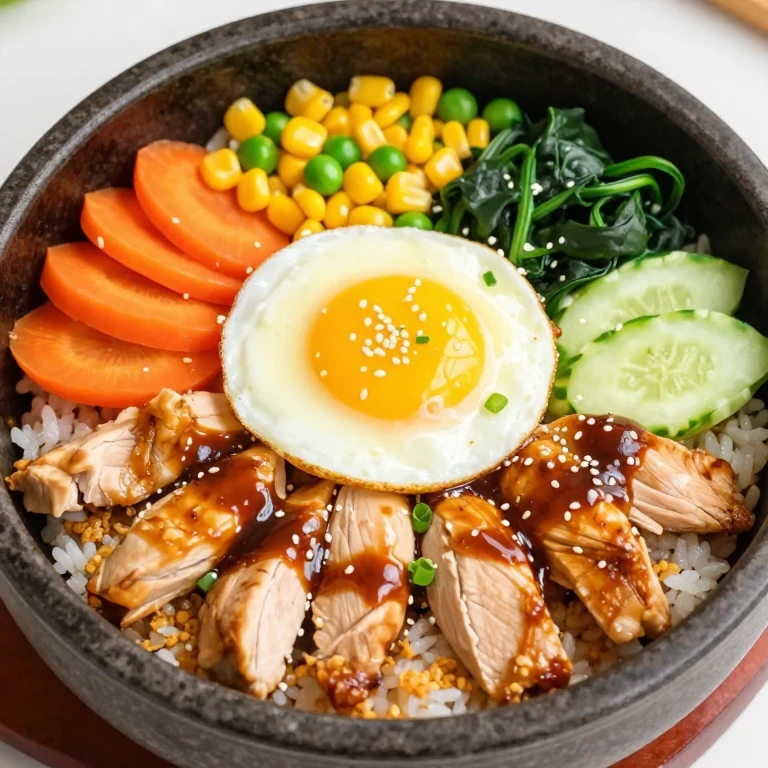
This is the version I make when younger family members are eating. Tender chicken, mild sauce, and familiar vegetables mean everyone finds something they like. I keep gochujang on the side so adults can add heat, while kids get a savory, slightly sweet base that tastes like home. The crispy rice is the real star here—even picky eaters get excited about that sizzle.
Ingredients
- 1 cup cooked short-grain rice per serving
- 8 oz chicken breast, diced
- 2 tbsp soy sauce
- 1 tbsp sesame oil
- 1 tbsp honey
- 2 cloves garlic, minced
- 2 cups mixed vegetables (carrots, corn, peas, spinach, cucumber)
- 1 fried egg per serving
- 2 tbsp mild gochujang (or soy-honey sauce for non-spicy option)
- Sesame seeds and scallions for garnish
Instructions
- Cook diced chicken in a skillet over medium heat with soy sauce, sesame oil, honey, and garlic for 8–10 minutes until cooked through and lightly caramelized.
- Heat dolsot over high heat for 3–4 minutes until very hot.
- Add sesame oil to dolsot, then rice; let it sizzle for 2–3 minutes undisturbed (kids love hearing the crackle).
- Arrange cooked chicken and blanched vegetables in sections on rice.
- Top with fried egg, mild sauce, sesame seeds, and scallions.
- Serve immediately and let everyone stir their own bowl.
Family-friendly move: Let kids choose which vegetables go in their section. Offer sauce on the side so heat-sensitive eaters can control spice level. The crispy rice is the hook that makes this fun, not intimidating.
Kid-adaptable note: Use mild gochujang or skip it entirely for younger kids; a simple soy-sesame-honey sauce tastes just as good. Swap any vegetables for kid favorites (peas, corn, carrots are always winners). The ritual of mixing everything together at the table is part of the appeal.
FAQ
What’s the best way to heat a dolsot for crispy rice?
I heat my dolsot over high heat for 3–5 minutes until it’s smoking slightly. The stone needs to be genuinely hot—if it’s just warm, you won’t get that signature crackling. I know it’s ready when I can feel the heat radiating from the bowl. Add sesame oil first (it helps the rice release from the stone), then add rice in an even layer and let it sit undisturbed for 2–3 minutes. You’ll hear a gentle crackling sound when the crust forms. Don’t stir during this time; that’s how you get the crispy, shattered crust that makes bibimbap special.
Can I make bibimbap without a dolsot?
Yes, but you’ll lose the signature crispy rice crust. I use a heavy cast-iron skillet as my backup—it holds heat similarly and develops a decent crust, though it won’t match the dolsot’s shatter. Heat the skillet over medium-high heat for 3–4 minutes, add sesame oil, then rice, and let it crisp for 3–4 minutes. The ritual is the same; the texture is slightly less dramatic. If you’re serious about bibimbap, a dolsot is worth the investment (they’re affordable and last decades).
How do I store leftover bibimbap components?
I keep everything separate: rice in an airtight container for up to 4 days, cooked proteins in a separate container for 3–4 days, and blanched vegetables in individual containers for up to 4 days. Gochujang and sauces keep for weeks. When I’m ready to eat, I reheat rice and protein gently (either in a skillet or microwave), then assemble fresh with cold or room-temperature vegetables. This way, nothing gets soggy and flavors stay bright. I don’t recommend storing an assembled bibimbap because the rice loses its texture and vegetables release water into the sauce.
What’s the best rice for bibimbap?
Short-grain white rice is traditional and gives the best crispy crust because of its starch content. Medium-grain works in a pinch, but long-grain won’t crisp the same way. I cook my rice with a slightly higher water ratio (1 cup rice to 1.25 cups water) so it’s a touch stickier—that helps it hold together in the dolsot and form a cohesive crust. Brown rice is possible but won’t crisp as dramatically. Always use freshly cooked rice or rice that’s been chilled; day-old rice crisps better than piping-hot rice because the exterior dries out faster in the dolsot’s heat.
Can I prep bibimbap components ahead for a dinner party?
Absolutely. I marinate proteins 24 hours ahead (flavors deepen), blanch vegetables 4–6 hours ahead and store them in separate containers, and cook rice up to 4 hours ahead. I keep everything cold until 15 minutes before serving, then bring rice and proteins to room temperature while I heat the dolsot. Vegetables can stay cold; they provide a nice temperature contrast against the hot rice and crispy crust. The only thing I do fresh is fry the egg and heat the dolsot. This strategy lets me spend dinner party time with guests instead of in the kitchen.
What vegetables work best in bibimbap?
I rotate through spinach (blanched and seasoned), sautéed mushrooms, blanched carrots, pickled radish, cucumber, zucchini, and broccoli. The key is variety in color, texture, and flavor—you want some soft (spinach), some crisp (cucumber, radish), and some earthy (mushrooms). I blanch most vegetables for 2–3 minutes to soften them slightly without making them mushy, then season each separately with sesame oil, soy sauce, and garlic. This way, each vegetable tastes intentional, not like an afterthought. Avoid watery vegetables like tomatoes or bell peppers (they release liquid and make everything soggy).
Is gochujang the only sauce option?
Gochujang is traditional and my default, but I’ve had success with other approaches. For milder versions, I mix gochujang with sour cream or Greek yogurt to soften the heat. For non-spicy bowls, I use a simple soy-sesame-honey sauce (equal parts soy and sesame oil, sweetened with a touch of honey and garlic). Some versions use doenjang (fermented soybean paste) instead for earthier flavor. The sauce should be spiced, savory, and slightly sweet—that balance is what makes bibimbap sing. Mix your sauce fresh and taste it before serving; you want it bold enough to season the entire bowl.