

A 9×13 sheet cake is the workhorse of the dessert world, and I’ve built this version around one non-negotiable principle: tender crumb and foolproof execution. One-bowl mixing means fewer dishes and zero fussy creaming steps that derail home bakers. The vanilla buttercream comes together in minutes, giving you a cake ready to frost, decorate, and serve in under an hour.
What makes this recipe worth your time is the texture contrast I’ve engineered into every slice. The cake itself stays impossibly moist thanks to a precise oil-to-flour ratio and a touch of sour cream in the batter. The frosting is silky and spreadable without being greasy, so decorating is actually pleasant instead of frustrating. I’ve tested this formula dozens of times, and it performs whether you’re baking at altitude, in humidity, or in your standard kitchen.
This is your base recipe. Serve it plain with fresh berries, dress it up with a piped message, or use it as the foundation for flavor remixes. Let’s build your go-to sheet cake.
Quick Snapshot
- Prep Time: 12 minutes
- Cook Time: 28-32 minutes
- Total Time: 45 minutes (plus cooling)
- Yield: 12-16 servings
- Texture: Tender crumb, moist interior, silky frosting
- Flavor Profile: Classic vanilla with subtle richness
- Skill Level: Beginner to intermediate
Why This Recipe Works
The magic lives in three specific choices. First, I use vegetable oil instead of butter in the batter. Oil distributes evenly through the flour and stays liquid when baked, creating a tender crumb that doesn’t firm up as it cools. Butter solidifies, which can make cakes feel dense after a day. Second, I add sour cream to the wet ingredients. The acidity reacts with baking soda to create lift, and the fat content keeps every bite moist without making the crumb greasy. Third, I bake at 350°F for 28-32 minutes rather than pushing higher heat. Moderate temperature allows the center to set gently without the edges drying out or browning too fast.
The frosting ratio matters equally. I use softened butter whipped with powdered sugar and a splash of vanilla, plus a pinch of salt to amplify sweetness perception. This balance prevents that cloying, overly sweet taste while keeping the texture spreadable and pipeable. The salt is the hidden player—it’s not detectable as salt, but it makes every bite taste more intentional.
Ingredient Overview
- For the Cake:
- 1 3/4 cups all-purpose flour
- 1 1/2 teaspoons baking powder
- 1/2 teaspoon baking soda
- 1/2 teaspoon fine sea salt
- 3/4 cup vegetable oil
- 1 cup granulated sugar
- 3 large eggs
- 1/2 cup sour cream
- 1/4 cup whole milk
- 2 teaspoons vanilla extract
- For the Vanilla Buttercream:
- 1/2 cup unsalted butter, softened
- 2 cups powdered sugar
- 2 tablespoons heavy cream or whole milk
- 1 teaspoon vanilla extract
- Pinch of fine sea salt
The flour is your structure. All-purpose works perfectly here—no need for cake flour, which can make the crumb too delicate. I measure by weight when I can, but spooning and leveling works fine if you’re careful not to pack the measuring cup.
Sour cream is non-negotiable. Full-fat sour cream, not Greek yogurt or light versions. The fat content and acidity are what create the tender crumb and subtle tang that balances the sweetness. If you don’t have sour cream, you can substitute plain full-fat yogurt in a pinch, but the texture shifts slightly toward denser.
The oil choice matters more than people realize. Vegetable, canola, or light olive oil all work. Avoid extra-virgin olive oil, which brings flavor that fights vanilla. The oil must be neutral so the vanilla and butter in the frosting shine.
Whirl Hook
This sheet cake lives on one core twist: one-bowl mixing with zero creaming fuss, paired with a tender crumb that stays moist for days. The texture contrast is built in—soft, yielding cake meets silky, pipeable frosting that doesn’t taste like pure sugar. That’s the high-payoff combination that makes this your go-to base.
Flavor Spin
The vanilla buttercream is your flavor anchor. I use pure vanilla extract, not imitation, because the real stuff has depth that imitation can’t match. Two teaspoons in a 9×13 cake is enough to be present without tasting artificial. The salt amplifies the vanilla and keeps the frosting from tasting one-dimensional. This is the twist that separates a good sheet cake from one that tastes like grocery-store mix.
Whirl Factor
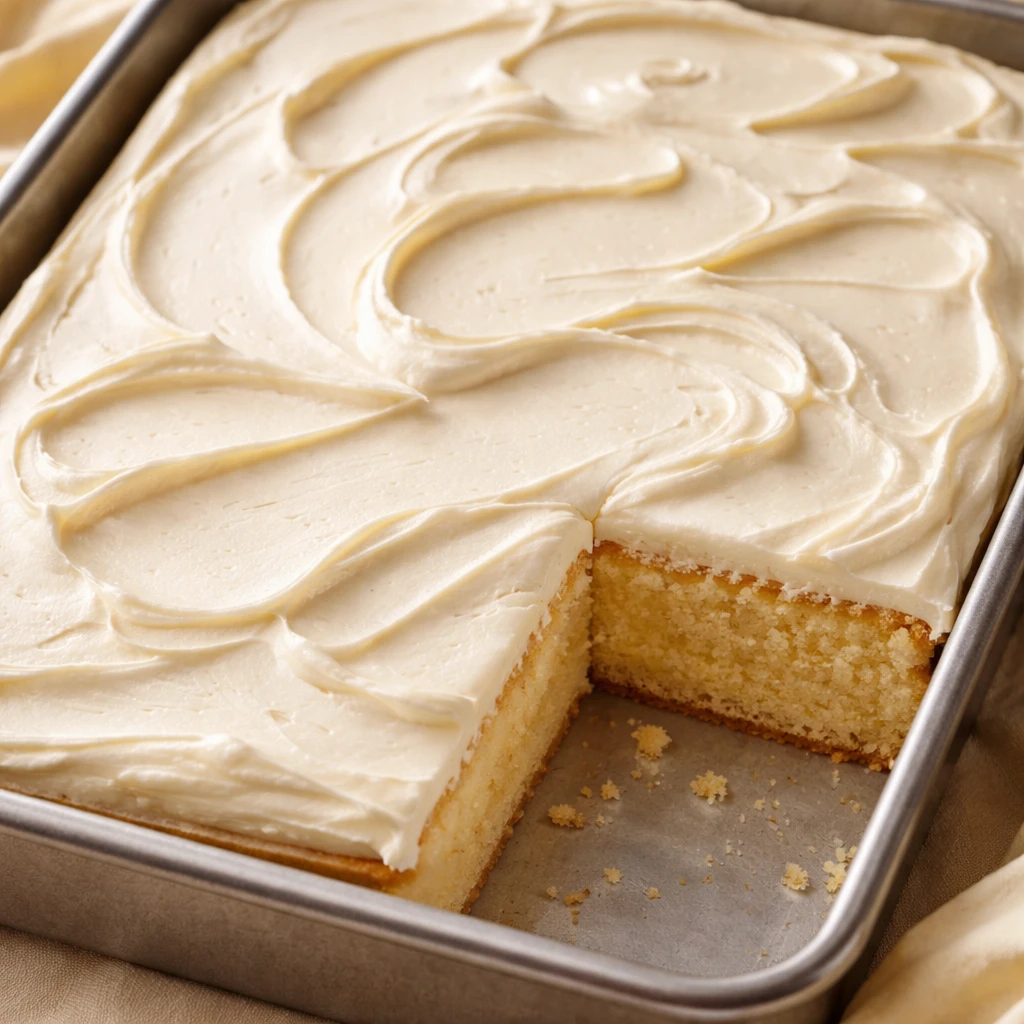
The texture contrast is where this recipe earns its place on your rotation. The cake interior is tender and moist, almost delicate when you cut through it. The frosting is smooth and silky, spreadable enough to work with an offset spatula but structured enough to hold piped decorations. When you bite through a slice, you get the soft crumb, then the slight resistance of the frosting, then both flavors melding together. That’s intentional design, not accident.
Step-by-Step Instructions
- Prepare your pan and preheat. Position a rack in the center of your oven and preheat to 350°F. Line a 9×13 baking pan with parchment paper, letting the edges overhang slightly for easy removal later. This prevents sticking and makes cooling faster. If you don’t have parchment, grease and flour the pan thoroughly, paying special attention to corners.
- Mix the dry ingredients. In a medium bowl, whisk together flour, baking powder, baking soda, and salt. Whisking aerates the flour and distributes the leavening agents evenly. Set aside. This takes about 30 seconds and prevents lumps in the final batter.
- Combine wet ingredients in one bowl. Pour the vegetable oil into a large mixing bowl. Add sugar and whisk for about 1 minute until the mixture is pale and slightly thickened. This brief whisking helps the sugar dissolve and incorporate air. Crack in the eggs one at a time, whisking well after each addition until the mixture is smooth and homogeneous. The batter should look glossy and slightly thick at this stage.
- Add sour cream and milk. Stir in the sour cream and milk with a wooden spoon or spatula until just combined. The batter will look slightly curdled—this is normal and expected. The acid in the sour cream reacts with the baking soda, which is exactly what you want. Stir in vanilla extract.
- Fold in the dry ingredients. Add the flour mixture to the wet ingredients and fold gently with a spatula until just combined. Stop as soon as you don’t see dry flour streaks. Overmixing develops gluten and toughens the cake. The batter should be smooth and pourable, with a consistency like thick pancake batter. If it looks too thick, add 1 tablespoon milk and fold again.
- Pour into the prepared pan. Transfer the batter to the 9×13 pan and spread it evenly with an offset spatula or the back of a spoon. Make sure the corners are filled and the surface is level. This ensures even baking and consistent thickness across all slices.
- Bake for 28-32 minutes. Place the pan in the preheated oven. Bake until a toothpick inserted into the center comes out with a few moist crumbs clinging to it. The edges should pull slightly away from the pan sides, and the top should be light golden brown. A few moist crumbs mean the cake will stay tender; if the toothpick comes out completely clean, the cake is slightly overbaked. At 28 minutes, start checking. Oven temperatures vary, so this range is real.
- Cool completely before frosting. Remove the pan from the oven and set it on a wire rack. Let the cake cool in the pan for 15 minutes, then turn it out onto the rack to cool completely. This takes about 45 minutes total. Frosting a warm cake will melt the butter and create a greasy, sliding mess. Cold cake is your friend here.
- Make the vanilla buttercream. While the cake cools, place softened butter in a medium bowl. Beat with an electric mixer on medium speed for 2-3 minutes until pale and fluffy. Scrape down the bowl. Add powdered sugar 1/2 cup at a time, beating on low speed after each addition to prevent sugar clouds. Once all the sugar is incorporated, increase speed to medium and beat for another 2 minutes. Add heavy cream, vanilla extract, and salt. Beat on medium speed for 1-2 minutes until the frosting is light, fluffy, and spreadable. If it’s too stiff, add cream 1 tablespoon at a time. If it’s too soft, add more powdered sugar.
- Frost the cooled cake. Spread the frosting evenly over the cooled cake using an offset spatula. Work from the center outward, using long, smooth strokes. If you want a rustic finish, leave the frosting slightly textured. If you want a smooth finish, dip your spatula in warm water, shake off excess, and glide it gently over the frosting. Decorate with sprinkles, piped designs, or fresh berries immediately, before the frosting sets.
Pro Tips for Best Results
- Room-temperature eggs mix faster. Cold eggs take longer to incorporate and can create a lumpy batter. Set eggs on the counter 30 minutes before baking. If you forget, place them in warm water for 5 minutes. You’ll notice the batter comes together noticeably faster and looks smoother from the start.
- Don’t skip the sour cream. This is where the texture magic happens. Regular milk alone won’t give you the same tender crumb. If you absolutely must substitute, use full-fat Greek yogurt or crème fraîche in equal amounts. The acidity and fat content are what matter, not the specific product.
- Measure flour carefully to avoid density. Too much flour makes the cake heavy and dry. Spoon flour into your measuring cup and level it with a knife. Don’t scoop directly from the bag, which compacts the flour. If you have a kitchen scale, use it—1 3/4 cups all-purpose flour weighs 220 grams. Precision here changes everything.
- Check doneness at 28 minutes, not 32. Oven hot spots mean the edges can overbake while the center is still underdone. Start checking early and pull the cake out as soon as a toothpick shows a few moist crumbs. Slightly underbaked is better than slightly overbaked with a sheet cake.
- Chill the frosting if it’s too soft to pipe. If your kitchen is warm or your butter was very soft, the frosting might be too loose to hold piped shapes. Refrigerate it for 10-15 minutes until it firms up. You can always soften it again by beating for another minute or two at room temperature.
- Frost on a level surface. If your cake layers slightly or the pan wasn’t level when it baked, trim the top with a serrated knife to create a flat surface. This takes 30 seconds and makes frosting and decorating infinitely easier. Save the crumbs for snacking.
Spin Options
This cake is a blank canvas. Here are three remixes I return to constantly.
Lemon Buttercream Spin
Replace vanilla extract in the frosting with 2 tablespoons fresh lemon juice and 1 teaspoon lemon zest. Add 1/2 teaspoon lemon extract if you have it. The frosting becomes bright and tart, cutting through the cake’s sweetness. This version pairs beautifully with fresh berries or a lemon curd swirl. The texture stays exactly the same—only the flavor shifts.
Chocolate Buttercream Spin
Sift 1/4 cup unsweetened cocoa powder into the finished frosting and beat for another minute. Add an extra tablespoon of heavy cream because cocoa powder absorbs moisture. The frosting becomes rich and chocolatey without tasting artificial. If you want deeper chocolate flavor, use Dutch-process cocoa, which has a more sophisticated taste than natural cocoa powder.
Brown Butter Vanilla Spin
Brown the 1/2 cup butter for the frosting before whipping it. Heat butter in a small saucepan over medium heat, swirling occasionally, until the milk solids turn deep golden brown and smell nutty (about 8-10 minutes). Let it cool completely, then proceed with the frosting recipe. The frosting develops a toasty, complex flavor that feels elevated without requiring any special ingredients.
Whirl Finish
Serve slices at room temperature for the best texture and flavor. The frosting is silky when cool, and the cake crumb is tender without being fragile. Pair with cold milk, coffee, or tea. For an elevated finish, top individual slices with fresh whipped cream and berries, or dust with edible glitter and serve on a small plate with a fork.
Storage & Reheating
Store the frosted cake in an airtight container at room temperature for up to 2 days. The frosting protects the cake from drying out. For longer storage, cover the pan tightly with plastic wrap and refrigerate for up to 5 days. The cake stays moist and the frosting firms up slightly when cold, making slices easier to cut. Unfrosted cake can be wrapped tightly and frozen for up to 3 months. Frosted cake freezes for up to 2 months, though the frosting texture may become slightly grainy after thawing.
To serve cold cake, let it sit at room temperature for 20 minutes before eating. This allows the frosting to soften and the crumb to regain its tender texture. If you want to warm individual slices, microwave them for 8-10 seconds on 50% power. Don’t use full power, which dries out the cake. A slice warmed this way tastes nearly as good as fresh-baked.
FAQ
Can I make this cake ahead?
Yes. Bake the unfrosted cake up to 2 days ahead, wrap it tightly, and store it at room temperature. Make the frosting the day you plan to serve. Frost the cake no more than 8 hours before serving so the frosting stays fresh and spreadable. If you frost it earlier, cover it lightly with plastic wrap to prevent the frosting from drying out or absorbing odors from the fridge.
What if I don’t have sour cream?
Full-fat Greek yogurt or plain yogurt works as a 1:1 substitute. The cake will be slightly less tender and a touch more dense, but still delicious. Crème fraîche also works perfectly. Avoid non-fat or low-fat versions, which lack the fat needed for moisture and tenderness.
Can I use this as a layer cake?
Absolutely. Bake the batter in two 8-inch round pans instead, reducing the bake time to 22-26 minutes. Let the layers cool, level them if needed, and fill with frosting between layers. This makes a two-layer cake that serves 8-10. The texture and flavor are identical to the sheet cake version.
How do I get a smooth frosting finish?
Spread the frosting on the cooled cake with an offset spatula, working from the center outward with long, smooth strokes. If you want a polished look, dip a clean offset spatula in warm water, shake off excess water, and glide it gently over the frosting in one direction. This melts the top layer slightly and creates a smooth, professional-looking finish. Practice makes perfect here—your second cake will look better than your first.
Can I halve this recipe?
Yes, but use an 8×8 baking pan instead of 9×13. Halve all ingredients and reduce bake time to 20-24 minutes. Check doneness a minute or two earlier than you would for the full recipe, since the smaller pan heats differently. The texture and flavor remain the same.
What’s the best way to decorate this cake?
Sprinkles, fresh berries, and piped frosting designs all work beautifully. If you’re piping, make sure the frosting is cool and firm enough to hold its shape. Edible flowers, cocoa powder dusted through a sieve, or a simple message piped with a small round tip all look elegant without requiring advanced skills. Let the frosting set for 30 minutes before adding delicate toppings so they don’t sink in.
Why is my cake sinking in the middle?
This usually means the oven temperature is off or the cake was underbaked. Invest in an oven thermometer to verify your oven’s actual temperature—many run 25°F higher or lower than the dial indicates. Also, make sure you’re checking doneness correctly. A toothpick should show a few moist crumbs, not wet batter. If the center is truly raw, the oven isn’t hot enough or the pan is too thick (dark pans absorb more heat).
9x13 Sheet Cake Recipe With Easy Vanilla Buttercream
Ingredients
Method
- Position a rack in the center of your oven and preheat to 350°F. Line a 9x13 baking pan with parchment paper, letting the edges overhang slightly for easy removal later.
- In a medium bowl, whisk together flour, baking powder, baking soda, and salt. Whisking aerates the flour and distributes the leavening agents evenly.
- Pour the vegetable oil into a large mixing bowl. Add sugar and whisk for about 1 minute until the mixture is pale and slightly thickened. Crack in the eggs one at a time, whisking well after each addition until the mixture is smooth and homogeneous.
- Stir in the sour cream and milk with a wooden spoon or spatula until just combined. Stir in vanilla extract.
- Add the flour mixture to the wet ingredients and fold gently with a spatula until just combined. Stop as soon as you don't see dry flour streaks.
- Transfer the batter to the 9x13 pan and spread it evenly with an offset spatula or the back of a spoon. Make sure the corners are filled and the surface is level.
- Place the pan in the preheated oven. Bake until a toothpick inserted into the center comes out with a few moist crumbs clinging to it, 28-32 minutes. The edges should pull slightly away from the pan sides, and the top should be light golden brown.
- Remove the pan from the oven and set it on a wire rack. Let the cake cool in the pan for 15 minutes, then turn it out onto the rack to cool completely, about 45 minutes total.
- While the cake cools, place softened butter in a medium bowl. Beat with an electric mixer on medium speed for 2-3 minutes until pale and fluffy. Add powdered sugar 1/2 cup at a time, beating on low speed after each addition. Once all the sugar is incorporated, increase speed to medium and beat for another 2 minutes. Add heavy cream, vanilla extract, and salt. Beat on medium speed for 1-2 minutes until the frosting is light, fluffy, and spreadable.
- Spread the frosting evenly over the cooled cake using an offset spatula. Work from the center outward, using long, smooth strokes. Decorate with sprinkles, piped designs, or fresh berries immediately, before the frosting sets.